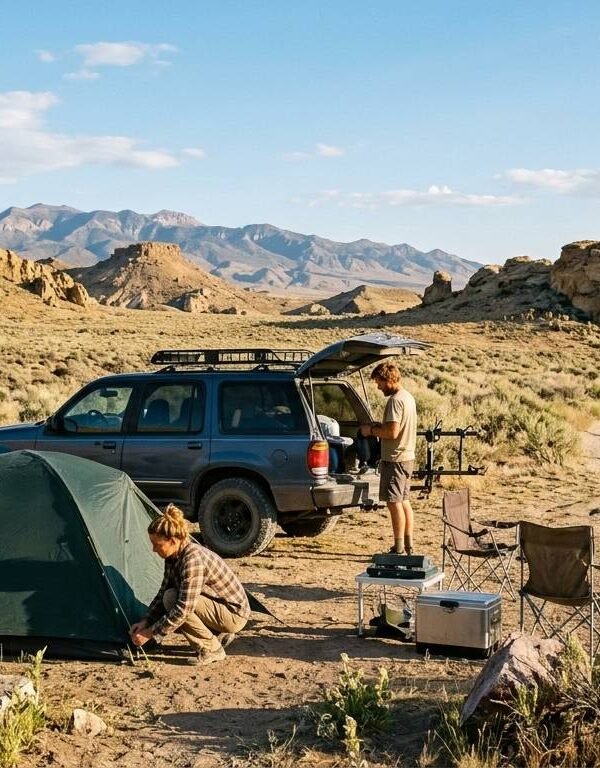
Quick answer: camping safety comes down to a few habits. Before you leave, check the forecast, fire restrictions and park alerts, and tell someone your plan. At camp, keep fires small and drown them cold, store every scrap of food where animals cannot reach it, never run a stove, heater or grill inside a tent, and treat water from lakes and streams. Know the warning signs of heat illness and hypothermia, carry the Ten Essentials and a first aid kit, and when thunder roars, get to a hard-topped vehicle or a building.
In this guide
- Plan and Share Your Itinerary
- Weather Risks: Lightning, Heat, Cold and Flash Floods
- Fire Safety at Camp
- Wildlife and Food Storage
- Carbon Monoxide and Tent Heating
- Water and Food Safety
- Navigation and Signaling
- First Aid Basics
- Leave No Trace and Safe Campsite Choice
- Your Camp Emergency Plan
- Frequently Asked Questions
- Related Guides
Most camping trips end with nothing worse than a smoky sweatshirt and a few mosquito bites. The trips that go wrong usually share a pattern: a small, predictable risk that nobody planned for. Sometimes a storm rolls in and the only shelter is a nylon tent. A cooler sits out overnight. Or a heater comes inside on a cold night because the sleeping bags were too thin.
This guide pulls the main camping risks into one place and explains, in plain language, what land managers and safety agencies advise for each. It draws on guidance from the National Park Service (NPS), the National Weather Service (NWS), the Centers for Disease Control and Prevention (CDC), the Consumer Product Safety Commission (CPSC), the U.S. Forest Service and the Leave No Trace Center for Outdoor Ethics. Each section links to a deeper article where we have one.
Nothing here replaces the rules posted at your campground or the instructions of a ranger. Regulations change from park to park and season to season, so treat this as a framework and check local conditions every time.

Plan and Share Your Itinerary
Safety starts at the kitchen table, days before the trip. The NPS encourages visitors to research the park they plan to visit, check current alerts and conditions, and know their own limits before they arrive.
A good pre-trip check covers:
- The forecast for the campground itself, not your hometown; mountain and desert weather can differ sharply from conditions a short drive away
- Fire restrictions, which can change from week to week during dry spells
- Park or forest alerts about closures, flooding, wildlife activity or water system problems
- Road conditions and the time it takes to reach the nearest town, hospital and ranger station
- Whether drinking water is available at the site or must be carried in or treated
Leave a trip plan with someone
Write down where you will camp, which vehicle you are driving, who is in the group, any planned hikes and the time you expect to be home. Give that note to a trusted person who is not on the trip, along with the phone number of the park or ranger district. Agree on a time after which they should call for help if they have not heard from you. Search teams begin with that kind of information, and it can shorten a search from days to hours.
Do not count on a cell signal
Large parts of many national parks and forests have little or no coverage. Download offline maps before you lose service, carry a paper map, and keep phones charged with a power bank. Some newer smartphones and dedicated satellite messengers can send emergency messages without cell service; if you carry one, learn how it works at home rather than for the first time in an emergency.
Pack the Ten Essentials
The Ten Essentials are a list long promoted by The Mountaineers and recommended by the NPS: navigation, a headlamp, sun protection, first aid supplies, a knife, fire starters, an emergency shelter, extra food, extra water and extra clothes. Car campers have more room than backpackers, so there is no reason to leave any of them at home. Our camping gear and checklists guide shows how the Ten Essentials fit into a full packing list for every type of trip.
Weather Risks: Lightning, Heat, Cold and Flash Floods
Weather causes more camping emergencies than wildlife ever will, and it changes faster outdoors than most people expect. Check the forecast the morning of each day at camp, and a NOAA Weather Radio or a weather app with alerts turned on gives early warning when conditions shift.
Lightning
The NWS is blunt: there is no safe place outside during a thunderstorm, and a tent offers no protection from lightning. Open-sided picnic shelters are not safe either. The safest choices are a fully enclosed building or a hard-topped vehicle with the windows up. If you can hear thunder, you are close enough to be struck, so move to safety at the first rumble and wait 30 minutes after the last thunder before heading back out. Our article on camping in the rain covers how to keep the rest of the trip dry once the storm passes.
Heat
Hot weather turns ordinary camping chores into real exertion. The NWS heat index combines temperature and humidity, and the agency notes that its values assume shade and light wind; full sunshine can raise the heat index by up to 15 degrees Fahrenheit. The NWS HeatRisk tool rates each day from 0 (green, little to no risk) to 4 (magenta, extreme). Plan strenuous hikes for early morning, set up camp in shade, and drink water steadily through the day.
The CDC lists the warning signs of heat stroke as a body temperature of 103 degrees Fahrenheit or higher; hot, red, dry or damp skin; a fast, strong pulse; headache; dizziness; nausea; confusion; and passing out. Heat stroke is a medical emergency: call 911, move the person somewhere cooler and lower their temperature with cool cloths or a cool bath.
Cold
Nights in the mountains and deserts can turn cold even in summer. According to the CDC, warning signs of hypothermia in adults include shivering, exhaustion, confusion, fumbling hands, memory loss, slurred speech and drowsiness, and a body temperature below 95 degrees Fahrenheit is a medical emergency. Wet clothing speeds heat loss, so changing into dry layers matters as much as adding more. Our guide to staying warm while camping in cold weather explains sleep systems, layering and safe ways to warm a tent.
Flash floods
Campsites along creeks, in canyons and in dry desert washes can flood within minutes when heavy rain falls upstream, sometimes miles away under a sky that looks clear overhead. Ready.gov warns that six inches of moving water can knock a person down and one foot of moving water can sweep a vehicle away. Avoid pitching a tent in a wash or on a low creek bank, know the way to higher ground, and follow the NWS rule for flooded roads: turn around, don’t drown.
Fire Safety at Camp
A campfire is part of the experience for many families, and it is also the source of many wildfires. Before lighting one, check whether fires are allowed. Land managers declare fire restrictions during dry, windy periods, and the rules can ban wood fires entirely or allow only gas stoves with an on-off valve.
Where fires are permitted, the guidance from Smokey Bear, the long-running Forest Service fire prevention campaign, comes down to a few points:
- Use an existing fire ring or pit where one is provided
- Keep the fire well away from tents, trees, shrubs and overhanging branches
- Keep a bucket of water and a shovel next to the fire before you light it
- Keep the fire small and never leave it unattended, even for a few minutes
- Put it out completely: drown it with water, stir the ashes, drown it again and feel for heat with the back of your hand
The last step is the one people skip. Coals buried under ash can stay hot enough to reignite for many hours. If the ashes are too hot to touch, the fire is not out.
Firewood
Moving firewood can spread insects and diseases that kill trees. The Nature Conservancy’s Don’t Move Firewood campaign recommends buying wood near where you will burn it or choosing certified heat-treated wood, and many states and parks restrict bringing firewood from elsewhere. Gathering wood is also limited in many parks, so check the rules before you start collecting sticks.
Our step-by-step guide to campfire safety walks through building, managing and putting out a fire, along with stove and lantern safety.
Wildlife and Food Storage
Wild animals rarely seek out people. Food is what draws them into camp, and an animal that learns to associate campsites with meals can become a danger to campers and often has to be removed or killed. Proper food storage protects both sides.
The NPS advises storing food, coolers, cooking gear and scented items such as toothpaste and sunscreen in a bear-resistant locker, a hard-sided vehicle where allowed, or an approved bear canister whenever they are not in use. Rules vary: some parks require lockers or canisters, and some do not allow food to be left in vehicles because bears have learned to break into cars. Read the campground rules on arrival.
Smaller animals cause more day-to-day trouble. Raccoons open coolers, ravens and jays steal from open tables, and rodents chew into packs left in tents. Keeping a clean camp handles most of it:
- Store food and trash every time you leave the site and before bed
- Never keep food, snacks or scented toiletries inside the tent
- Wash dishes promptly and dispose of food scraps and greywater as the campground directs
- Pack out trash or use the wildlife-resistant bins provided
Keeping your distance
Give animals space and never feed them. Yellowstone National Park, for example, requires visitors to stay at least 100 yards from bears and wolves and at least 25 yards from all other wildlife, and many parks post similar rules. If an animal changes its behavior because of you, you are too close. Our guide to storing food safely from bears and raccoons covers lockers, canisters, hangs and what to do when an animal approaches. The broader campsite safety basics article adds snakes, insects and site selection.
Carbon Monoxide and Tent Heating
Carbon monoxide is one of the quieter camping dangers, and it often strikes on the coldest nights. It has no color or smell. The CPSC warns campers never to use fuel-burning heaters, stoves, lanterns or charcoal grills inside a tent, camper or other enclosed shelter, and CDC reports have documented deaths among campers who brought these devices inside to stay warm.
The CDC lists the most common symptoms of carbon monoxide poisoning as headache, dizziness, weakness, upset stomach, vomiting, chest pain and confusion. People who are asleep or have been drinking can die before they notice any symptoms at all. Anyone who feels these signs near a fuel-burning device should get to fresh air at once and call 911.
Safer ways to stay warm include a sleeping bag rated for the expected low, an insulated sleeping pad, dry base layers, a warm hat and a hot water bottle made from a sealed, heat-safe bottle. RV and camper owners should keep a working carbon monoxide alarm inside and test it before each trip. Campers using vehicles for warmth should never run the engine in an enclosed space and should keep the exhaust pipe clear of snow.
Water and Food Safety
Clear mountain streams can carry bacteria, viruses and parasites. Treat any water from lakes, rivers or springs unless the campground tap is marked as drinkable.
The CDC describes several treatment methods:
- Boiling is the most reliable way to kill germs. Bring water to a rolling boil for one minute, or three minutes at elevations above 6,500 feet
- Filters remove many parasites and bacteria, but most portable filters do not remove viruses
- Chemical disinfectants such as chlorine or iodine products work against many germs when used exactly as the label directs, though some parasites resist them
- Combining a filter with a chemical disinfectant covers more germs than either method alone
Cloudy water should be allowed to settle or be strained through a clean cloth first. Carry more water than you think you need in hot weather, and keep a backup method in case a filter clogs or breaks.
Keeping food safe
The U.S. Department of Agriculture advises keeping cold foods at 40 degrees Fahrenheit or below and throwing out perishable food left in the “danger zone” between 40 and 140 degrees for more than two hours, or more than one hour when the air temperature is above 90 degrees. A cooler thermometer takes the guesswork out of it. Pack raw meat sealed and low in the cooler so juices cannot drip onto ready-to-eat food, and keep the cooler in shade with the lid closed. Our guide to camping cooler packing explains ice choices and layering.

Navigation and Signaling
Getting lost is less common at drive-in campgrounds than on the trail, yet it happens on short walks to a viewpoint or a restroom after dark. Children and dogs wander. A few habits keep everyone found.
Carry a map of the area and know how to read it. A phone with downloaded maps works well until the battery dies, so treat it as a tool alongside paper, not a replacement. Note landmarks as you walk, look back at junctions so the return route looks familiar, and set a turnaround time for hikes.
If someone gets lost
Search and rescue groups widely teach the STOP method: stop, think, observe and plan. Staying in one place makes a person far easier to find than wandering in search of the trail. Many programs teach children to hug a tree, meaning that a child who realizes they are lost should stay put next to a tree and wait for searchers.
Signaling for help
Give every member of the group, especially children, a whistle. Three blasts is a widely recognized distress signal, and a whistle carries farther and lasts longer than a shouting voice. A signal mirror, a headlamp or bright clothing can help searchers see you from a distance. Personal locator beacons send an emergency signal by satellite; in the United States, owners must register them with NOAA so rescuers know who they are looking for.

First Aid Basics
A well-stocked first aid kit and the knowledge to use it handle most camping injuries: cuts, scrapes, blisters, splinters, burns from the fire or stove, sprains, insect stings and the occasional upset stomach. The American Red Cross publishes a list of recommended first aid kit contents, and building from that list, then adding personal medications, is a sound approach.
Training matters more than any single item. Red Cross first aid and CPR courses are offered in many communities, and wilderness first aid courses cover situations where help is hours away. Learn how to control severe bleeding with direct pressure, how to recognize heat illness, hypothermia and allergic reactions, and when to stop treating in camp and head for professional care.
Ticks and insects
The CDC recommends using an EPA-registered insect repellent, treating clothing and gear with products containing 0.5 percent permethrin, and checking your body, children and pets for ticks after time outdoors. Remove an attached tick promptly with fine-tipped tweezers, grasping it close to the skin and pulling upward with steady, even pressure. Watch for a rash or fever in the weeks after the trip and mention the bite to a doctor if either appears.
A medical note
This guide offers general safety information, not medical advice. Anyone with a medical condition, allergies or prescription medications should talk with a healthcare provider before a trip, especially a trip far from a hospital.
Leave No Trace and Safe Campsite Choice
The seven Leave No Trace principles are a conservation framework, but several of them double as safety rules. They are: plan ahead and prepare; travel and camp on durable surfaces; dispose of waste properly; leave what you find; minimize campfire impacts; respect wildlife; and be considerate of other visitors.
Planning ahead covers the weather, permits and gear checks described earlier. Respecting wildlife is the food storage habit. Minimizing campfire impacts lines up with fire safety. Even camping on durable surfaces helps: an established site has already been chosen and hardened, so it is less likely to sit in a drainage that floods.
Choosing a safe spot
At an established campground, the site is usually set. In dispersed or backcountry areas, you choose, and a few checks help:
- Look up. Dead trees and hanging dead branches can fall in wind, so avoid pitching under them
- Look around for signs of water flow, such as debris lines, sand bars or a dry channel, and stay out of them
- Leave No Trace recommends camping at least 200 feet, about 70 adult steps, from lakes and streams
- Avoid exposed ridges and isolated tall trees in thunderstorm season
- Note the route back to your vehicle in case you need it at night
Our article on Leave No Trace for campers explains each principle with campsite examples.

Your Camp Emergency Plan
An emergency plan for a camping trip fits on an index card. Its value comes from deciding things in advance, so nobody has to think clearly for the first time while scared, cold or in the dark.
Cover these points before the first night:
- The address or GPS location of the campsite, written down, plus the nearest hospital and ranger station
- Where the car keys live, so anyone in the group can reach the vehicle quickly in a storm
- The shelter plan for lightning, which in most cases means the vehicle
- A meeting spot if the group gets separated, and the rule that children stay put and blow a whistle if lost
- Who has first aid training and where the kit is
- How to call for help: where cell coverage works, whether text to 911 is available in that area, and any satellite device in the group
- When the group will leave early, such as a severe weather warning, a fire nearby or an injury
Review the card with everyone at camp, including children. A two-minute walk-through of where the car is, where the whistle hangs and what thunder means turns a scary moment into a practiced one.
Pets are part of the plan
Dogs need water, shade and a plan for storms and heat just like people. Keep them leashed where required, never leave them in a closed car on a warm day, and bring their food inside the same secure storage as yours. Our guide to camping with dogs covers leash rules, gear and health checks.
More Guides in This Series
- What to Do If You Get Lost While Camping
- Tick Prevention and Removal for Campers
- How to Choose a Safe Campsite
- Solo Camping Safety
Frequently Asked Questions
What is the most important camping safety rule?
No single rule covers everything, but checking the forecast and conditions before you go and telling someone your plan prevents many emergencies. At camp, the habits that matter most are fire safety, food storage and never using fuel-burning devices inside a tent.
Is it safe to stay in a tent during a thunderstorm?
No. The National Weather Service says a tent offers no protection from lightning. Move to a hard-topped vehicle or an enclosed building and wait 30 minutes after the last thunder.
Can I use a propane heater in my tent?
The Consumer Product Safety Commission warns against using any fuel-burning heater, stove, lantern or grill inside a tent or other enclosed shelter because of carbon monoxide. Use a warmer sleeping bag, an insulated pad and dry layers instead.
How do I keep animals out of my campsite?
Store all food, coolers, trash and scented items in a bear-resistant locker, canister or other storage the campground approves whenever they are not in use, and keep a clean camp. Never feed wildlife.
Do I need to treat water from a campground faucet?
Water from a tap labeled as potable at a developed campground is generally treated. Water from lakes, streams and springs should be boiled, filtered and disinfected, or treated by another CDC-recommended method.
What should be in a camping first aid kit?
Start with the American Red Cross list of first aid kit contents and add personal medications, blister care, tweezers for ticks and any items a doctor recommends for your group.These articles go deeper on each part of camping safety:Sources: National Park Service (trip planning, Ten Essentials, food storage and wildlife guidance); Yellowstone National Park wildlife distance rules; National Weather Service (lightning safety, heat index, HeatRisk, Turn Around Don’t Drown); Ready.gov (floods); Centers for Disease Control and Prevention (heat-related illness, hypothermia, carbon monoxide poisoning, backcountry water treatment, tick prevention); U.S. Consumer Product Safety Commission (carbon monoxide and camping); U.S. Department of Agriculture (food safety danger zone); Smokey Bear and the U.S. Forest Service (campfire safety); The Nature Conservancy (Don’t Move Firewood); Leave No Trace Center for Outdoor Ethics (seven principles); American Red Cross (first aid kits and training); NOAA (personal locator beacon registration); The Mountaineers (Ten Essentials).