Quick answer: a tent offers no protection from lightning. At the first rumble of thunder, move everyone to a hard-topped vehicle with the windows up or to a fully enclosed building, and stay there until 30 minutes after the last thunder. Check the forecast before and during the trip, pitch away from ridges, isolated tall trees and creek beds, and keep the car keys where anyone can grab them. If no vehicle or building is within reach, get off high ground, stay away from water and metal, and spread the group out.
Afternoon thunderstorms are a normal part of summer camping in much of the country. In the mountains of the West they often build by early afternoon, and across the Southeast and Florida they can pop up almost daily during the warm season. Most pass in an hour or less. The danger is that people treat them like rain, when the real threat is lightning strikes, followed by wind, hail and flash flooding.
This article explains what the National Weather Service (NWS) and other safety organizations advise for campers caught in a thunderstorm, from site selection to what to do if you are far from shelter. It is part of our camping safety guide, which covers weather, fire, wildlife and emergency planning in one place.

Why a Tent Offers No Protection
Many campers assume that zipping into a tent is the safe move when a storm arrives. The NWS says otherwise, in capital letters on its lightning safety pages: a tent offers no protection from lightning. Fabric walls and thin aluminum or fiberglass poles do nothing to carry a strike safely around the people inside.
Open-sided picnic shelters, pavilions and dugouts fall into the same category. They keep the rain off but do not protect against lightning. The NWS defines a safe building as one that is fully enclosed, with a roof, walls and floor, and with plumbing or wiring that can carry current into the ground. A campground restroom built of block with running water and lights may qualify; an open shelter does not.
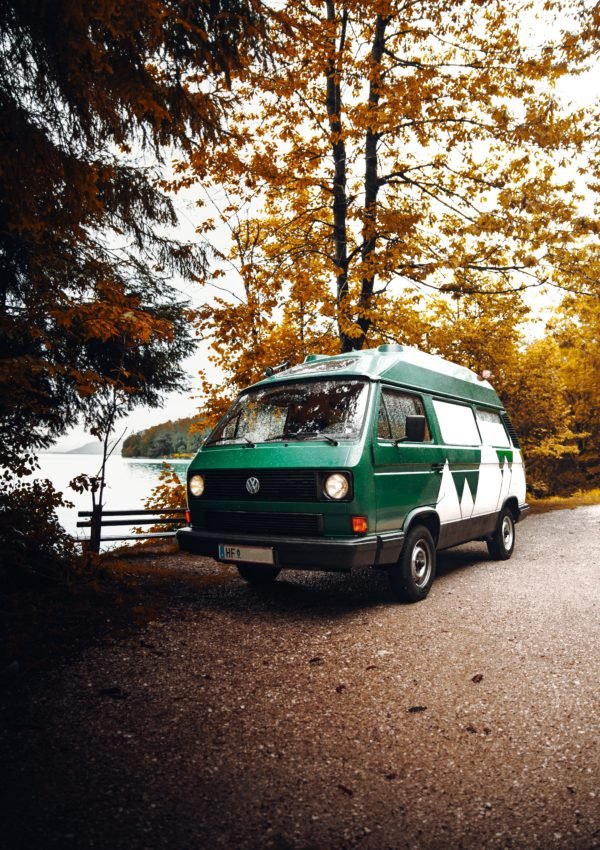
A hard-topped metal vehicle is the other safe option. Protection comes from the metal shell, which directs current around the occupants, much like a rough Faraday cage, not from the rubber tires, a common myth the NWS works to correct. Convertibles, soft-top vehicles, motorcycles and bicycles offer no protection.
How far lightning reaches
Lightning can strike well away from the heaviest rain. The NWS notes that strikes can occur as far as 10 miles from the storm, which is why its guidance is simple: if you can hear thunder, you are close enough to be struck. Blue sky overhead does not mean the threat has passed.
How a Lightning Strike Injures People
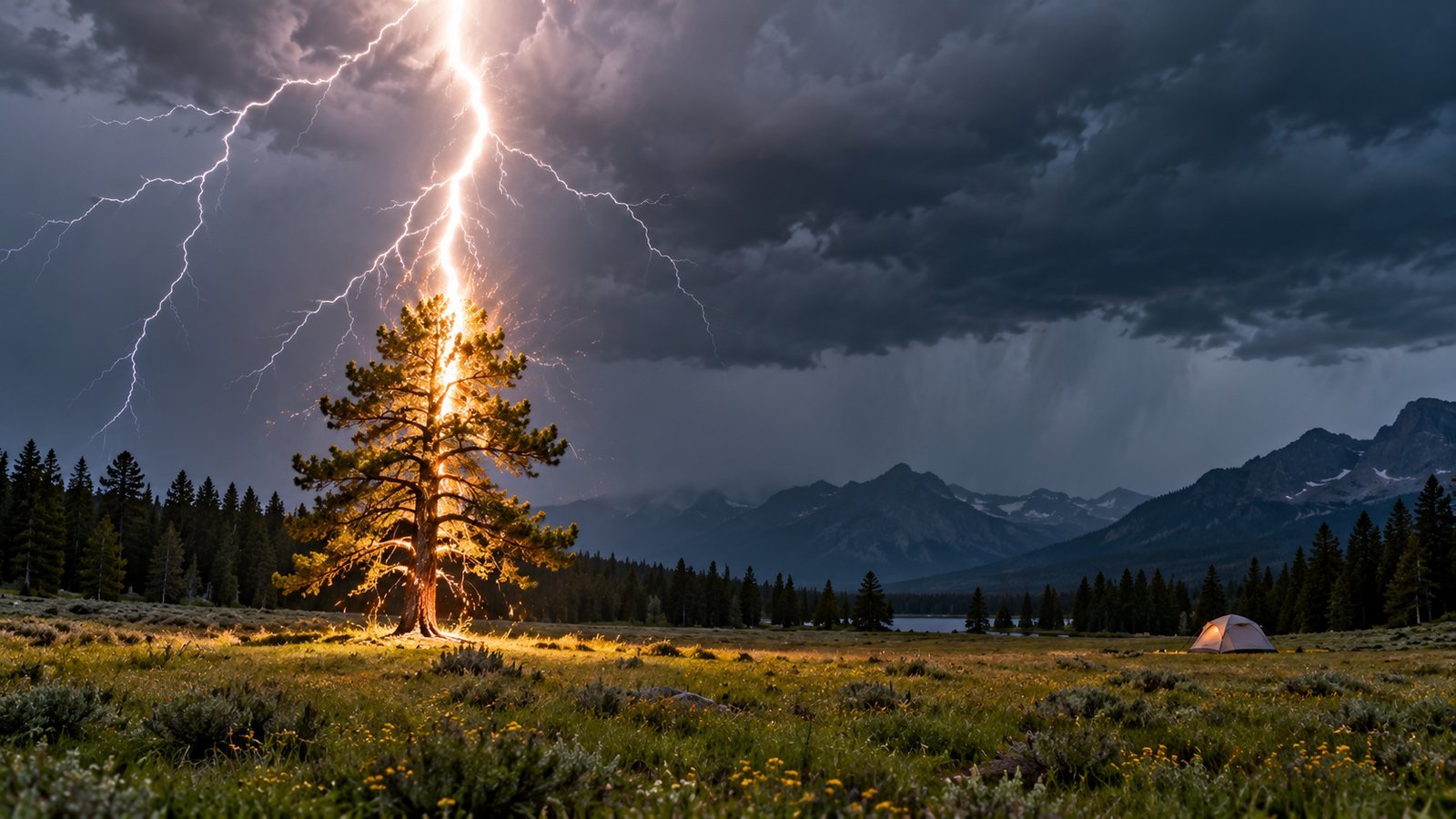
Knowing how lightning actually hurts people explains why the safety rules are what they are. The NWS describes five ways lightning strikes people, and any of them can be deadly.
- Direct strike: the person becomes part of the main lightning channel. The NWS says direct strikes are less common than the other types but potentially the most deadly, and they most often happen to people in open areas.
- Side flash: lightning hits a taller object, such as a tree, and part of the current jumps to a person standing within a foot or two of it. The NWS notes that most side flash victims had taken shelter under a tree to avoid rain or hail, which is exactly why campers should not wait out a storm under the nearest tall tree.
- Ground current: when lightning strikes, much of the energy spreads outward along the ground. Because it affects a much larger area, the NWS says ground current causes the most lightning deaths and injuries. It is why a tent pitched near a struck tree is dangerous even if the tent itself is not hit.
- Conduction: lightning travels long distances through wires and metal. Metal does not attract lightning, the NWS explains, but it gives the current a path. Fences, metal poles and wet guylines can carry current toward people touching them.
- Streamers: upward discharges that rise from the ground and objects as lightning approaches. A person who is part of a streamer can be injured even if the main bolt hits somewhere else.
What this means at camp
Each mechanism points back to the same advice. Distance from tall objects reduces side flash, getting off open ground reduces direct strikes, and being inside a hard-topped car or enclosed building with plumbing and wiring is the only reliable lightning protection. Set down trekking or hiking poles, fishing rods and metal tent poles and step away from them when a storm is close. They do not attract lightning, but holding metal provides one more path for current if a strike lands nearby.

Watching the Weather Before and During the Trip
Most lightning injuries outdoors can be avoided with a little planning. The NWS advises checking the weather forecast for the specific area you will visit, since conditions at a mountain campground can differ sharply from the forecast in the nearest city. Turn on severe weather alerts in your phone’s settings before you lose signal, so warnings reach you whenever coverage returns.
Three kinds of NWS products matter most to campers:
- A Severe Thunderstorm Watch means conditions are favorable for severe storms to develop in and near the watch area
- A Severe Thunderstorm Warning means severe weather is happening or about to happen; take action right away
- Flash Flood Watches and Warnings follow the same pattern for rapidly rising water
The NWS classifies a thunderstorm as severe when it produces hail one inch or larger, winds of 58 miles per hour or stronger, or a tornado. Even a storm that does not meet that bar can produce deadly lightning.
Tools that work without a signal
Cell service at campgrounds can be spotty. A NOAA Weather Radio receives NWS broadcasts directly and can sound an alert for warnings in your area, and the NWS recommends portable weather radios for outdoor activities. Phones can receive Wireless Emergency Alerts where there is coverage. Checking the sky matters too: towering, dark clouds, a sudden drop in temperature and gusty wind often arrive shortly before a storm.
Planning the day around storms
Mountain thunderstorms commonly develop in the early afternoon. The NWS suggests that hikers in mountainous areas start early and be off exposed summits and ridges by noon. Plan the longest or highest hikes for the morning, and save afternoons for activities close to the car.

Choosing a Campsite With Storms in Mind
At a developed campground the site is chosen for you, but you still decide where the tent goes on it, and in dispersed areas you choose everything. A few choices make a storm much easier to handle.
Keep the vehicle close. The single best lightning plan for car campers is a car parked within a short walk of the tent. Hike-in sites farther from the parking area need a closer look at nearby buildings.
Avoid high, exposed spots. The NWS advises staying off open fields, hilltops and ridges during storms, and its guidance for campers in open areas is to set up in a valley, ravine or other low area. That advice comes with a catch: low areas are also where water collects, so pick a spot that is lower than the surroundings but not in a drainage, wash or creek bed.
Watch the trees. Tall, isolated trees attract strikes, and the NWS recommends staying near a lower stand of trees when in a forest. Look up for dead trees and hanging branches as well, since storm winds bring them down. The campsite safety basics guide has more on reading a site before the tent goes up.
Stake and guy out the tent fully. A well-pitched tent with tight guylines handles gusts far better than one with half its stakes in the ground. Our tent buying guide explains rainflies, poles and features that matter in rough weather.

When You Hear Thunder: A Step-by-Step Plan
The NWS slogan is short for a reason: when thunder roars, go indoors. For campers, that usually means the car. A practiced plan makes the move quick and calm.
- Stop what you are doing at the first thunder. Do not wait to finish cooking, packing or a game.
- Grab the car keys, which should live in an agreed spot. Phones, a headlamp and rain jackets can come too if they are within reach.
- Get everyone into a hard-topped vehicle or enclosed building. Close the windows.
- Inside the vehicle, avoid touching metal parts connected to the frame and keep hands in laps.
- Wait 30 minutes after the last thunder before going back outside. Each new rumble resets the clock.
- Use the time to check radar or a weather radio for flash flood warnings and to see whether more storms are following.
The 30-minute wait feels long when the rain has stopped and the sun is out, but lightning from the trailing edge of a storm is a real hazard. Bring a deck of cards or a book in the glove box for these breaks.
What to leave behind
Gear can wait. Do not return to the tent to rescue sleeping bags, close windows or loosen a flapping rainfly while thunder is still audible. Wet gear can be dried later, and our article on camping in the rain has practical tips for keeping a soggy trip on track.
If You Cannot Reach a Car or Building
Backpackers, paddlers and campers at walk-in sites sometimes have no vehicle or building nearby. The NWS is clear that nothing outdoors is truly safe, and that the following steps only slightly lower the risk. They are a last resort, not an alternative to shelter.
From NWS guidance:
- Avoid open fields, the tops of hills and ridges
- Stay away from tall, isolated trees and other tall objects; in a forest, stay near a lower stand of trees
- Spread a group out so current cannot travel between people
- Stay away from water, wet items such as ropes, and metal objects such as fences and poles, which conduct electricity over long distances
Backcountry guidance from NOLS
The National Outdoor Leadership School (NOLS), whose backcountry lightning guidelines the NWS points readers toward, recommends spreading group members about 50 feet apart when lightning is close. The spacing lowers the chance that several people are hurt at once and leaves others able to give first aid. NOLS describes the lightning position, crouching low with feet together, as a last resort only when no safer terrain is reachable; the NWS notes that it does not make a person safe.
Paddlers should head for shore at the first sign of a storm. The NWS notes that most lightning injuries and deaths on boats happen on small boats without a cabin.
Cave entrances and rock overhangs are not refuges either. The NWS warns that lightning can arc across small overhangs and travel into cave entrances.

Wind, Hail and Flash Floods
Lightning gets most of the attention, but the other parts of a thunderstorm cause plenty of camping damage.
Wind
Downburst winds can snap branches, collapse tents and send loose gear flying. Before a storm arrives, put away canopies and pop-up shelters, which catch wind like sails, and secure chairs, tables and coolers. A vehicle protects against falling limbs as well as lightning, though it is still wise not to park directly under a dead or leaning tree.
Hail
Large hail can injure people and damage tents and windshields. Severe hail is another reason to wait out a storm inside a hard-topped car rather than a tent.
Flash floods
Heavy rain can turn a dry wash or quiet creek into a torrent within minutes, sometimes from a storm upstream that never reaches camp. Ready.gov warns that six inches of moving water can knock a person down and one foot of moving water can sweep a vehicle away. Never pitch a tent in a dry streambed or narrow canyon bottom, know the route to higher ground, and do not drive across flooded roads or low-water crossings. The NWS phrase for this is turn around, don’t drown.

After the Storm Passes
Once 30 minutes have passed since the last thunder, walk the site before settling back in. Look for broken branches still hanging in the trees, pooled water under the tent, loosened stakes and soaked gear. Check the forecast again; one storm is often followed by another in the same afternoon.
Swap wet clothing for dry layers quickly. Cool, damp evenings after a storm can chill people, especially children, faster than expected. Keeping a set of dry clothes sealed in a bag in the car is one of the most useful storm habits a family can build.
Pack a rescue blanket
A lightweight emergency rescue blanket, the foil-like sheet sold for first aid kits, is worth carrying on storm-prone trips. It weighs almost nothing and helps keep a wet, chilled person warm while you wait out a second storm or wait for help. It provides no protection from lightning, so use it only once everyone is in a safe place.
If someone is struck
Lightning strike victims do not carry an electrical charge and are safe to touch, according to the NWS. Call 911 right away. The NWS notes that cardiac arrest is the immediate cause of death in lightning fatalities, so if the person is not breathing or has no pulse, begin CPR and use an automated external defibrillator if one is available. Many strike survivors also have burns, hearing problems or other injuries that need medical care even when they seem fine at first. This is general safety information, not medical advice; a first aid or CPR course from the American Red Cross or a similar provider is the best preparation.

Kids, Pets and Group Camping
Children follow a storm plan better when they have practiced it. Walk through it on arrival: where the car is, who carries the keys and what everyone does at the first thunder. Making the dash to the car a quick game on the first afternoon helps it feel routine rather than scary.
Dogs should ride out storms with their people inside the vehicle, never tied up at the campsite. Thunder frightens many dogs, and a panicked dog on a long leash can tangle itself or slip a collar. Bring a familiar blanket and keep the leash on in the car.
Large groups need more time to reach shelter. The NWS notes that groups should have a lightning safety plan and start moving earlier, because getting many people to safety takes longer. Assign one adult to watch the weather and make the call, so nobody waits for a consensus while the storm closes in.

Frequently Asked Questions
Is it safe to stay in a tent during a thunderstorm?
No. The National Weather Service says a tent offers no protection from lightning. Move to a hard-topped vehicle or fully enclosed building and wait 30 minutes after the last thunder.
Is my car safe in a lightning storm?
A hard-topped metal vehicle with the windows closed is one of the safest places available, because the metal shell carries current around the people inside. The rubber tires are not what protects you.
How long should I wait after thunder to go back outside?
The NWS recommends waiting 30 minutes after the last thunder. Any new thunder restarts the count.
What if there is no car or building near my campsite?
Get off ridges and hilltops, stay away from tall isolated trees, water and metal, and spread the group out. These steps only reduce the risk slightly, so plan future trips with a nearby shelter in mind.
Can I use a sleeping pad or the lightning crouch to stay safe?
No position or piece of gear makes you safe outdoors. NOLS teaches the lightning position as a last resort, and the NWS stresses that the only safe places are enclosed buildings and hard-topped vehicles.
Are campground picnic shelters safe from lightning?
No. Open-sided shelters and pavilions keep rain off but do not protect against lightning, according to the NWS.
What is a side flash from lightning?
A side flash happens when lightning strikes a taller object, such as a tree, and part of the current jumps to a person standing close to it. The NWS says most side flash victims were sheltering under a tree.
Should I put down my hiking poles in a thunderstorm?
Yes. Metal does not attract lightning, but it can conduct current from a nearby strike. Set trekking poles and other metal gear down, step away from them and head for a car or enclosed building.
Does a car protect you like a Faraday cage?
A hard-topped metal vehicle works roughly like one: the metal shell carries lightning current around the people inside. Keep the windows closed and avoid touching metal parts.
Sources: National Weather Service (lightning safety outdoors, lightning myths, severe thunderstorm definitions, watches and warnings, NOAA Weather Radio, Turn Around Don’t Drown); NOLS backcountry lightning safety guidelines; Ready.gov (floods); American Red Cross (first aid and CPR training); National Weather Service, Lightning Science: Five Ways Lightning Strikes People.