
Quick answer: rain itself rarely ruins a trip. Wet clothing, a poorly placed tent and ignored weather warnings do. Choose slightly raised ground, rig a tarp over your cooking area, keep one set of clothes strictly dry for sleeping, and treat thunder as a signal to get into a car.
Few things test a camping trip like a gray sky that turns into a steady drizzle by mid-afternoon. Some people pack up and head home. Others discover that a wet forest smells wonderful, that campgrounds go quiet, and that a card game under a tarp can be the best part of the weekend. Both choices are fine, as long as the decision is made with a clear head and a reliable plan.
This guide walks through the whole process, from reading the forecast to drying out afterward. It sticks to widely accepted practice and to safety guidance from agencies such as the National Weather Service and the Centers for Disease Control and Prevention (CDC). Where the answer depends on your tent, your campground or your local conditions, the text says so rather than guessing.
Read the Forecast Like a Camper
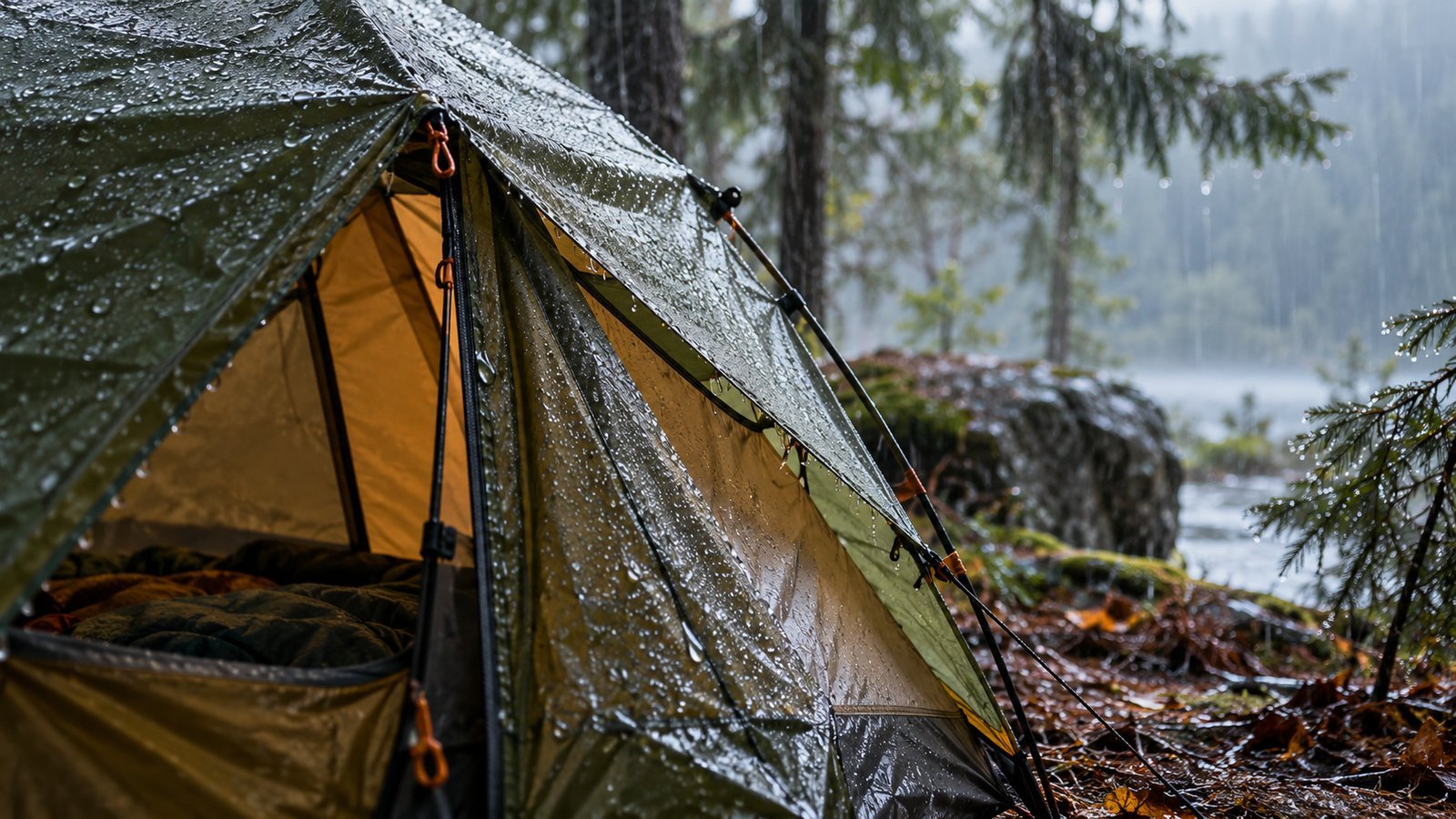
A rain icon on a weather app tells you very little. Look instead at timing, intensity and the possibility of thunderstorms. Light rain that clears by evening is a very different trip from a slow-moving system with heavy downpours. The National Weather Service (weather.gov) publishes forecasts by location and also issues watches and warnings, so check the page for the area around your campground, not just your home town. Conditions near mountains, lakes and coasts can differ sharply from the nearest big city.
Check again the morning you leave and every time you get a signal at camp. Forecasts change, and the National Oceanic and Atmospheric Administration (NOAA) recommends tracking weather around you with a phone, radar or a portable NOAA Weather Radio when you are camping and away from sturdy shelter. A battery or hand-crank weather radio costs little and keeps working when cell service does not.
Decide in advance what would make you leave. A written list sounds fussy, yet it removes the temptation to bargain with yourself at midnight. Reasonable triggers include a thunderstorm warning for your area, a flash flood watch or warning, water rising toward your site, or anyone in your group becoming cold and unable to warm up.
Choose a Pitch That Sheds Water
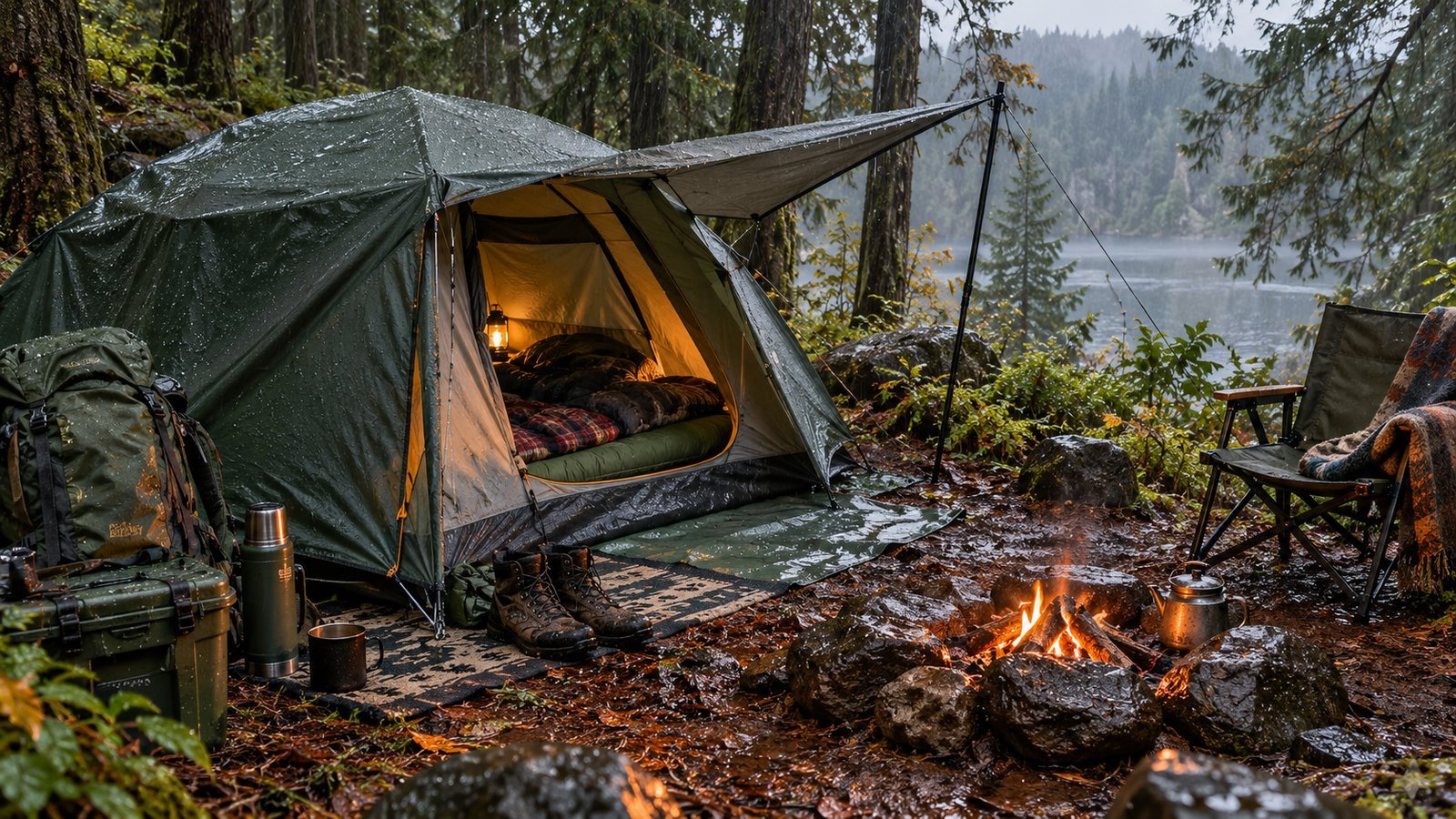
Where you put the tent matters more than almost any piece of equipment. Rain flows downhill and collects in low spots, so a flat patch that looks perfect in daylight can become a puddle by morning. Look for ground that is level but slightly higher than its surroundings, with soil that drains instead of pooling. Avoid shallow dips, dry creek beds and the lowest corner of a campsite.
Flooding deserves real respect. Ready.gov explains that just six inches of fast-moving water can knock an adult down and that a foot of moving water can sweep a vehicle away, which is why the standing advice is to turn around rather than drive or walk through flooded areas. Near a stream or river, ask the camp host or a ranger how the water behaves after heavy rain.
Trees offer shelter from wind and a bit of rain, but they bring their own problems. Dead branches can fall in wet, windy weather, so look up before you stake anything. Skip any spot under a branch that looks cracked, hanging or leafless when the rest of the tree is green. Also notice which way the wind is blowing and point the tent door away from it, so opening the zipper does not invite a face full of water.
Lightning changes the calculation for open ground. The National Weather Service states plainly that a tent offers no protection from lightning, and that there is no safe place outside when thunderstorms are in the area. Pick a spot you can leave quickly, and know where your vehicle is parked. More on that in the safety section below.
Set Up Camp So Everything Stays Dry
Start with the tent itself. Pitch it with the rain fly fully attached and tightened, since a sagging fly that touches the inner wall wicks water inside. Follow the manufacturer instructions for staking and guy lines, because designs differ. A footprint or ground sheet under the tent can protect the floor, but make sure it does not stick out past the tent edge. A ground sheet that extends beyond the walls collects rainwater and channels it underneath you.
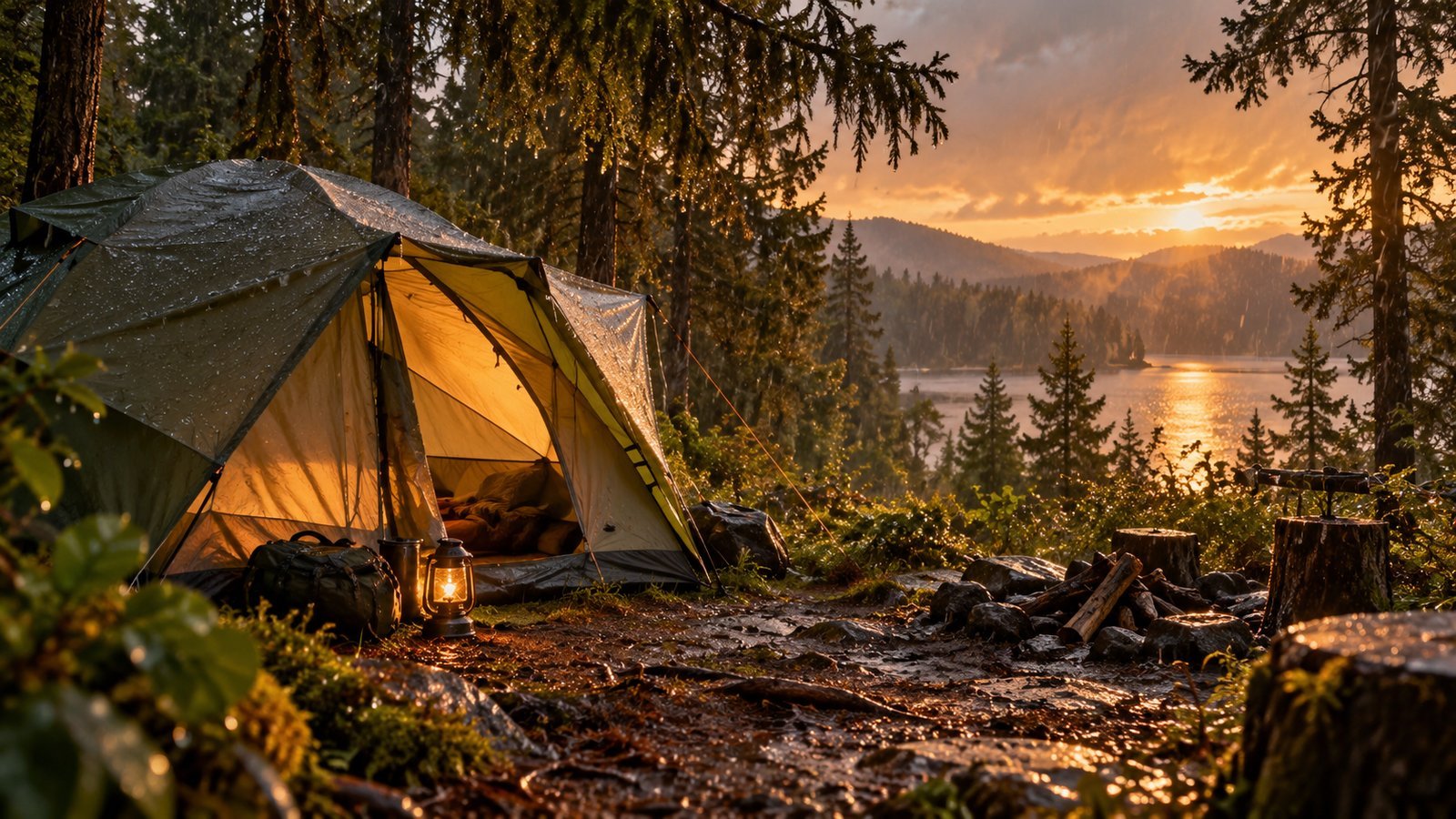
Next, build a dry zone for living. A tarp strung above the picnic table or cooking area turns a soggy campsite into a usable one. Angle it so water runs off one side, and tie one corner lower than the rest. Run the low corner away from walkways and away from your tent. A flat tarp that cups water becomes heavy and may collapse, so give it a pitch.
Think about the transition zone at the tent door. Wet boots and jackets are the main way moisture gets inside. Keep a small mat or a spare tarp scrap at the entrance, take off muddy footwear in the vestibule, and hang wet outer layers there instead of inside the sleeping area. Without a vestibule, a bin or a trash bag turns the corner of the porch into a boot shelf.
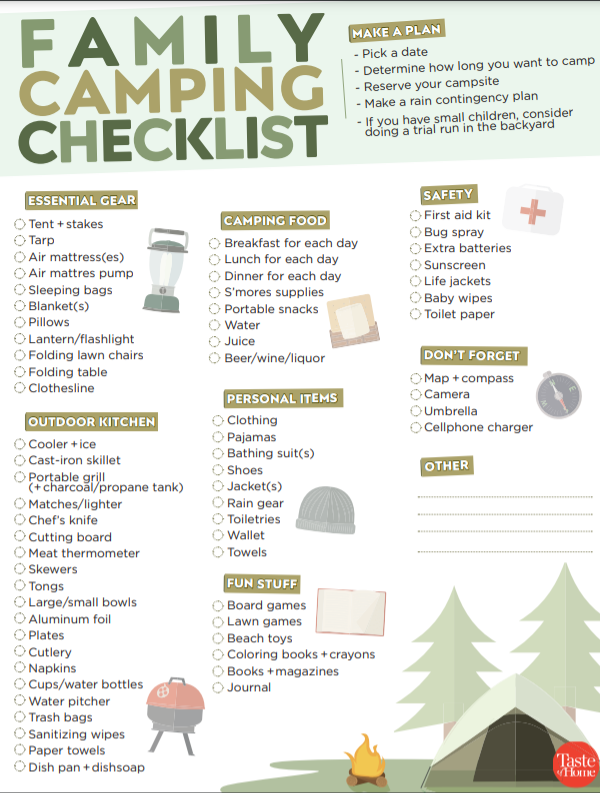
Organize gear into dry bags or heavy-duty trash bags lined inside packs. A rule that works well: anything that must stay dry goes into two layers of protection, and anything already wet goes in a separate bag so it cannot spread damp. The family camping checklist and the car camping checklist both make good starting points for deciding what to pack, and rain mostly adds extra tarps, cord, towels, dry bags and spare socks.

Dress for Wet Weather Without Getting Cold
The CDC points out that hypothermia is not just a deep-winter problem. It can occur at cool temperatures above 40°F if a person becomes chilled from rain, sweat or cold water. A rainy night in a tent can be cold enough for trouble, particularly for children and anyone who is tired or underfed. Staying dry is the whole game.
Build a layered clothing system. Next to the skin, choose materials that handle moisture well, such as synthetic fabrics or wool, and avoid cotton for hiking or active work because it holds water and chills the body. Add an insulating layer such as fleece, then a waterproof shell with a hood. Rain pants help more than people expect, since wet legs drain warmth fast.
Keep one set of dry sleeping clothes and protect it like treasure. Pack it in a sealed bag, never wear it around camp, and change into it before bed. The same rule applies to a pair of thick socks. Even when everything else is damp, dry sleepwear and a warm sleeping bag make a big difference at night.
Watch for early signs of trouble. The CDC lists shivering, exhaustion, confusion, fumbling hands, memory loss, slurred speech and drowsiness as warning signs of hypothermia in adults, while babies may show bright red, cold skin and very low energy. If someone shows these signs, get them out of wet clothing, into shelter and warmed up, and seek medical help. A body temperature below 95°F is an emergency according to the CDC. This article is general information and not medical advice, so when in doubt, call for professional help.

Cook, Eat and Keep Spirits Up
Hot food lifts morale in bad weather, but the rules about fire and fumes become stricter. Never cook inside a tent. The CDC reports on fatal carbon monoxide poisonings linked to fuel-burning stoves and grills used inside tents, and notes that carbon monoxide is odorless. Opening a tent flap does not make the practice safe. Keep stoves, lanterns, heaters and charcoal outside and well away from sleeping areas.
Use your tarp-covered kitchen for the stove, keeping the flame clear of the tarp itself and of any hanging fabric. Allow plenty of space around the burner, set the stove on a stable surface, and keep a close eye on it. Wet ground and slick tables make spills more likely, so cook slowly and keep kids a few steps back.
Plan simple meals for rainy days. One-pot dishes, soups, instant oatmeal and hot drinks all work well, and so do sandwiches built from the cooler without any stove at all. The posts on a three-day camping food list and premade camping meals have plenty of ideas that need little more than boiling water or a quick warm-up. A thermos of hot water gets you tea, cocoa or instant soup without lighting anything in a hurry.
Campfires are a different story. Wet wood is hard to light, and burn bans or smoldering coals add risk. Where fires are allowed and you decide to try one, build it only in an approved fire ring and put it out thoroughly afterward using the drown, stir, drown, feel method taught by Smokey Bear. Never light a fire under the tarp or near the tent.
Keeping Kids Busy and Spirits Up
Rain tests patience more than skill. A group with a plan for entertainment can enjoy a wet afternoon, while one without may start counting the hours. Bring cards, a small board game, a book, paper and colored pencils, or a deck of trivia questions. The article on fun camping games for kids and adults includes plenty of options that work under a tarp or inside a vehicle.
Give children real jobs. Let them tie off the tarp under supervision, pick the dry-clothes bag or lead a puddle walk in rain gear when there is no lightning. Kids who feel useful tend to complain less, and a bit of mud play can turn a gray day into a story they tell for years. Keep everyone fed and warm, because tired and hungry people find rain much harder to enjoy.
Build in rest. Naps in a dry tent while rain taps the fly are one of the quiet pleasures of camping. Bring a book, a flashlight or headlamp and a spare set of batteries, since overcast days get dark early.
Know When Thunder Means Leave the Tent
Thunderstorms are the one kind of rain that calls for action rather than patience. The National Weather Service advice is simple: when thunder roars, go indoors. At a campground that means a substantial building with plumbing and wiring, or a hard-topped metal vehicle with the windows up. A tent, an open picnic shelter, a shed or a covered porch does not protect you from lightning.
The NWS gives a camping example in its own guidance. Say you are cooking dinner and hear distant rumbles, with a tent and an open-sided picnic shelter nearby, head to your vehicle. Then wait at least 30 minutes after the last rumble of thunder before going back to camp. The agency adds that people have been struck because they went back outside too soon, so the half hour is worth honoring even if the sky looks brighter.
Plan for this before you need it. Park where you can reach the car quickly, keep keys somewhere obvious, and tell everyone in the group what the plan is. For backpackers who cannot reach a vehicle, NWS points to tips from the National Outdoor Leadership School as a last resort, and cautions that there is no truly safe place outside. Choosing to postpone or cut short a trip when severe storms are forecast is a sound decision.
Flash flooding can follow heavy rain even when your own site is dry, especially downstream of hills or in narrow valleys. Once a flood warning is issued, or water begins to cover roads or approach your tent, move to higher ground right away. Do not wait for official word if conditions are visibly getting worse. Never drive into a flooded road to get out.

Break Camp and Dry Out Afterward
Packing up in the rain is a skill. Shake as much water as you can off the tent and fly before folding, and pack the wet fly separately from the inner tent when you can. Clean mud off stakes and poles. Take photos of the site before you leave so you can see whether you left it as you found it.
At home, set the tent up or hang it fully in a dry, shaded place as soon as you can. Storing damp fabric in a stuff sack invites mildew, which can damage waterproof coatings and leave odors that are hard to remove. Open every zipper and vent, wipe the floor, and let the tent dry completely before you put it away. Sleeping bags, pads, clothing, tarps and boots need the same treatment. Check the manufacturer care instructions for each item if you are unsure.
Finally, write down what worked and what did not. Maybe the tarp needed a longer cord, or a dry bag leaked at the seam, or the kids wanted more indoor activities. A short list, saved with your camping gear, makes the next wet trip easier.

Frequently Asked Questions
Is it safe to camp in the rain?
Light to moderate rain is manageable with the right gear and site. Thunderstorms, flash flood warnings and cold, soaking conditions raise the risk considerably, so be ready to leave. The National Weather Service says no place outdoors is safe during thunderstorms and that a tent does not protect against lightning.
Will my tent leak?
It depends on the tent, its age and how it is set up. Pitch it with the rain fly fully attached and taut, keep the inner tent from touching the fly, and follow the manufacturer instructions. Seams and coatings can wear over time, and the maker of your tent can say what repair or reproofing products suit it.
How do I keep my sleeping bag dry?
Store it in a waterproof bag or liner inside your pack, keep it away from tent walls, and never use it as a towel. A dry set of sleeping clothes helps too. Wet insulation loses much of its warmth.
Can I use a stove or heater inside my tent?
No. Fuel-burning stoves, heaters, lanterns and grills release carbon monoxide, which is odorless and can build up quickly in enclosed or partly enclosed spaces. Use them outdoors, away from sleeping areas.
How long should I wait after thunder before leaving shelter?
The National Weather Service recommends staying in a safe building or hard-topped vehicle for at least 30 minutes after the last thunder you hear.


Leave a Reply