
Quick answer: pick a campground that allows dogs, visit the vet before you go, keep your dog on a leash no longer than 6 feet, pack water, food, waste bags and a safe way to secure your dog, watch for heat and wildlife, and never leave a dog in a parked vehicle.
A dog who loves the car and the backyard may be a very different animal at a campground full of smells, sounds and strangers. Some dogs take to camping at once. Others need practice, patience and a plan. Planning with your dog’s personality in mind makes the difference between a trip everyone enjoys and one that ends early.
This guide covers the practical side of a first trip: where to go, how to prepare, what to bring, how to manage the day and night, and what to do about heat, ticks, wildlife and waste. It draws on the National Park Service (NPS), the Centers for Disease Control and Prevention (CDC) and Leave No Trace guidance. Product mentions are kept generic on purpose, since the right gear depends on the size, coat and temperament of your own dog.
One caveat applies throughout. Rules about pets are set by each campground, park and forest, and they differ widely. Always confirm the current policy before you book, and follow it exactly.
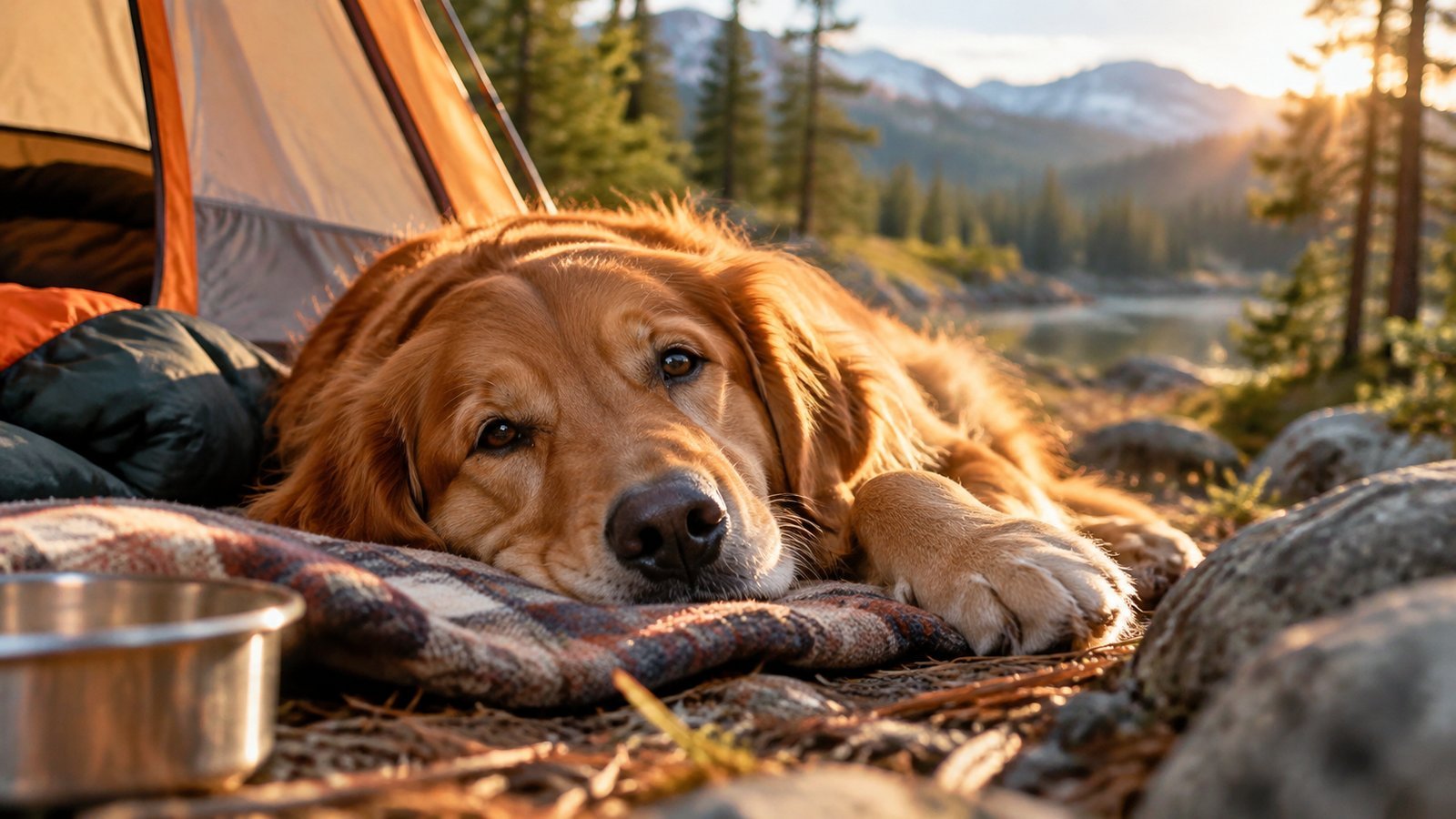
Choose a Dog-Friendly Place
Start with the rules, not the scenery. The NPS says that many national parks do not allow pets on hiking trails or boardwalks, and that visitors should always check with the park before bringing a pet. Some parks welcome dogs only in campgrounds, parking areas and along roads. State parks, national forests and private campgrounds also set their own rules, including limits on the number of pets per site and restrictions on certain breeds or on leaving dogs unattended.
Read the pet policy when you book and confirm by phone if anything is unclear. Look for details on leash length, whether dogs are allowed in cabins or only at tent sites, which areas are off limits, and whether there is a fee. Ask about nearby veterinary clinics too, in case you need one.
Think about the character of the campground. A quiet, spread-out site gives a nervous dog more space than a crowded loop where neighbors sit a few feet away. Sites at the end of a loop or beside a wooded buffer tend to see less foot traffic. For a dog that barks at every passerby, a corner site and a visual barrier such as a tarp wall can help.
Finally, match the trip to the dog. A senior dog, a puppy and a high-energy adolescent need different things. The NPS reminds owners that older dogs may not have the endurance they once did and recommends choosing trails appropriate for the dog’s fitness. Health concerns? Ask your veterinarian.
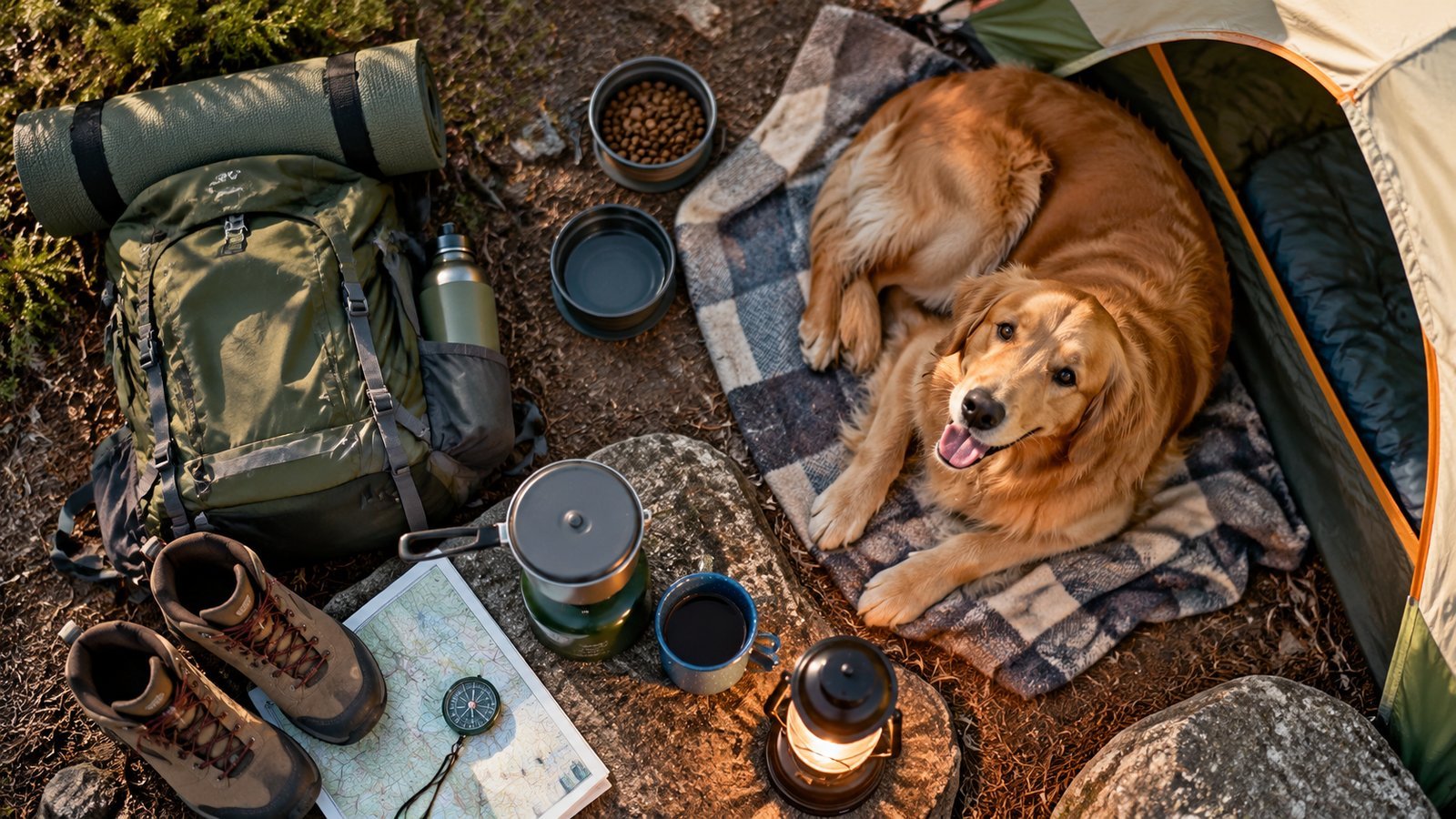
Prepare Your Dog Before You Go
Schedule a vet visit before the trip. The CDC advises that dogs be examined and be up to date on vaccinations before travel, and suggests asking a vet about flea, tick and heartworm prevention suited to the destination. The NPS agrees, noting that fleas, ticks and waterborne pathogens can cause serious illnesses and that a plan should reflect the activities you have in mind. Some places, and any travel across borders, may call for a health certificate, so ask your vet and check local requirements well ahead of time.
Make sure identification is current. A collar with a tag showing your phone number is the minimum, and a microchip with up-to-date contact details gives a backup if a collar comes off. Bring a recent photo of your dog on your phone and keep vaccination records in your travel folder.
Practice basic manners. Your dog should respond reliably to commands such as sit, stay, come and leave it, even when distracted. The NPS notes that a busy trail can overwhelm a young or untrained dog, and that owners of reactive dogs should consider whether a crowded campground is the right choice. If your dog lunges at other dogs or strangers, start with a quiet weekend or a night in the backyard first.
Rehearse the trip at home. Pitch the tent in the yard or living room, let your dog explore it, and feed meals inside. Practice sleeping arrangements, whether your dog will lie on a mat, in a crate or on a dog bed in the tent. Our post on backyard camping with kids describes an easy way to test the whole setup before leaving, and it works just as well with a four-legged family member.
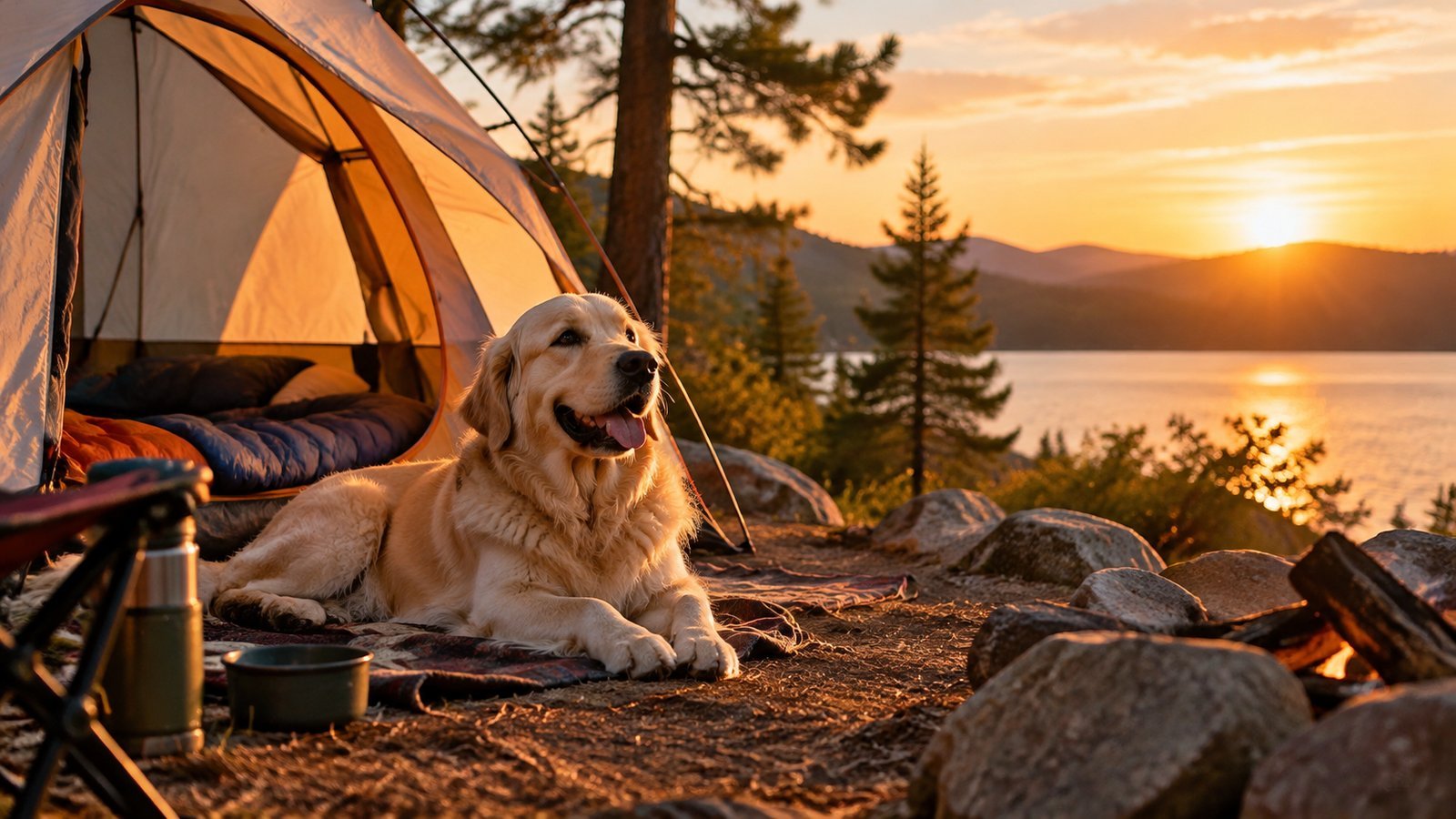
Pack for Your Dog
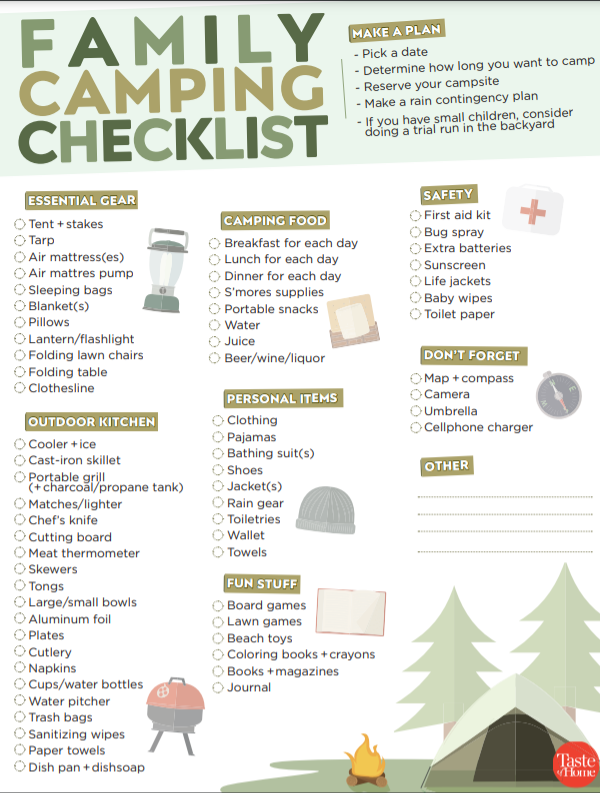
Think of your dog as a camper with a short but important checklist. Alongside your own list from the family camping checklist, include the following dog items:
- Enough food for the whole trip plus an extra day, stored in a sealed container
- Fresh drinking water and a collapsible or sturdy bowl
- A 6-foot leash, plus a spare, and a secure collar or harness with ID
- A tie-out, stake or cable for the campsite, if the campground allows one
- A crate, mat or dog bed and a blanket for the tent
- Waste bags and a sealable trash bag
- Any medicines, along with your vet’s phone number
- A towel for muddy paws and wet fur
- Tick remover and a basic pet first aid kit, as advised by your vet
- Reflective or light-up gear for the collar so you can see your dog at night
Choose items that suit the size and coat of your dog. A thin-coated dog may need a jacket on a cold night, and a heavy-coated dog may need extra shade and water on a warm one. Booties can protect paws on rough ground, as the NPS suggests for longer hikes, though many dogs need practice wearing them first.
For water, plan ahead. Bring enough for your dog to drink throughout the day. The NPS says to carry extra water and to take frequent water breaks, and waterborne pathogens are a real concern in lakes and streams, so avoid letting your dog drink from questionable sources.

Manage Your Dog at the Campsite
On arrival, walk your dog around the site on a leash before you unpack. Let your dog sniff the edges so the space becomes familiar. Then set up with your dog in mind: place the tent door where you can watch the area, keep food and trash away from the dog’s resting place, and put the tie-out or crate in a shaded spot.
Keep your dog leashed. The NPS says to keep a dog on a 6-foot leash on trails, and many campgrounds and parks require a leash no longer than 6 feet at all times. A dog who has never been tied out may chew the line or get tangled, so supervise until it is comfortable. Never leave a dog tied up and unattended, and check campground rules about leaving dogs alone, since many ban it.
Control barking. A campground depends on quiet hours, and a barking dog can ruin the stay for neighbors. Exercise your dog well before bed, offer a chew toy, and keep it close to you at night. For a dog stressed by unfamiliar sounds, a white noise app or a familiar blanket may help. Respect others by moving away from the neighbors for walks and by picking up after your dog at once, which is also part of being considerate of others in the Leave No Trace principles, discussed in our Leave No Trace guide.
Think about the campfire. Dogs can burn paws or singe fur, and food around the fire attracts them. Keep your dog back from the flames, hold the leash firmly when others cook, and follow the routine in our campfire safety guide so no embers are left behind for a curious nose.

Protect Your Dog From Heat, Cold and Parasites
Heat is a major danger. The NPS points out that dogs do not sweat like humans, so they are at higher risk of overheating. Watch for excessive panting, drooling or vomiting. Spot them, and move your dog to a cooler place and offer water. Schedule walks for cooler parts of the day, rest often in the shade, and keep a close eye on short-nosed breeds, older dogs, overweight dogs and puppies, which can struggle more in warm weather. Call a veterinarian when worried.
Never leave a dog in a parked vehicle in warm weather. The CDC warns that temperatures inside a parked car can rise rapidly and be deadly, even when the weather outside does not feel hot. Cracking the windows does not solve the problem. Leave the dog with someone you trust or bring the dog along.
Hot surfaces matter as well. Pavement, sand and rock can burn paws, so test the surface with the back of your hand before you walk. Cold nights call for equal care. A short-haired dog may need an insulated bed and a jacket, and a damp dog in a chilly tent can lose heat quickly. Keep your dog dry, and consider a pad under the dog bed to block cold ground.
Ticks and fleas deserve attention. Talk with your vet about preventives, then check your dog from nose to tail after each outing, including between the toes, in the ears and under the collar. Use a tick remover as your vet recommends. Dogs can also pick up burrs and foxtails, so brush them out. Avoid letting dogs swim in stagnant water or drink from puddles.

Respect Wildlife, Neighbors and the Land
Your dog is your responsibility. The NPS says to keep pets away from wildlife, since dogs can startle or provoke animals and are themselves at risk of injury. Pets can also pass diseases to wildlife, and the agency lists examples including heartworm and canine parvovirus, noting that keeping pets vaccinated helps protect them and wild animals. Never allow your dog to chase animals, dig at burrows or approach nests.
Store dog food as carefully as your own. Rocky Mountain National Park counts pet food and bowls among the items that must be secured, and the NPS notes that anything with a scent can attract bears and other animals. Feed your dog at set times, pick up leftover food and keep sealed containers in the food locker or hard-sided vehicle, following local rules.
Pick up waste every time. The Leave No Trace Center says to pack it in and pack it out, including pet waste, and the NPS encourages owners to follow those principles on trails. Bag the waste and carry it to a trash can. Do not leave bags beside the trail to collect later, and do not bury waste in the campsite.
Be considerate of others. Not every camper loves dogs, and some people are afraid of them. Keep your dog close when passing, ask before letting it greet anyone, and keep it away from other campsites. Courtesy keeps dog-friendly campgrounds open to everybody.

Settle Your Dog in for the Night
Nights are where first trips often go wrong. A dog that is used to a bed at home may not sleep in a tent full of new sounds. Plan the arrangements in advance. Many people place a crate or familiar bed in the tent beside their own sleeping pad. Others use a sleeping pad and blanket, keeping the dog leashed to a safe point inside. Whichever you choose, avoid letting your dog roam outside overnight.
Give your dog a last walk and a chance to relieve itself before bed. Keep a flashlight and spare leash at the tent door. Dogs may need to go out in the night, so be prepared to wake and walk them on a leash, checking the area with a light for wildlife as you go.
Think about cold nights and carbon monoxide. Do not heat a tent with a fuel-burning stove or lantern, since carbon monoxide can build up quickly in enclosed spaces and affects pets as well as people. Layer blankets and use an insulated pad instead.
In the morning, give water first and food after a short walk. Check for ticks, burrs and sore paws, and make a note of what worked. If the trip goes well, extend the next outing by a night. Otherwise, try a shorter stay or a different campground, and keep the pace gentle.

Frequently Asked Questions
Can I bring my dog to any campground?
No. Policies vary widely. Many national parks restrict pets to developed areas, and some campgrounds limit the number or type of pets. Check the specific rules before you book.
How long should my dog's leash be?
The NPS advises a 6-foot leash on trails, and many campgrounds and parks require a leash of 6 feet or shorter. Follow the posted rule for your location.
Can I leave my dog in the car for a few minutes?
The CDC warns that temperatures inside a parked car can rise quickly and be fatal, so do not leave dogs in vehicles in warm conditions.
Does my dog need any vaccines before camping?
Ask your veterinarian. The CDC and NPS both recommend being up to date on vaccinations and discussing parasite prevention, including ticks, fleas and heartworm, before you travel.
Is it safe to let my dog drink from a lake or stream?
The NPS notes that waterborne pathogens can cause serious illness in pets, so carry clean water for your dog and avoid stagnant or questionable sources.

Leave a Reply