Quick answer: dispersed camping, meaning camping outside developed campgrounds, is generally allowed on most U.S. Forest Service and Bureau of Land Management land unless an area is posted closed. Both agencies commonly limit stays to 14 days; on BLM land the standard rule is 14 days within a 28-day period, after which you must move more than 25 miles away. Camp on durable, already-used spots at least 200 feet from water, follow current fire restrictions, pack out all trash and check the local ranger district or field office before you go, because rules vary by area.
Dispersed camping is the backbone of free camping in the United States. Instead of a numbered site with a picnic table and a fee, you find a clearing along a forest road or a flat pull-off in the high desert and set up camp. There are no reservations and often no other people around.
That freedom comes with responsibility. There are no hosts, no trash cans and often no toilets, and the rules differ between the two main land managers: the U.S. Forest Service, which manages national forests and grasslands, and the Bureau of Land Management, which manages vast public lands concentrated in the West. This guide explains the rules for each, where they differ, and how to plan a trip that keeps you legal and leaves the site in good shape. For the bigger picture of free campsites, including campgrounds and overnight parking, see our complete guide to free camping in the US.
Sources: U.S. Forest Service dispersed camping guidance and Motor Vehicle Use Map information; Bureau of Land Management camping guidance and supplementary rules (43 CFR 8365.1-2); Leave No Trace Center for Outdoor Ethics; National Park Service backcountry camping pages. Rules vary by forest and field office; always check locally. Checked October 2026.
What Is Dispersed Camping?
The Forest Service describes dispersed camping as camping anywhere in the national forest outside of a designated campground. The term applies the same way on BLM land. Dispersed sites have no services: no trash removal, no running water and usually no toilets, tables or fire grates.
Dispersed camping usually takes one of three forms:
- Roadside dispersed camping: car or van camping at an existing pull-off or clearing along a forest or BLM road.
- Backcountry camping: hiking or paddling in and camping away from roads.
- Designated dispersed sites: some popular areas limit camping to numbered, free dispersed sites to protect the land. These are still primitive but more regulated.
Who manages what
National forests are managed by the U.S. Forest Service, part of the Department of Agriculture. BLM land is managed by the Bureau of Land Management, part of the Department of the Interior. Each forest has ranger districts, and the BLM has field offices; both can set local rules that override general guidance.
National Forest Dispersed Camping Rules
General Forest Service rules apply across most national forests, but each forest publishes its own orders. These are the rules you will see most often.
Where you can camp
Dispersed camping is generally allowed throughout national forests unless an area is signed or listed as closed. Many forests close areas near developed recreation sites, trailheads, picnic areas and certain watersheds. Some popular forests now allow camping only at designated dispersed sites.
Stay limits
Many national forests limit dispersed camping to 14 days in one location, and some set a limit within a longer period, such as 14 days in any 30. The specific limit varies by forest, so check the forest’s website or call the ranger district.
Vehicle access
The Forest Service publishes free Motor Vehicle Use Maps (MVUMs) for each ranger district. These show which roads are open to which vehicles and, in many forests, how far off a designated road you may drive to reach a campsite. Driving off designated roads is generally prohibited, even to reach a nice-looking clearing. MVUMs are available as free PDFs and in georeferenced form for mapping apps.
Distance from water
Leave No Trace recommends camping at least 200 feet, about 70 adult steps, from lakes and streams. Many forests have similar setback requirements, often 100 to 200 feet. Camping back from water protects shorelines and gives wildlife access.

BLM Dispersed Camping Rules
BLM land is often more open and less regulated than national forests, which makes it popular with van lifers and RVers, especially in the desert Southwest.
Where you can camp
The BLM states that dispersed camping is allowed on public lands unless otherwise posted or prohibited by a local rule. Look for existing campsites with evidence of prior use, and avoid closed areas, private inholdings and active mining claims.
Stay limits
Under BLM rules, you may generally camp on public lands for up to 14 days within a 28-consecutive-day period. After 14 days, you must move to a new location more than 25 miles away. Some field offices set different or shorter limits, especially in heavily used areas.
Long-term visitor areas
In parts of Arizona and California, the BLM operates Long-Term Visitor Areas where visitors can stay for months during winter by purchasing a permit. These are not free, but they offer an inexpensive option for extended desert stays.
Vehicle access
BLM travel management plans designate routes as open, limited or closed. Stay on existing routes, and do not drive across desert crusts or vegetation, which can take years to recover.
Designated Dispersed Sites vs Developed Campgrounds
Not every free site is a pick-your-own spot. Some national forests and BLM field offices limit camping in busy or sensitive areas to designated dispersed sites: numbered, primitive sites marked with a post or sign, often with a fire ring but no water, toilets or trash service. If an area uses designated dispersed sites, camping outside the marked sites is not allowed, even if the ground looks fine. The local forest order, ranger district or field office page will say so, and signs at the area entrance usually do too.
Developed campgrounds are the other end of the spectrum. They typically have picnic tables, fire rings, vault or flush toilets, trash collection and sometimes drinking water and a camp host who can answer questions and enforce quiet hours. They usually charge a nightly fee and many can be reserved on Recreation.gov. If you need a toilet, water or a guaranteed spot, a developed campground on public land is often the easier choice for a first trip.
- Dispersed camping: no fee, no amenities, you choose an existing site where allowed.
- Designated dispersed sites: no fee in most places, no amenities, you must use a marked site.
- Developed campgrounds: nightly fee, amenities, often reservable, staff or a camp host on site.
National Forest vs BLM: Key Differences at a Glance
| Rule | National forests (USFS) | BLM public lands |
|---|---|---|
| Where allowed | Generally outside developed sites unless closed or posted | Generally allowed unless posted or prohibited |
| Typical stay limit | Often 14 days; varies by forest | 14 days within 28 days, then move more than 25 miles |
| Vehicle maps | Motor Vehicle Use Maps (MVUMs) by ranger district | Travel management maps by field office |
| Landscape | Mostly forested, mountainous, more water | Often open desert, grassland and canyon country |
| Fire rules | Forest orders and seasonal restrictions | Field office restrictions, often strict in dry season |
| Long stays | Move after the limit | Long-Term Visitor Area permits in some desert areas |
What about national parks?
National parks are managed by the National Park Service and generally do not allow roadside dispersed camping. Camping is limited to developed campgrounds, which usually charge fees, or designated backcountry sites that require a permit. Do not confuse a national forest next to a park with the park itself.
Seasonal Closures and Other Dispersed Camping Rules to Check Before You Go
The official rules for a specific area can change through the year. Before every trip, check the managing ranger district or BLM field office website or call the office for:
- Current fire restrictions, which can ban campfires or even camp stoves without a shut-off valve.
- Seasonal closures for snow, mud season, wildlife calving or nesting, or burned areas after a wildfire.
- Road conditions and gate closures, since many forest roads close in winter or after storms.
- Food storage orders in bear country, which may require bear-resistant containers or hard-sided vehicle storage.
- Local stay limits that are shorter than the general 14-day rule in popular areas.
Dispersed Camping Rules for Campfires
Wildfire is the biggest risk dispersed campers can create. Fire rules change often, sometimes daily during dry periods.
- Check restrictions before every trip. Forests and BLM field offices issue fire restriction orders in stages. Stage 1 often bans campfires except in developed sites; stage 2 can ban all open flame, including some stoves.
- Get permits where required. In California, a free California Campfire Permit is required for open fires and portable stoves outside developed sites on federal and some other lands.
- Use existing fire rings. Do not build new rings. If there is no ring and fires are allowed, consider skipping the fire.
- Keep fires small and attended. Have water and a shovel ready.
- Drown, stir and feel. Make sure ashes are cold to the touch before you leave.
Our guide to campfire safety, including how to build and put out a fire covers the full process step by step.

Dispersed Camping Rules for Human Waste, Trash and Dishwater
Without toilets or trash service, dispersed campers must handle waste themselves. This is where many popular dispersed areas get closed.
Human waste
Leave No Trace recommends digging catholes 6 to 8 inches deep and at least 200 feet from water, camp and trails, then covering and disguising them. In some areas, such as river corridors and certain desert and alpine zones, land managers require you to pack out human waste using a portable toilet or waste bags. Carry a trowel and a sealable bag for used toilet paper.
Make a bathroom plan
Without toilets, you need a bathroom plan before you arrive. Options include digging a cathole 6 to 8 inches deep and at least 200 feet from water, camp and trails where allowed; carrying wag bags (waste bags with gelling agent) in areas that require you to pack out human waste; or using a portable toilet you empty at a proper dump station. RV and van campers should only empty black tanks and gray water at a dump station, never on the ground. Pack out used toilet paper and hygiene products in a sealed bag.
Your bathroom plan should match the site: a trowel for catholes where soil is deep enough, wag bags in canyons, alpine areas or anywhere the official rules require packing out waste, and a portable toilet if you camp with kids or stay several nights in one spot. RVers should also know where the nearest dump station is before their black tanks fill up.
Trash
Pack out everything you bring in, including food scraps, which attract animals. Leave the site cleaner than you found it if you can.
Bring more trash bags than you think you need, including one for recycling and one sealed bag for used hygiene products, which should never be buried or burned.
Dishwater
Strain food particles from dishwater, pack them out, and scatter the strained water at least 200 feet from water sources. Use minimal, biodegradable soap. For more detail, see our guide on how to wash dishes while camping without harming the site.
Road Conditions and Vehicle Prep
Most dispersed sites are reached by dirt road, and road conditions can change fast after rain or snowmelt. Many road trippers get into trouble not at camp but on the way in. A few habits help:
- Match the road to your vehicle. Check the Motor Vehicle Use Map and recent reports for steep grades, washouts and high-clearance sections. If you see deep tire tracks or ruts in mud, the road is probably too soft to drive.
- Carry basic recovery gear. A tire repair kit, a portable air compressor, a shovel and a full-size spare cover most flat tires and minor stuck situations. Air down only if you know how, and air back up before pavement.
- Turn around early. If a road narrows with no place to turn, scout on foot first. Backing a trailer down a dirt road is far harder than driving up it.
- Do not count on cell service. Download offline maps and tell someone your route and return time. A satellite messenger is worth considering if you camp alone or far from pavement.
Tip for road trippers: in bear country, forest food storage orders often require you to keep food, coolers and scented items in a hard-sided vehicle or a bear-resistant container whenever you are not using them. Many road trippers carry a bear canister even when car camping so they are ready if they move to a walk-in site.
Driving dirt roads safely
Many forest and BLM roads start as a graded dirt road and get rougher the farther you go. Drive slowly, watch for washboard, rocks and soft shoulders, and give way to uphill traffic on narrow sections. On steep grades, use a lower gear going down instead of riding the brakes. If fresh tire tracks end at a mud hole or a washout, take that as a warning, not an invitation. Keep a tire repair kit and an air compressor in the vehicle, and know how to use both before you need them. A dirt road that is easy when dry can become impassable after a storm, so check the forecast before driving in and have a plan for getting out.

Food Storage Rules and Wildlife
Some national forests and BLM areas require food storage orders, such as bear-resistant containers or locked vehicles, especially in bear country. Even where it is not required, store food, coolers, trash and scented items properly overnight. Our guide on storing food safely from bears and raccoons explains the options.

Safety When You Are Far From Help
Dispersed sites are often miles from pavement and cell coverage, so self-reliance matters more than at a campground.
- Tell someone your plan. Share the area, road names and expected return time with a friend who will call for help if you do not check in.
- Check road conditions. Forest and BLM roads can turn to deep mud after rain or snow. A high-clearance vehicle helps, but turning around early is often the best choice.
- Carry extra water and fuel. Desert BLM camps may be hours from the nearest town.
- Know the weather risks. Flash floods can fill dry washes in minutes, and lightning is a real threat on exposed ridges.
- Have a way to signal. A satellite messenger or personal locator beacon can summon help where phones do not work.
Our guide to campsite safety basics for wildlife, weather and carbon monoxide covers more of these hazards.
How to Find Legal Dispersed Campsites on Public Land
- Pick the land manager. Identify the national forest or BLM field office for the area you want to visit.
- Download the maps. Get the MVUM or BLM travel map, plus offline maps on your phone.
- Check the website and alerts. Look for closures, fire restrictions, stay limits and road conditions.
- Call if unsure. Ranger district and field office staff can point you toward areas that allow dispersed camping.
- Arrive in daylight. It is much easier to find an existing, legal site and check the ground for hazards before dark.
- Have a backup. Popular areas fill on weekends; know a second and third option.
Choosing a site once you arrive
- Use an existing site with bare, compacted ground.
- Stay the required distance from water, roads and trails.
- Look up for dead branches and avoid dry washes that can flood.
- Respect other campers’ space; in open country, a quarter mile is common courtesy.
Pull fully off the dirt road onto an existing hardened pullout or site so you do not block traffic or crush vegetation, and never park on dry grass, which can be ignited by a hot exhaust system.
Finding designated-dispersed sites
If the area you are visiting uses designated-dispersed sites, the forest or field office usually publishes a map or list of the numbered sites, and each site is marked on the ground. Arrive early on weekends, since designated-dispersed sites are first come, first served in most places, and have a backup option such as a nearby developed campground in case every site is taken. Check the official rules on the area’s web page before you go, because they override anything you read on apps or forums.
Backup Options When Your Spot Is Taken
Popular dispersed areas fill up on summer weekends, so plan backup options before you leave cell service:
- Mark two or three alternative areas on your offline map, ideally on different roads or in different ranger districts.
- Note the nearest developed campground, and check whether it has first-come sites.
- Arrive by early afternoon, when weekend campers are leaving and before evening arrivals.
- Know where you can legally stop for one night if all else fails, and do not create a new site to make room.
Having backup options keeps you from driving a dirt road in the dark or settling for a spot that breaks the rules.

Leave No Trace in Dispersed Areas
Dispersed camping access depends on campers treating the land well. When popular areas become damaged, land managers respond with closures, designated sites or fees. The seven Leave No Trace principles, covered in our article on Leave No Trace for campers, are the best way to keep free camping available.
Safety Gear for Remote Camps
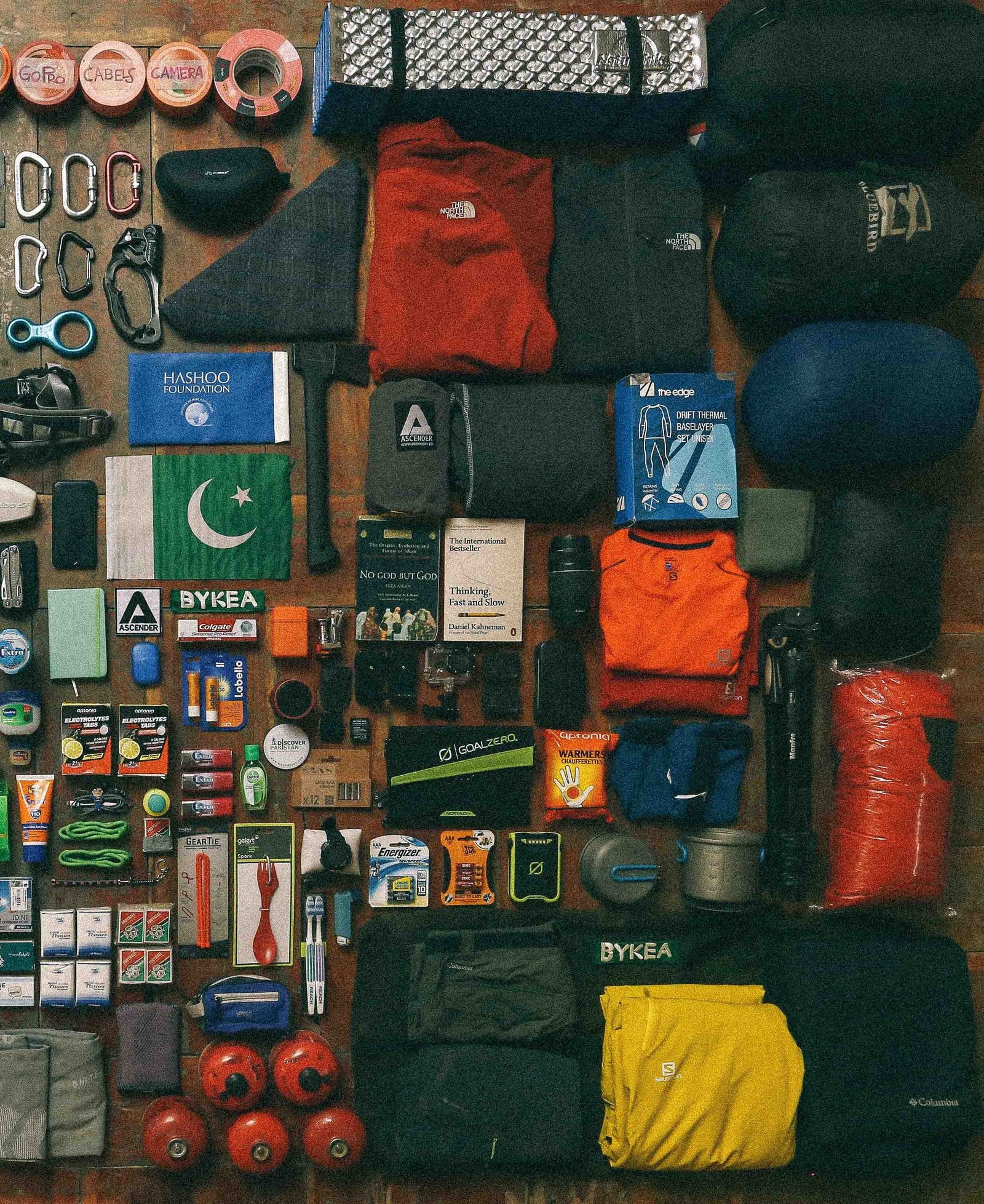
Dispersed sites can be an hour or more from help. Along with the basics, bring a first-aid kit you know how to use, enough water for drinking and cooking (plan on at least a gallon per person per day unless you know water sources are reliable and you can treat the water), a camp stove for cooking when fires are banned, and trash bags so you can pack out everything you bring.
What to pack in a first-aid kit for dispersed camping
A first-aid kit for a remote site should cover more than bandages: blister care, wound-closure strips, tweezers, an elastic bandage, pain relievers, antihistamines, any personal medications and a printed first-aid guide, since you may not have cell service. Check your first-aid kit before each season and replace anything used or expired.
Dispersed Camping Checklist
- Map of the area (MVUM or BLM travel map), downloaded offline
- Current fire restriction status and any required campfire permit
- Enough water for drinking, cooking and cleaning, often 1 to 2 gallons per person per day
- Trowel and waste bags, or a portable toilet where required
- Trash bags for packing everything out
- First aid kit and a way to call or signal for help where there is no cell service
- Shovel and water for any campfire
Frequently Asked Questions
Is dispersed camping free?
Most dispersed camping on national forest and BLM land is free, though some areas require a free permit, a parking pass or a fee for designated dispersed sites. Long-Term Visitor Areas on BLM land charge permit fees.
How long can you camp on BLM land?
Under BLM rules, you can generally camp for up to 14 days within a 28-consecutive-day period, then you must move more than 25 miles away. Some field offices set different limits.
Can you camp anywhere in a national forest?
Dispersed camping is generally allowed in national forests outside developed sites unless an area is posted closed. Many forests restrict camping near water, trailheads and developed areas, and some allow camping only at designated sites.
Do you need a permit for dispersed camping?
Usually not for national forest or BLM land, though some areas require free permits, campfire permits or wilderness permits. National park backcountry camping generally requires a permit.
How far from water should you camp?
Leave No Trace recommends at least 200 feet, about 70 adult steps, from lakes and streams. Many forests and field offices have their own setback rules.
What are designated dispersed sites?
Designated dispersed sites are numbered, primitive campsites in an area where the land manager limits camping to marked spots. They are usually free and have no water or toilets, but you must camp at a marked site rather than choosing your own.
Can you dispersed camp in national parks?
Generally no. National parks typically require you to stay in developed campgrounds or hold a backcountry permit for designated backcountry sites. Dispersed camping rules on this page apply to national forests and BLM land, which often border national parks.
What are the food storage rules for dispersed camping?
Food storage rules depend on the area. In bear country, many national forests have food storage orders that require food, trash and scented items to be kept in a bear-resistant container or a hard-sided vehicle when not in use. Check the forest or field office page for the specific rules before you go.

Sources
- U.S. Forest Service: Dispersed Camping; Motor Vehicle Use Maps.
- Bureau of Land Management: Camping on Public Lands; 43 CFR 8365.1-2.
- Leave No Trace Center for Outdoor Ethics: Seven Principles.
- National Park Service: backcountry camping and permits.
- CAL FIRE: California Campfire Permit.
- USDA Forest Service: Motor Vehicle Use Maps and local forest orders.
- Recreation.gov: campground reservations on federal lands.
- National Park Service: backcountry camping and permits.