
Quick answer: check for burn bans first, use an existing fire ring, clear flammable material, keep the fire small, keep water and a shovel within reach, and never leave it unattended. To finish, drown the fire, stir the ashes, drown again, and feel with the back of your hand. If it is too hot to touch, it is too hot to leave.
A campfire is the center of many camping memories: the glow on faces, the smell of woodsmoke, the marshmallows that catch fire for a second. It is also one of the easiest ways for a camping trip to cause real harm. Smokey Bear, the public service campaign of the U.S. Forest Service and partner agencies, states that abandoned or improperly extinguished campfires are a major cause of wildfires.
Good fire habits are simple and learnable. This guide covers how to decide whether to light a fire at all, how to prepare a safe spot, how to tend it, and how to put it fully out. The advice draws on the National Park Service (NPS) and Smokey Bear. Local rules always come first, so treat what follows as a baseline and defer to your campground, park or forest.
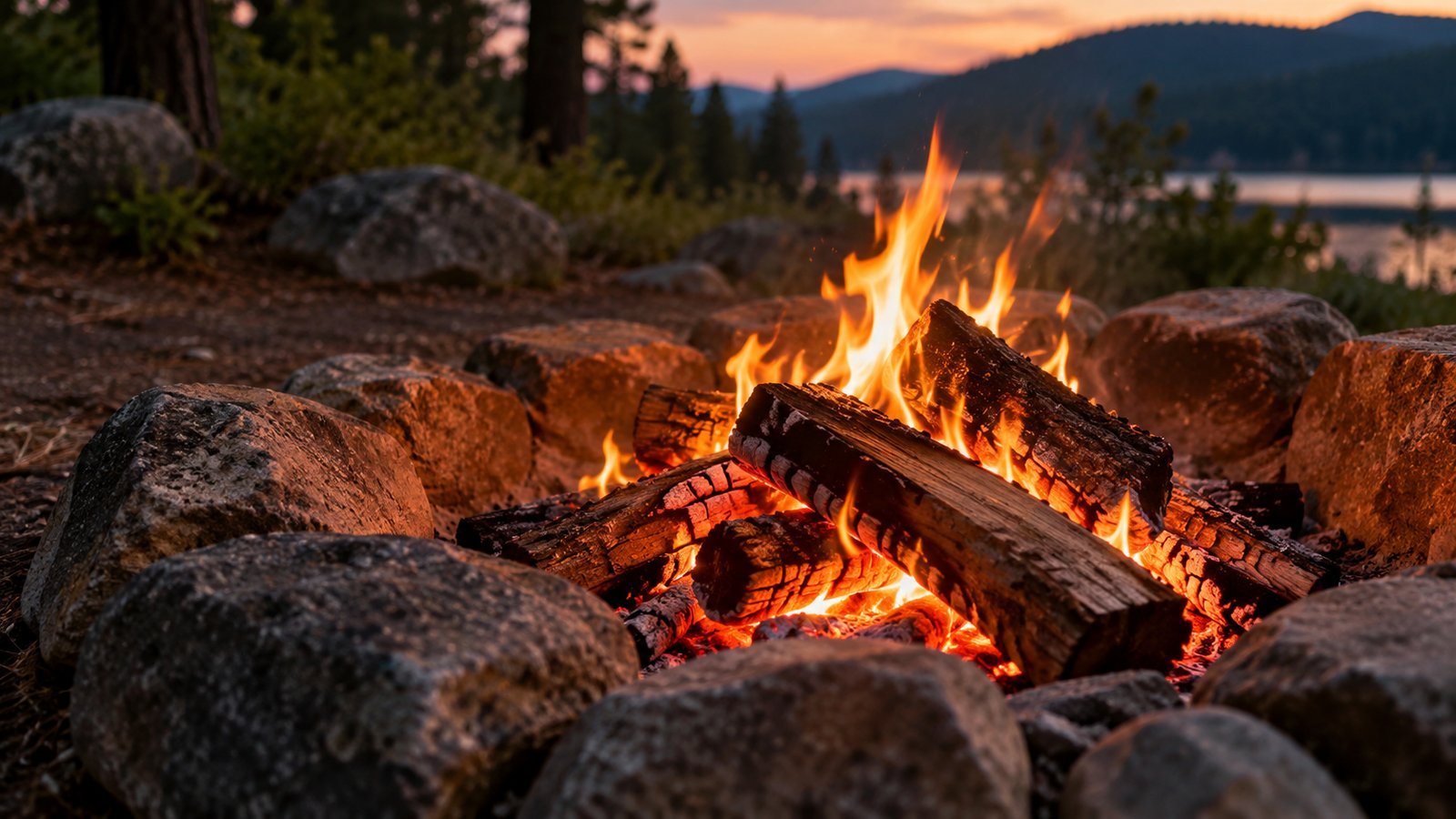
Start With the Rules and the Weather
Before you gather a single stick, find out whether fires are permitted. Burn bans and fire restrictions can be put in place when conditions are dry, and they can change quickly. Ask at the campground office, check the website of the park, forest or state agency that manages the land, and read posted notices at the entrance. Where a ban is in effect, a fire is off the table even if the ring is sitting right there.
Wind matters as much as paperwork. Starting a fire when it is windy is on the campaign’s list of don’ts, since sudden gusts can carry sparks into vegetation outside the cleared area. The NPS wildland fire guidance also suggests considering alternatives such as a propane camp stove during periods of high fire danger. Skipping the fire can be the safest and most considerate call.
There is a bonus to that choice. Leave No Trace asks campers to use a stove when they can and to keep fires small, contained and legal, which is covered in our guide to Leave No Trace for campers. A stove cooks faster, makes no smoke in your eyes, and leaves no scar on the ground.
Finally, think about who is with you. The campaign’s guidance says a campfire should be lit only when an adult is present and in charge, and that young children and pets should be kept away. Decide before the first match who will watch the fire and who will take over if that person needs a break.
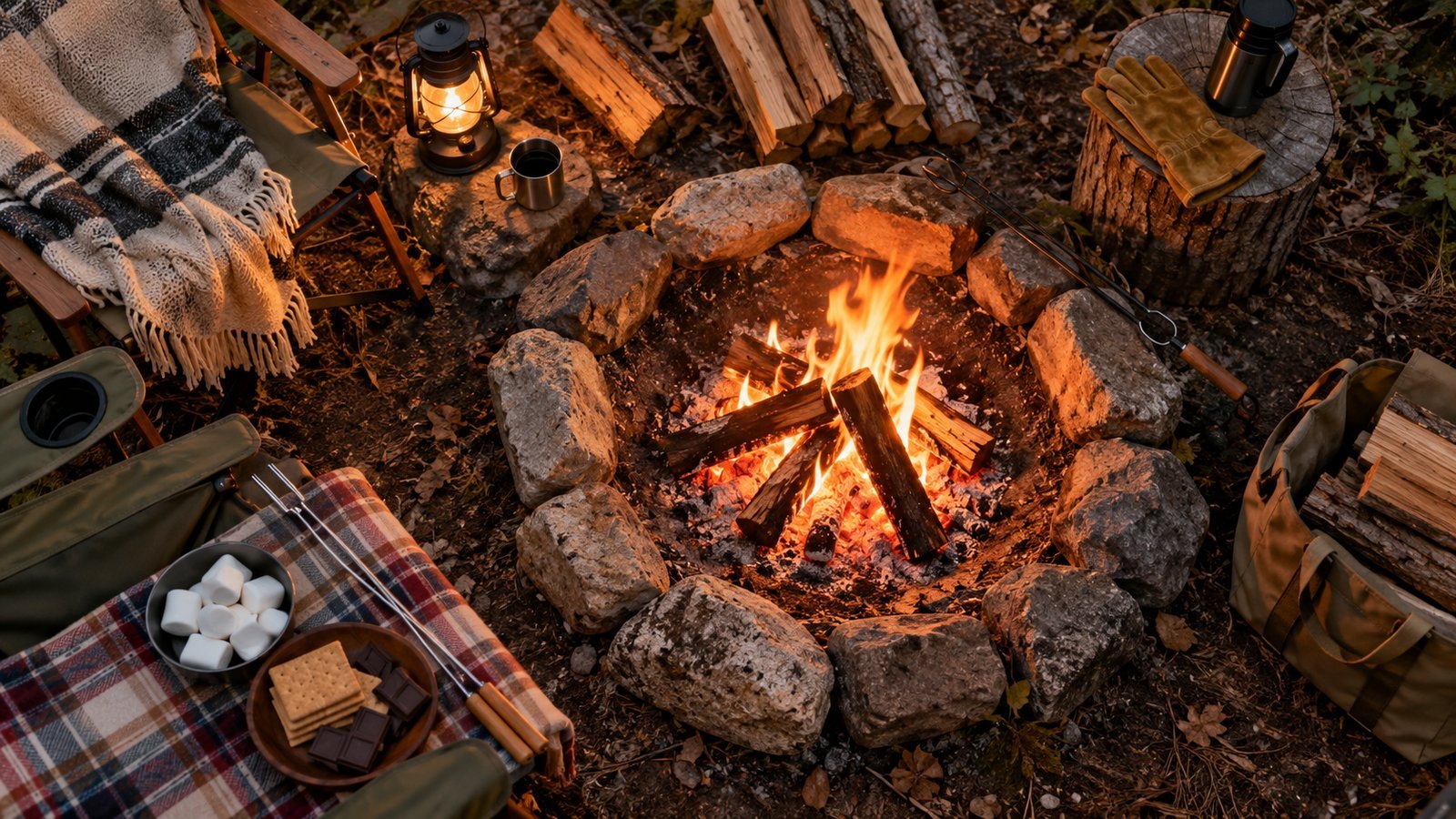
Choose and Prepare the Site
The best place for a fire is an established fire ring or pit in a designated campsite. Using one keeps the impact in a spot that already exists and usually puts the fire in a reasonable location. Do not dig new pits or build rock rings in places that have none unless the rules for that area specifically allow it.
Check the surroundings. The NPS suggests building campfires away from overhanging branches, steep slopes, rotten stumps, logs, dry grass and leaves, and piling extra firewood away from the fire. Make sure there is a comfortable distance between the fire and your tent, tarp, chairs and vehicles. Synthetic fabric melts when sparks land on it, which is a lesson best learned from reading rather than from a ruined jacket.
Clear the area. At Big Thicket National Preserve, rangers advise scraping away litter, duff and any burnable material within a 10-foot circle so the fire cannot creep outward. Where a ring already exists, the same idea applies: remove dry needles, leaves and twigs around it, and look up for branches that sparks could reach.
Gather your tools before lighting. Keep plenty of water close, plus a shovel or trowel. A bucket filled before you strike a match is far more useful than one you plan to fill after something goes wrong. Long-handled cooking tools with insulated handles give you distance from the heat when you roast or cook over the flames. Our list of campfire cooking equipment covers the cookware that works well around a fire.
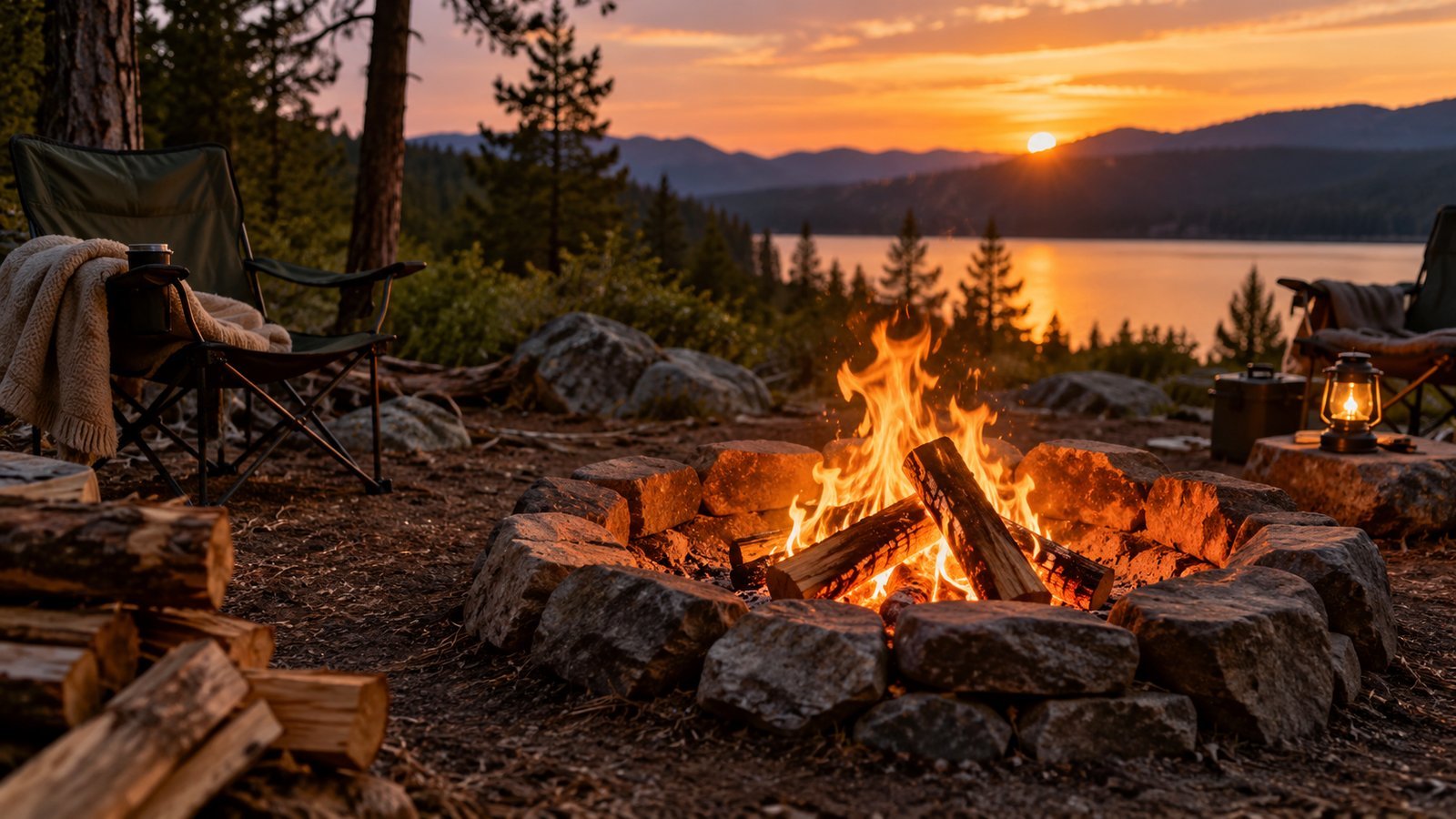
Build the Fire the Safe Way
Use only wood that is permitted. Many campgrounds ask visitors to buy local firewood or use certified wood rather than bringing logs from home, because moving firewood can spread insects and disease between regions. Check the rules for your destination. Gather dead and downed wood only where collecting is allowed, and never cut living trees.
Start small. Keeping the fire small is the standing advice, and a modest fire is easier to control, easier to put out, and kinder to the site. Begin with dry tinder such as small twigs or commercial fire starters, add kindling, and build up to larger pieces only as needed. A fire that is only as big as the job requires burns less wood and throws fewer sparks.
Never use flammable liquids to start or revive a fire. That is another don’t on the campaign list, and with good reason: gasoline, lighter fluid poured onto burning wood and similar products can flare unpredictably. Burn only wood. Glass, cans, plastics and garbage should stay out of the fire, as they leave harmful residue and do not burn cleanly. Pack trash out or use the campground bins.
The NPS also warns against trying to burn leftover food, tea bags or coffee grounds, because burning organic matter completely takes a very hot fire, hotter than most campfires reach. Partly burned scraps still attract wildlife into camp. Put food waste in a secure trash container instead.

Tend the Fire and Cook Around It
Someone responsible should be within arm’s reach of the fire the entire time it burns. The NPS and Smokey Bear both say never to leave a campfire unattended, since even a small breeze can spread flames. When you need to walk to the restroom or fetch water, hand the job to another adult or put the fire out first.
Watch the wind. Once gusts pick up, shrink the fire or begin putting it out. Wind can push flames out of a fire ring and carry embers well beyond it. Keep your chairs upwind when possible, and keep anything light, such as paper plates and tarps, off to the side.
Cooking over flame calls for patience. Cook over coals rather than tall flames, which gives steadier heat and fewer flare-ups. Keep sleeves and loose clothing away from the fire, tie back long hair, and use tools long enough to leave a safe gap. The NPS notes that you should know what steps to take if someone is burned by sparks, hot tools or coals, and that anyone whose clothes catch fire should stop, drop and roll. Packing a first aid kit and knowing where it is stored should be routine.
Camp meals do not have to come from the fire alone. A stove makes breakfast quick, and meals cooked ahead of time can be warmed over coals. Browse the ideas in our posts on camping lunch ideas and making coffee while camping for options that suit both a fire and a stove.
Keep children and pets in mind throughout. Set a simple rule, such as a marked circle that nobody enters without an adult, and keep dogs on a leash or tied securely a short distance away. Roasting sticks should be long, and marshmallows are best handled one person at a time.
Put It Out Completely: Drown, Stir, Drown, Feel
Putting out a fire takes longer than most people expect, and it is the step that matters most. The campaign teaches a four-part method: drown, stir, drown, feel. Allow plenty of time before bed or before you drive away, because rushing this job is how fires escape.
- Drown. Pour lots of water over the fire until the hissing stops, soaking every ember. The campaign warns not to put out a fire with only dirt or sand.
- Stir. Use a shovel to mix the water into the embers, dirt and ash. Scrape sticks and logs so that no embers stay exposed or smoldering, not just the red ones.
- Drown again. Add more water, and soil if needed, until everything is cool.
- Feel. Hold the back of your hand over the ashes to check that the embers are cool. Do not touch the ashes themselves, since they can still burn skin.
If you still feel heat, stir more water into the ashes and check again. The NPS adds that whitish or gray coals can hold heat for hours and flare up in gusting wind, and that simply kicking dirt over a fire can insulate the coals and keep them hot longer. Spread them out and mix, rather than burying them.
Do not bury hot coals. The NPS warns that buried coals can smolder underground and may re-ignite later. Do not leave a ring of rocks you built from scratch, either: if you assembled a temporary ring, scatter the stones once the ashes are cold, and fill in any pit you dug if the rules allowed one. Pack out all trash, including anything that did not burn.
The standard to remember comes straight from Smokey Bear: if it is too hot to touch, it is too hot to leave. That applies to the last night of your trip and also to a quick walk down to the lake.
Handle Emergencies and Prevent Common Mistakes
Even careful campers sometimes see a fire go wrong. Should a small fire escape the ring, use water or dirt right away if it is safe to do so, and call for help early rather than late. Once it spreads beyond what you can control, move everyone to safety and call 911 or alert the campground host or park staff, who know how to reach fire crews in that area. Safety comes before gear and before the campsite.
Several mistakes show up again and again. Leaving the fire to burn down on its own overnight, while the group goes to bed, is one. Building the fire too close to the tent is another. Others include dumping a small amount of water on a big fire, ignoring a burn ban because the ring looks usable, and burning trash. Each mistake is avoidable with a plan made before the first match.
The NPS wildland fire guidance also recommends packing a portable fire extinguisher when you travel, and practicing Leave No Trace by packing out cigarette butts and burned materials from your camping area. Cigarette butts are easy to overlook, so crush them out fully and carry them with you.
Teach younger campers the routine as a game with clear steps. Let them help carry water, watch the fire’s edges, and feel the cooled ashes with the back of the hand once an adult says it is time. Skills learned this way tend to last. Camping in wet weather? Our advice on camping in the rain explains why fires and stoves need extra care when everything is damp.
Frequently Asked Questions
Do I need a permit for a campfire?
It depends on the land manager and local conditions. Some places require a permit, some restrict fires to designated rings, and some ban them when it is dry. Check with the campground, park, forest or state agency before you go and again when you arrive.
How big should a campfire be?
Small. Smokey Bear and the NPS both advise keeping it small. A small fire is easier to control and to extinguish.
Can I put out a campfire with just dirt or sand?
Smokey Bear says no: use water, then stir in dirt or sand as needed. The NPS says that in a pinch dirt can be stirred in until the coals are out, but cautions that kicking dirt on top may insulate the coals and keep them hot.
How do I know the fire is really out?
Hover the back of your hand over the wet ashes. Any heat means more stirring and more water. The material should be cool to the touch before you leave or sleep.
Can I burn trash or food scraps in the fire?
No. The campaign lists burning glass, cans, plastics and garbage as a don’t. The NPS says partially burned food can still attract wildlife, so pack scraps out in a secure container.



Leave a Reply