Quick answer: in hot weather, plan around the heat instead of fighting it. Check the heat index and the National Weather Service HeatRisk forecast, choose a shaded site or a higher, cooler campground, and save hiking and chores for early morning and evening. Drink water steadily before you feel thirsty, wear loose, light-colored clothing and a wide-brimmed hat, and rest in the shade during the hottest hours. Learn the CDC warning signs of heat exhaustion and heat stroke, and treat heat stroke as a 911 emergency.
Summer camping season is the busiest time at most campgrounds, and in much of the country it is also the season of heat waves. Campers spend most of the day outdoors with limited shade, do more physical work than usual and sleep in tents that can turn into ovens by mid-morning. Those conditions make heat illness a real risk, even for fit adults.
The good news is that heat illness is largely preventable. This guide covers how heat affects the body, how to plan and set up camp for hot conditions, how to stay hydrated and cool, and what the Centers for Disease Control and Prevention (CDC) says about recognizing and treating heat illness. For the bigger picture on weather, fire, wildlife and emergencies, see our complete guide to camping safety.
How Heat Affects Campers
The body cools itself mainly by sweating. When sweat evaporates from the skin, it carries heat away. High humidity slows evaporation, so a humid 90-degree afternoon can be harder on the body than a dry one at the same temperature.
The heat index
The National Weather Service (NWS) heat index combines air temperature and relative humidity into a “feels like” temperature. The NWS points out that heat index values are calculated for shady, light-wind conditions, and that exposure to full sunshine can raise them by up to 15 degrees Fahrenheit. A campsite in open sun can feel far hotter than the number on the forecast.
Heat stress vs heat illness
The National Institute for Occupational Safety and Health (NIOSH) uses the term heat stress for the total heat load on the body: heat from the environment plus the heat your muscles make during physical work, minus the heat your body manages to shed. Clothing that traps heat adds to it. Heat stress is the cause, and heat illnesses such as heat exhaustion and heat stroke are what can follow when the body cannot keep up. For campers, that means a hot afternoon of hauling gear, hiking uphill or splitting wood carries more heat stress than the same temperature spent resting in the shade.
HeatRisk
The NWS HeatRisk forecast rates heat on a scale from 0 to 4, using colors from green through yellow, orange and red to magenta. Higher levels mean a greater risk of heat-related health effects, and the scale accounts for how unusual the heat is for that location and time of year. Checking HeatRisk for the days of your trip gives a quick sense of whether to shift plans, shorten hikes or reschedule.
Who is at higher risk
Anyone can develop heat illness, but the CDC identifies groups at higher risk, including older adults, infants and young children, pregnant people and people with chronic medical conditions. Some medications also affect how the body handles heat. Anyone in those groups, or caring for someone who is, should be especially cautious and may want to talk with a doctor before a trip in hot weather.
Plan the Trip Around the Heat
The easiest heat to manage is the heat you avoid. A few planning choices make a large difference.
Pick the season and place with care. In hot regions, spring and fall often offer far more comfortable camping than midsummer. Our guide to Florida camping seasons shows how timing changes the experience in one of the hottest camping states. In the mountains, air temperature generally drops as elevation rises, so a higher campground can be noticeably cooler than one in the valley below.
Look for shade and water. Campground maps and reviews often note which sites have tree cover. Sites near a lake or river can catch a breeze, and some campgrounds offer electrical hookups that make a fan easy to run.
Schedule activity for the cool hours. Hike, set up camp and do strenuous chores in the early morning or evening. Midday is for shade, swimming where it is safe and allowed, naps and card games.
Watch for heat-related rules. During hot, dry spells, land managers often impose fire restrictions, and some trails close or post warnings during extreme heat. Check park alerts before leaving and again at the campground.
Set Up Camp for Shade and Airflow
Tents trap heat. Sunlight warms the fabric, the air inside has nowhere to go, and by mid-morning the interior can be much hotter than the air outside. Setup choices can keep the tent livable.
Use the shade you have
Pitch the tent where it will be shaded in the afternoon, not just the morning. The sun moves west through the day, so trees on the west side of the tent pad matter most. Before choosing a spot under trees, look up for dead branches that could fall in wind.
Make your own shade
A tarp rigged over the tent or the picnic table can cut direct sun considerably. Leave space between the tarp and the tent so air can move between them. Light-colored tarps stay cooler than dark ones, and a reflective tarp, with its shiny side facing the sun, bounces back even more of the sunlight before it reaches the tent.
Open it up
On clear nights with no rain in the forecast, removing the rain fly or rolling back its panels lets heat escape through the mesh. Open doors and vents on opposite sides to create cross-ventilation, and turn the doors toward any prevailing breeze. Take the fly down in the morning so the tent does not bake all day. Keep it close at hand, though, since summer storms can arrive quickly.
Keep it out of the tent during the day
Spend the day in shaded outdoor spaces rather than inside the tent. A tent is a place to sleep, not a cool room. Electronics, medications and food should not be left inside a hot tent or a closed car, where temperatures climb quickly.
Water, Electrolytes and Eating Well
Hydration is the foundation of heat safety. The CDC advises drinking more water than usual in hot weather and not waiting until you are thirsty. Sugary drinks and alcohol are poor substitutes.
How much water to bring
Needs vary with heat, activity, body size and sweat rate, so there is no single number. Plan generously: more water for drinking, extra for cooking and washing, and a reserve in case of a delay. In areas without potable water, carry it in or bring a reliable way to treat water from lakes and streams.
Electrolytes
Heavy sweating removes salt and minerals as well as water. The CDC notes that sports drinks can help replace salt and minerals lost during heavy sweating. Anyone on a low-sodium or fluid-restricted diet, or with a medical condition that affects fluid balance, should ask a doctor before changing what they drink. Regular meals and salty snacks help as well.
Simple habits
- Keep a water bottle within reach of every person, including children, and refill it at each break
- Drink with every meal and every rest stop
- Watch urine color; dark urine is a common sign of not drinking enough
- Store water jugs in the shade so drinking water stays cooler and more appealing
Light meals often sit better in the heat than heavy ones. No-cook lunches, fresh fruit and cold salads also mean less time over a hot stove.
Electrolyte packets
Electrolyte packets, powdered drink mixes with salt and other minerals, are light to pack and easy to add to a water bottle on a long, sweaty day. They are one way to follow the CDC’s note that sports drinks can help replace salt and minerals lost in heavy sweating. The same caution applies: anyone on a low-sodium diet or with a heart or kidney condition should ask a doctor first. Plain water remains the main drink for most people.
Hot-Weather Camping Gear Checklist
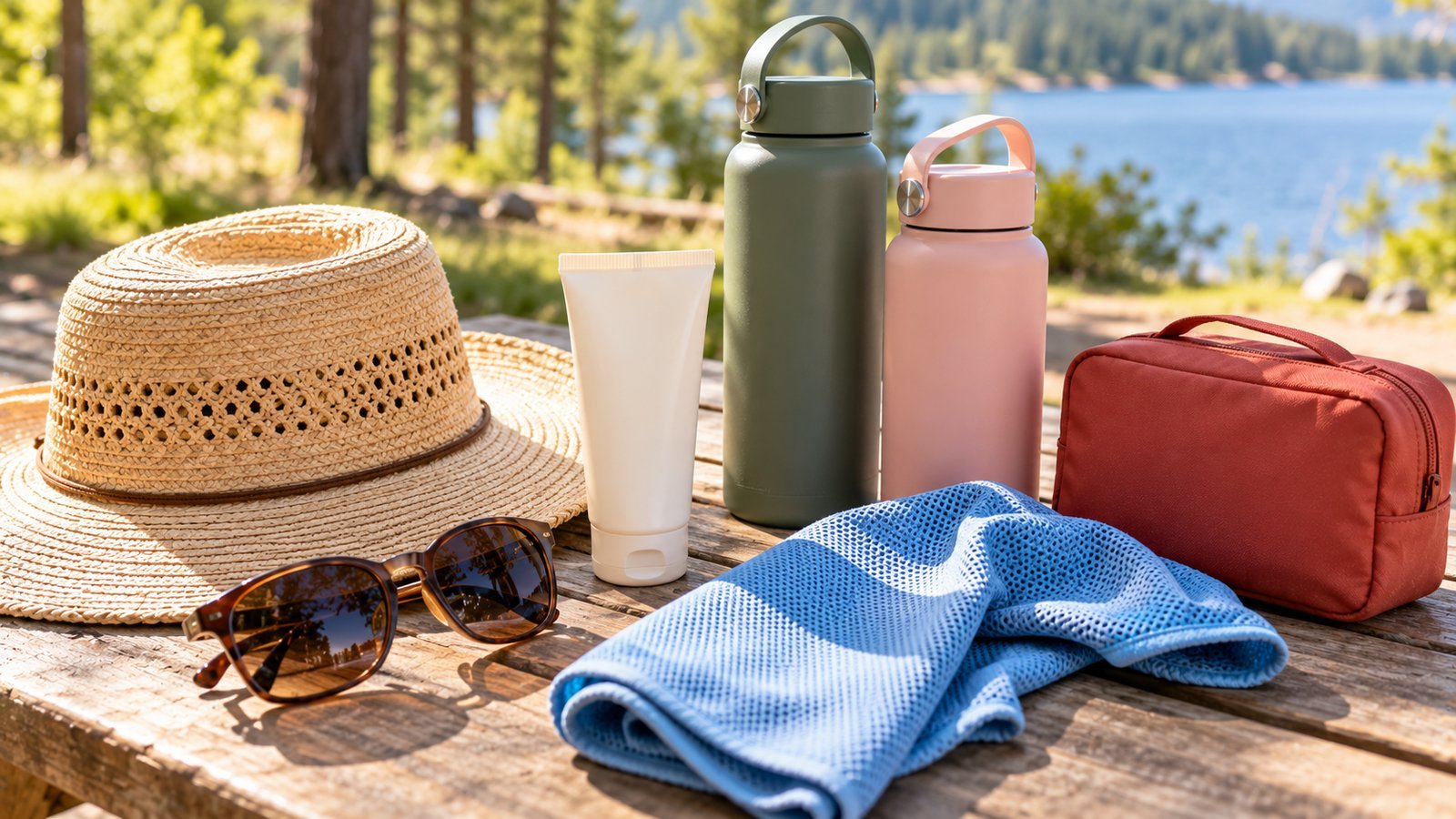
Packing a few specific items makes hot days far easier to manage. Most are inexpensive or already in a family’s gear bin.
| Item | Why it helps |
|---|---|
| Wide-brimmed sun hats for everyone | Shade the face, ears and neck all day |
| Light, loose long sleeves with UV protection | Block sun without trapping heat |
| Reflective tarp and extra cord | Creates shade over the tent or table |
| Battery fan or portable fan | Moves air in the tent and at the table |
| Power bank or spare batteries | Keeps fans and phones running without hookups |
| Cooling towels or bandanas | Cool the skin through evaporation when wet |
| Electrolyte packets | Replace salt lost in heavy sweating |
| Insulated cooler and ice packs | Keep food and drinks cold and safe |
| Extra water jugs | Drinking, cooking and cooling down |
| Mesh tent or tent with large mesh panels | Lets heat escape at night |
| Summer sleeping gear | A light sheet, summer bag or cot for hot nights |
| Spray bottle | Quick misting for skin and clothing |
Cooling towels and wet cloths
Cooling towels work through evaporation: soak, wring out and drape around the neck or over the head. They work best in dry air, where water evaporates quickly, and less well on humid days. A wet cotton bandana or a damp shirt does much the same job. Rewet them often, and keep using shade and water, since a towel will not prevent heat illness on its own.
Fans and power
A small battery fan clipped to the tent ceiling or set on the picnic table makes hot nights more bearable. Charge rechargeable fans before the trip, and bring a power bank sized for the number of nights. A portable fan that runs on hookups is an option at sites with electricity. The CDC cautions that fans may provide comfort, but when temperatures are in the high 90s they will not prevent heat-related illness, so shade, water and wet skin matter more on the hottest days.
Cooler strategy
Pack the insulated cooler with ice packs or block ice, food on top of the ice, and keep it in the shade with a blanket or tarp over it. A separate cooler for drinks, which gets opened all day, helps the food cooler stay cold longer.
Clothing, Sun Protection and Sleeping Cool
The CDC recommends lightweight, light-colored, loose-fitting clothing in hot weather. Loose fabric lets air move over the skin, and light colors absorb less heat from the sun.
Sun protection
Sunburn does more than hurt. It affects the body’s ability to cool itself. The CDC recommends broad-spectrum sunscreen with an SPF of 15 or higher, applied before going outside and reapplied as the label directs, especially after swimming or sweating. A wide-brimmed hat, sunglasses and a lightweight long-sleeve shirt provide shade that sweat cannot wash off. Our guide to the camping clothing layering system covers fabrics that also suit cooler desert and mountain nights.
Sun hats, UV protection and the UV index
The CDC recommends sun protection whenever the UV index is 3 or higher, and notes that in the continental United States UV rays are strongest from 10 a.m. to 4 p.m. during daylight saving time. The U.S. Environmental Protection Agency adds that UV intensity rises with altitude, so mountain campers can burn faster than they expect even on cool days. Choose sun hats with a wide brim all the way around, not just a cap, and sunglasses that block UVA and UVB rays. Clothing labeled with a UPF rating is tested for UV protection, but any tightly woven, loose fabric helps. Check the UV index in the forecast along with the heat index and HeatRisk.
Sleeping cool
Hot nights make sleep difficult, and poor sleep makes the next hot day harder.
- Swap a warm sleeping bag for a light sheet or a summer-weight bag that can be unzipped flat
- Sleep on a cot or a pad with breathable fabric; some insulated pads trap body heat
- Use a battery-powered fan clipped inside the tent
- Wipe down with a damp cloth before bed so evaporation helps cool the skin
- Hang wet clothes outside the tent so humidity stays out
Even in summer, deserts and high country can turn chilly after dark. Keep a warm layer handy, and check the overnight low before leaving warmer gear at home.
Sleeping Gear for Summer Camping: Mesh Tents, Hammocks and Bags
Nights are often where hot-weather trips go wrong. A good night’s sleep makes the next day’s heat easier to handle, and the right sleeping gear makes a big difference.
Mesh tents and the rain fly
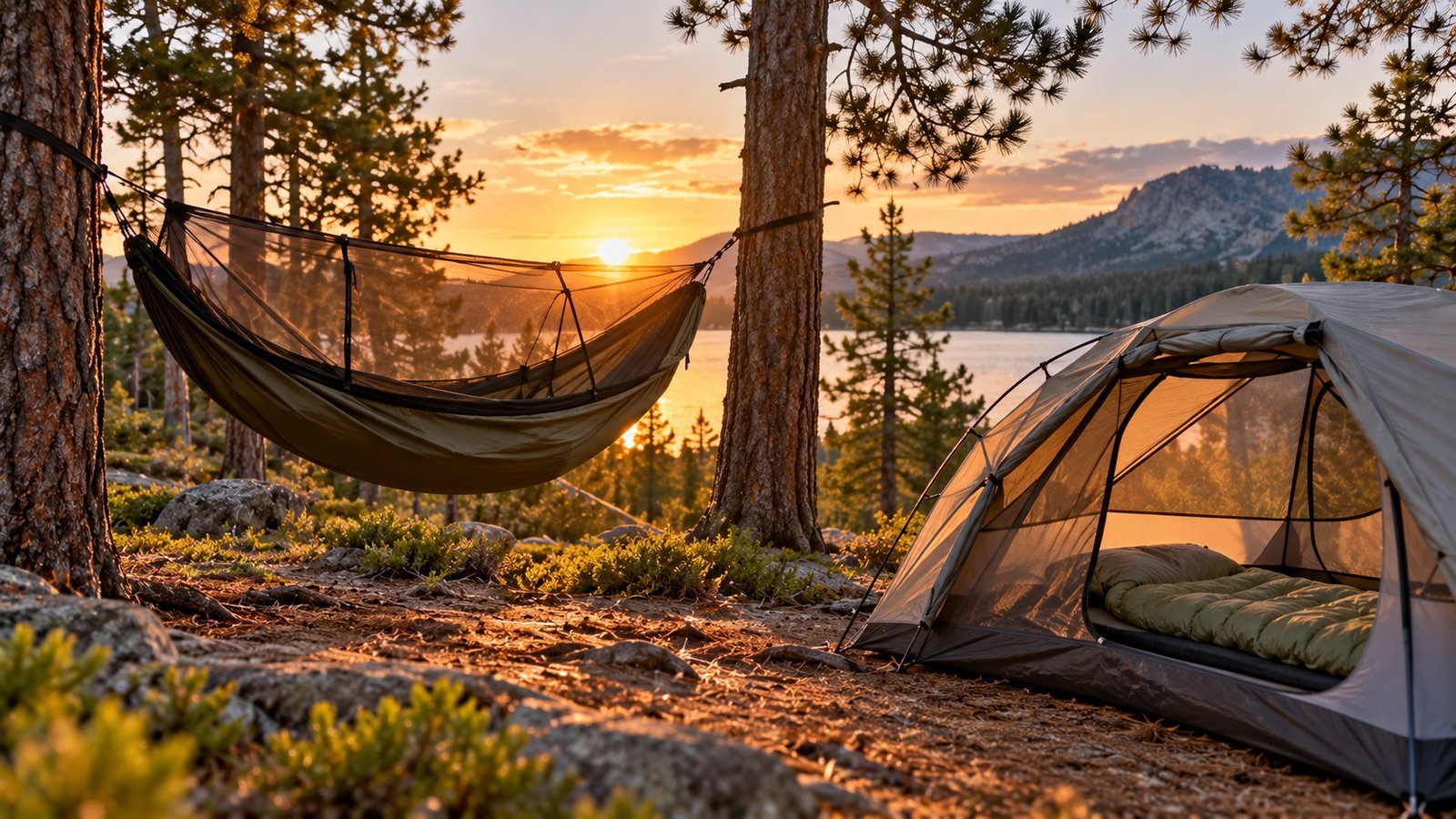
Tents with large mesh panels, or mesh bodies with a separate rain fly, let heat and moisture escape on warm nights. Leave the fly off or rolled back when the sky is clear, and keep it staked nearby, ready to clip on if a summer storm builds. If you have a choice, a roomier tent with mesh on two sides moves more air than a small, closed one.
Hammock camping
Hammock camping can be cooler than sleeping on the ground, because air circulates under and around you. A hammock with a built-in bug net keeps out mosquitoes, and a tarp overhead handles rain. Use wide tree straps rather than rope to protect bark, follow campground rules about hanging from trees, and check overhead for dead branches before you hang.
Sleeping bag and pad
A warm-weather sleeping bag, or a sleeping bag that unzips fully into a quilt, gives you something to pull over yourself when the temperature drops before dawn. A light sheet or liner is often enough on hot nights. Some foam and insulated pads hold body heat, so a cot or a pad with a breathable surface may sleep cooler.
Warning Signs of Heat Illness
Heat illness usually builds over hours, and the early signs are easy to dismiss as tiredness. Knowing the CDC warning signs helps everyone in the group spot trouble early.
Heat cramps
Signs include heavy sweating during intense exercise and muscle pain or spasms. The CDC advises stopping physical activity, moving to a cool place, drinking water or a sports drink and waiting for the cramps to go away before resuming. Get medical help right away if cramps last longer than an hour, if the person is on a low-sodium diet or if they have heart problems.
Heat exhaustion
Signs include heavy sweating; cold, pale and clammy skin; a fast, weak pulse; nausea or vomiting; muscle cramps; tiredness or weakness; dizziness; headache; and fainting. Any of these is a signal to stop, cool down and rest.
Heat stroke
Signs include a body temperature of 103 degrees Fahrenheit or higher; hot, red, dry or damp skin; a fast, strong pulse; headache; dizziness; nausea; confusion; and losing consciousness. Heat stroke is a medical emergency.
Sunburn
Signs include painful, red and warm skin and blisters. The CDC recommends staying out of the sun until it heals and using cool cloths or a cool bath for relief.
First Aid for Heat Illness at Camp
The CDC first aid steps differ by condition, and the difference matters.
For heat exhaustion, move the person to a cooler place, loosen tight clothing, put cool, wet cloths on the body or have them take a cool bath, and give sips of water. Get medical help right away if they are throwing up, if symptoms get worse or if symptoms last longer than an hour.
For heat stroke, call 911 right away. Move the person to a cooler place and help lower their temperature with cool cloths or a cool bath. Do not give the person anything to drink.
At camp, a cool place might be deep shade, an air-conditioned vehicle or a building such as a visitor center. Wetting clothing and skin with water and fanning the person speeds cooling. Know before you arrive where the nearest hospital is and where cell coverage works, since heat stroke needs professional care quickly.
This article provides general safety information, not medical advice. A first aid course from the American Red Cross or a similar provider is valuable preparation for any camping family.
Coolers, Food and Pets in the Heat
Hot weather is hard on food safety too. The U.S. Department of Agriculture advises discarding perishable food left out for more than two hours, or more than one hour when the temperature is above 90 degrees Fahrenheit. Keep the cooler in the shade, open it as little as possible and use a thermometer to confirm the inside stays at 40 degrees or below. Our guide to camping cooler packing explains ice, layering and food safety in detail.
Dogs and other pets
Pets feel the heat as much as people, and dogs cool themselves mainly by panting. The CDC warns never to leave pets in a parked car, where temperatures can climb to dangerous levels within minutes. Give dogs constant access to shade and fresh water, walk them in the cool hours and test pavement or sand with the back of your hand before letting them walk on it. Our guide to camping with dogs covers gear, leash rules and health checks for the trip.
Know when to call it
Sometimes the safest call is to leave early. If HeatRisk reaches the highest levels, if someone in the group shows signs of heat exhaustion that do not improve with rest, or if the campsite has no shade or water, packing up and heading somewhere cooler is a sensible decision, not a failure.
Frequently Asked Questions
How hot is too hot for tent camping?
No single temperature applies to everyone. Check the heat index and the NWS HeatRisk forecast, consider who is in your group and whether the site has shade and water, and change plans if the forecast reaches high HeatRisk levels.
How do I keep my tent cool during the day?
Pitch it in afternoon shade, rig a tarp above it with an air gap, open doors and vents for cross-ventilation and remove or roll back the rainfly when no rain is expected. Spend the hottest hours outside the tent in the shade.
What are the first signs of heat exhaustion?
According to the CDC, signs include heavy sweating, cold and clammy skin, a fast and weak pulse, nausea, muscle cramps, tiredness, dizziness and headache. Move to a cooler place, loosen clothing, cool the skin and sip water.
Should I give water to someone with heat stroke?
No. The CDC advises calling 911, moving the person to a cooler place and lowering their temperature with cool cloths or a cool bath, but not giving them anything to drink.
Are sports drinks better than water when camping in the heat?
Water is the main drink for most people. The CDC notes that sports drinks can help replace salt and minerals lost through heavy sweating; anyone on a low-sodium diet or with a medical condition should ask a doctor first.
Is it safe to camp with a dog in hot weather?
It can be, with shade, plenty of fresh water and activity limited to cooler hours. Never leave a dog in a parked car, and watch for heavy panting or weakness.
Do battery fans actually help in a hot tent?
Yes, on most summer nights. A battery fan moves air across the skin, which helps sweat evaporate. The CDC notes that fans will not prevent heat illness when temperatures reach the high 90s, so pair them with shade, water and a damp cloth. Bring a power bank so the fan lasts all night.
Is hammock camping cooler than tent camping?
Often, yes. Air moves under and around a hammock, which helps on warm nights. Use a bug net in mosquito season and a tarp for rain.
What is heat stress?
NIOSH describes heat stress as the total heat load on the body from the environment, physical work and clothing. Too much heat stress can lead to heat exhaustion or heat stroke.
Sources: Centers for Disease Control and Prevention (heat-related illness warning signs and first aid, hot weather tips, sun safety, pet safety in hot cars); National Weather Service (heat index, HeatRisk); U.S. Department of Agriculture (food safety in hot weather); American Red Cross (first aid training); NIOSH (Heat Stress and Workers); CDC (Sun Safety Facts, UV index and peak UV hours); U.S. Environmental Protection Agency (Learn About the UV Index).