
Quick answer: warmth comes from a sleep system, not one item. Match the sleeping bag rating and pad R-value to the expected low, wear dry layers to bed, keep moisture under control, eat and drink before bed, and never heat a tent with a fuel-burning stove, heater or grill.
Cold nights can be the most memorable part of a camping trip or the reason somebody swears off tents for good. The difference rarely comes down to bravery. Preparation makes the difference: gear chosen for the temperature, clothing that stays dry, and a few habits that keep your body producing and holding heat.
This guide explains how to build a warm setup from the ground up. The guidance comes from sleeping bag and pad advice from the outdoor retailer REI, and health and safety information from the Centers for Disease Control and Prevention (CDC). Temperature ratings and personal comfort are estimates, so the safest approach is to test your system close to home before relying on it far from help.
Note that this article covers ordinary cold-weather camping, such as a chilly fall weekend or a mild winter night, not mountaineering or expeditions. For extreme cold, seek training and advice from experienced guides and local authorities.
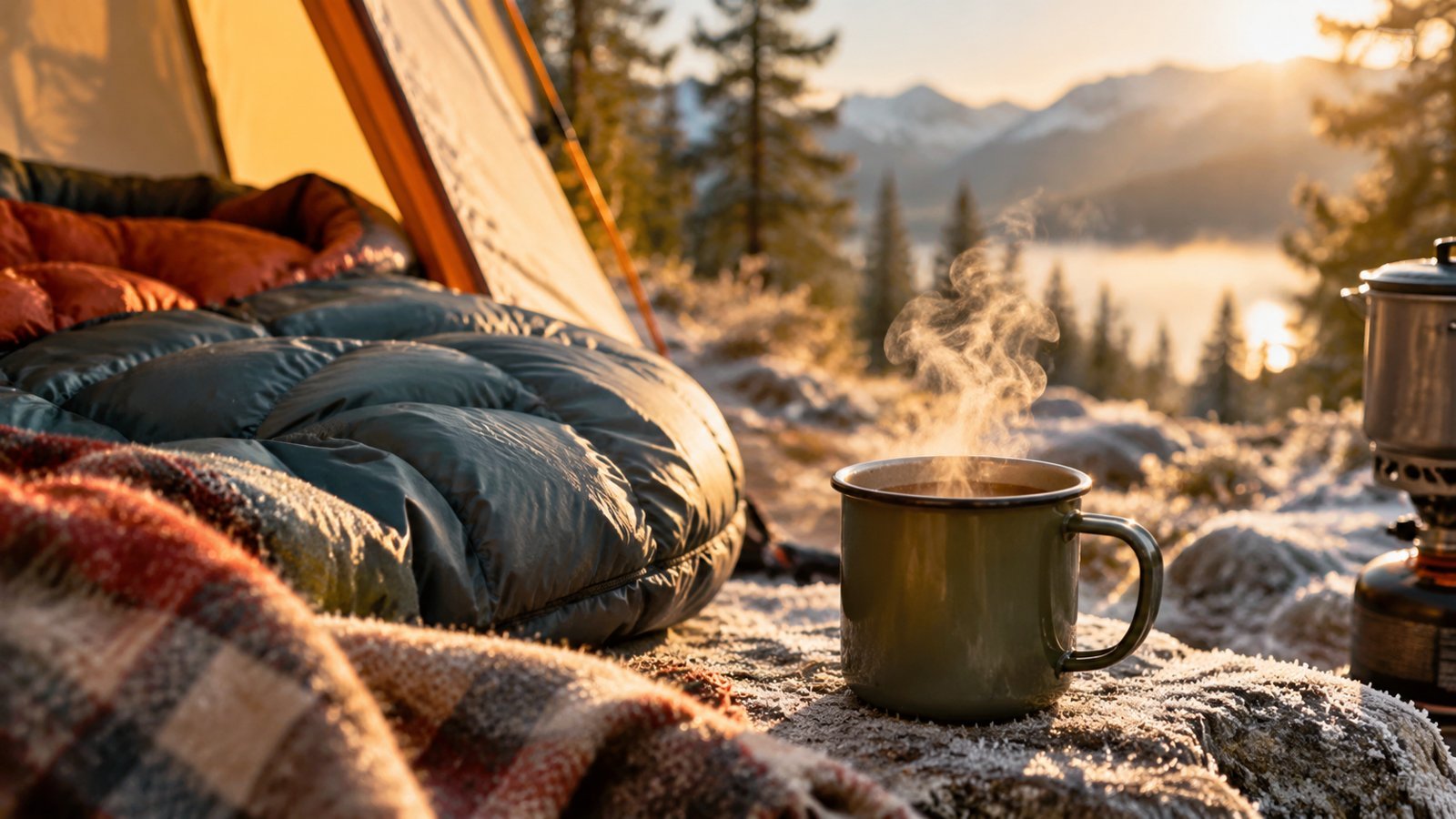
Know the Risks of Cold Before You Go
Cold is more than uncomfortable. The CDC explains that hypothermia is abnormally low body temperature, which occurs when the body loses heat faster than it can make it. The condition affects the brain, making it hard to think clearly or move well, so a person may not realize what is happening. The agency adds that hypothermia is most likely at very cold temperatures but can also occur at cool temperatures above 40°F if a person is chilled from rain, sweat or cold water.
Signs of hypothermia in adults, according to the CDC, include shivering, exhaustion, confusion, fumbling hands, memory loss, slurred speech and drowsiness. In babies, signs include bright red, cold skin and very low energy. When anyone in your group shows these signs, take the situation seriously. The CDC says a temperature below 95°F is an emergency requiring immediate medical attention, and that you should try to warm the person while help is on the way. This article is general information, not medical advice.
Frostbite is a separate risk in very cold conditions. The CDC lists redness or pain in a skin area as a possible first sign, followed by white or grayish-yellow skin, skin that feels firm or waxy, and numbness. Cover your face, hands, feet, nose and ears, and seek medical care if you see signs of frostbite.
Tell someone your plan, as the CDC recommends for anyone hiking, camping or skiing in cold conditions, and carry dry clothing and a way to call for help. Check the forecast for the lowest temperature, the wind and any precipitation, since wind and wet conditions make cold feel worse and sap heat faster. Should the forecast call for conditions beyond your gear or experience, postpone the trip.
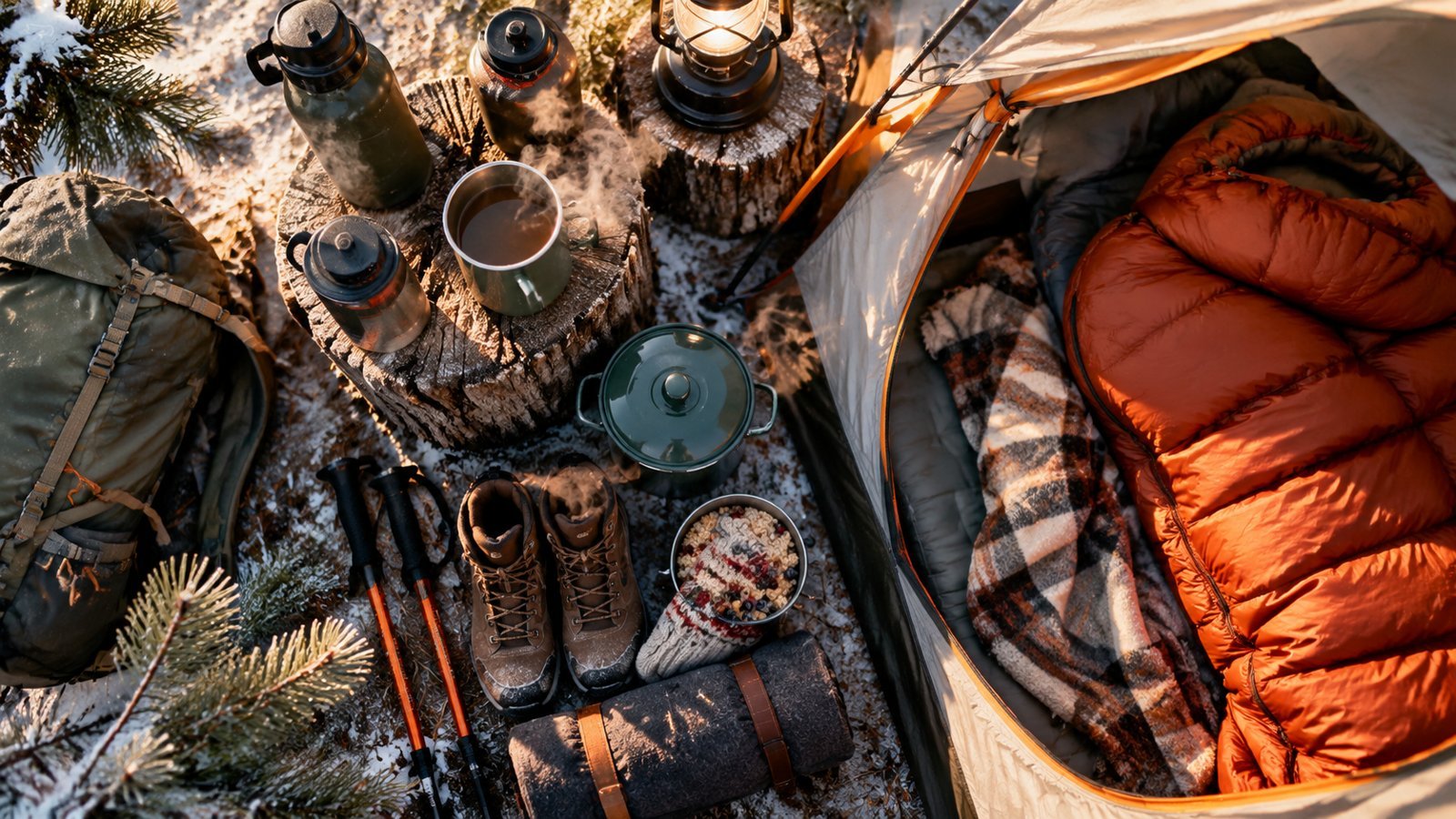
Build a Sleep System: Bag, Pad and Clothing
REI describes a sleep system as three parts: the sleeping bag, the sleeping pad and the sleeper’s clothing. All three work together. A great bag on a thin pad can leave you cold from below, because the ground pulls heat from your body. REI explains that surfaces cooler than 98°F drain body warmth, which is why insulating yourself from the ground matters as much as covering yourself from above.
Start with the bag. Lab-tested ratings labeled EN or ISO allow fair comparison between brands, but REI cautions that real-world comfort probably will not match them because lab tests cannot account for variations in clothing, body type and weather. Tested bags give two numbers: the comfort rating, which suggests the temperature at which a cold sleeper might feel comfortable, and the lower limit rating, which is always lower and suggests the temperature at which a warm sleeper might still be comfortable. Cold sleepers should pay attention to the comfort rating. Ratings listed without those labels are often a brand’s estimate and should be treated as rough guides.
Choose a bag rated below the expected overnight low. REI’s sleep-system chart pairs an expected low of 32°F with a bag rated 20°F or lower, a low of 20°F with a bag rated 15°F or lower, and a low of 0°F with a bag rated 0°F or lower. Also, the number in a bag’s name is often rounded, so check the actual test rating in the specifications.
Next, the pad. REI describes R-value as a measure of a pad’s resistance to heat flow, where a higher number means more insulation and R-values add when pads are stacked. The retailer’s general guidelines are that an R-value below 2.0 suits warm weather, 2.0 to 3.9 suits cool weather, 4.0 to 5.4 suits cold weather and 5.5 or higher suits extremely cold weather. Sleeping bag ratings, REI adds, assume use with a pad that has an R-value of 4. For cold nights, many campers put a closed-cell foam pad under an inflatable pad to add insulation, protect against punctures and block moisture from the cold ground.
Cots, air mattresses and similar items may lack insulation. REI warns that alternatives to sleeping pads can be heavy and bulky and may offer little insulation, so check the specifications if you plan to use them in cold weather. For a refresher on caring for your bag and pad between trips, read our guide to camping gear care.
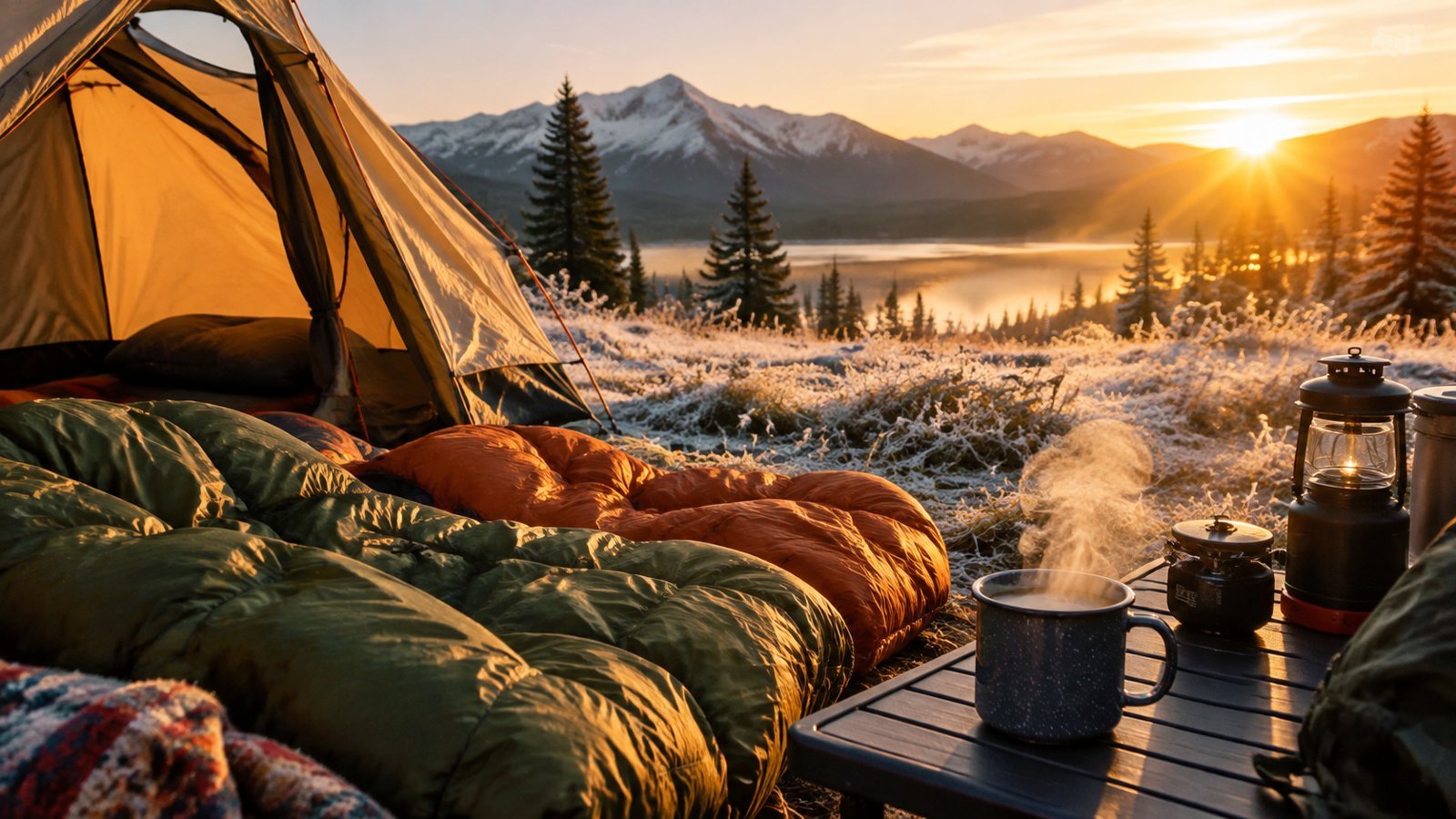
Layer Your Clothing and Keep It Dry
Clothing is the third part of the system, and it works best in layers. A base layer next to the skin should move moisture away, and synthetic fabrics and wool are common choices. Cotton absorbs moisture and holds it, which cools the body. An insulating layer, such as fleece or a puffy jacket, traps warm air, and an outer shell blocks wind and rain.
The CDC’s cold-weather advice stresses staying dry and covering exposed skin. The advice includes a hat, a scarf or knit mask over the face and mouth, gloves or mittens, water-resistant boots and several layers of loose-fitting clothing, and it warns that wet clothing chills the body quickly and that excess sweating can cause problems. The agency also advises avoiding getting wet and trying not to sweat or become too tired.
Manage sweat by adjusting layers before you overheat. Remove a layer when you start a hard task like carrying firewood or setting up, and put it back on when you stop. Keep a dry set of clothes for sleeping and protect it in a sealed bag, and never wear it around camp. Dry socks make a big difference. Change into them before bed and keep a spare pair.
Avoid sleeping in tight clothing, which can restrict circulation. Loose layers trap warm air more effectively. Wear a warm hat to bed, and consider a neck gaiter or a balaclava on very cold nights. Rain in the forecast? Read our guide to camping in the rain, which covers how to keep gear dry and spot early signs of trouble.

Set Up Camp for Warmth
Where and how you camp affects how cold you feel. Choose a site with some protection from wind, such as a tree line, a rock wall or the lee side of a hill, and be mindful of dead branches overhead. Avoid low spots where cold air tends to settle and where water can collect. A tent facing away from the wind is warmer and quieter than one pointed into it.
Pick the right tent. A three-season tent has plenty of mesh for ventilation, which can make it feel drafty on cold nights. A tent with fewer mesh panels and a full rain fly holds heat better, though you still need ventilation to prevent condensation. Keep vents partly open even in the cold, since breathing and sweating add moisture to the inside air that otherwise ends up on the walls and your gear.
Insulate the floor. Use a footprint or ground sheet under the tent and, if you have them, rugs or extra foam pads inside. Keep your pack and boots off the floor as well if possible, because a cold floor draws heat. Pitch the tent early, before the temperature falls and your hands get stiff, and stake it firmly in case the wind rises. Our car camping checklist helps ensure you bring the extras that make a cold camp comfortable.
For pets and children, take extra measures. Kids lose heat quickly and may not tell you when they are cold. Check their hands, feet and neck at bedtime, and make sure bags are zipped and the pad is thick enough. Dogs need insulation from the ground and may need a coat, as discussed in our guide to camping with dogs.
Avoid Carbon Monoxide and Fire Hazards
The temptation to bring a stove, heater or grill into the tent on a cold night is strong, and it is dangerous. The CDC warns that carbon monoxide (CO) is odorless and can build up quickly in enclosed or partly enclosed spaces, and it reports on fatal poisonings from stoves and grills used in tents. Opening a tent flap does not remove the danger. The CDC and the Consumer Product Safety Commission advise against using portable generators, camp stoves, grills, heaters, lanterns and charcoal inside or close to tents, campers and vehicles.
Do not use a heater unless the manufacturer says it is approved for tent or indoor use, and check its instructions carefully. Even an approved device should be used with working carbon monoxide detection and with ventilation as directed. Never fall asleep with a flame burning. Do not heat a tent with hot rocks or coals brought in from a fire, since both can burn fabric and release gas.
Safer ways to add warmth exist. A hot drink before bed helps, and a water bottle filled with hot water, tightly sealed and wrapped in a sock or cloth, can warm a sleeping bag if you test that the bottle does not leak. Keep it away from bare skin if it is very hot. Follow the manufacturer’s guidance for any warming device.
Fire safety also matters on cold evenings. Keep the fire in an approved ring, away from the tent and from anything that burns, and put it out with water before bed. Our guide to campfire safety covers the full routine.

Eat, Drink and Move to Stay Warm
Your body is a heat source, and it needs fuel and water to work. Eat a warm, filling dinner and keep snacks within reach. A small snack before sleep can give your body something to burn through the night. Drink water regularly during the day, since dehydration makes it harder to stay warm, and consider hot drinks such as tea, broth or cocoa. The CDC advises avoiding alcohol and other mood-altering substances when you are out in the cold, and avoiding caffeinated drinks.
Warm up before you get into the bag. A few minutes of gentle exercise, such as jumping jacks, brisk walking or squats, raises your body temperature. Stop before you sweat, because damp skin turns chilly quickly. Use the bathroom before bed as well, since getting out of a warm bag in the middle of the night is miserable. Keep a headlamp and boots by the door.
Pay attention to signs of trouble. Constant shivering is the body’s way of telling you it is losing heat, and the CDC says it is a sign that it is time to go inside. Unable to warm up? Change into dry clothes, get into a vehicle with the heat on, with the exhaust clear of snow or obstructions, or leave the campsite. Ending a night early is a reasonable decision, not a failure.
Finally, plan the morning. Cold gear is hard to handle, so keep your boots and tomorrow’s clothes in the sleeping bag foot box or at least off the ground and out of frost. Have a hot breakfast ready to make as soon as you get up. Warm hands and a full stomach set a good tone for the day, and a simple routine makes it easier to deal with the cold.

Frequently Asked Questions
What temperature sleeping bag do I need?
Choose a bag with a tested rating below the lowest temperature you expect. REI’s chart suggests a bag rated 20°F or lower for an expected low around 32°F, and one rated 15°F or lower for lows around 20°F. Cold sleepers should look at the comfort rating.
What R-value should a sleeping pad have for cold weather?
REI says an R-value of 4.0 to 5.4 suits cold weather and 5.5 or higher suits extremely cold weather. R-values add together when you stack pads.
Can I use a heater in my tent?
The CDC and Consumer Product Safety Commission warn against using fuel-burning heaters, stoves, lanterns, grills and charcoal in or near tents because of carbon monoxide. Use the heater only if the manufacturer says it is approved for that use, and follow all instructions.
How do I know if I am getting hypothermia?
The CDC lists shivering, exhaustion, confusion, fumbling hands, memory loss, slurred speech and drowsiness as warning signs in adults. A temperature below 95°F is an emergency. Seek medical help immediately.
Why am I cold even in a warm bag?
Common causes include a pad with too little insulation, damp clothing, a bag that has lost loft from long compression, or going to bed hungry or dehydrated. Check each part of the system.



Leave a Reply