
Quick answer: Florida’s dry season, roughly November through April, is generally the easier time for camping because rain and humidity drop. The wet season, roughly May through October, brings frequent afternoon thunderstorms, and hurricane season runs June 1 through November 30. Book early, since state parks open reservations 10 to 11 months ahead.
Florida is one of the few states where camping makes sense almost every month of the year. It also demands more weather awareness than most. A trip that feels perfect in January can be a different experience in August, with heat, humidity, daily storms and a long list of insects. Knowing what each part of the year looks like helps you pick the right dates, the right gear and the right campground.
This guide breaks the Florida camping year into practical chunks. It leans on the National Weather Service (NWS), the National Hurricane Center, Florida State Parks, the Florida Fish and Wildlife Conservation Commission (FWC) and the Centers for Disease Control and Prevention (CDC). Florida is a long state, and the weather in the Panhandle can differ from the Keys, so the descriptions below are broad. Always check the forecast and the campground’s own advice for your specific dates.
Hurricane season overlaps part of the dry season, since it runs to the end of November, so even a trip planned for autumn needs a forecast check. That detail gets its own section below.
Understand Florida's Two Main Seasons
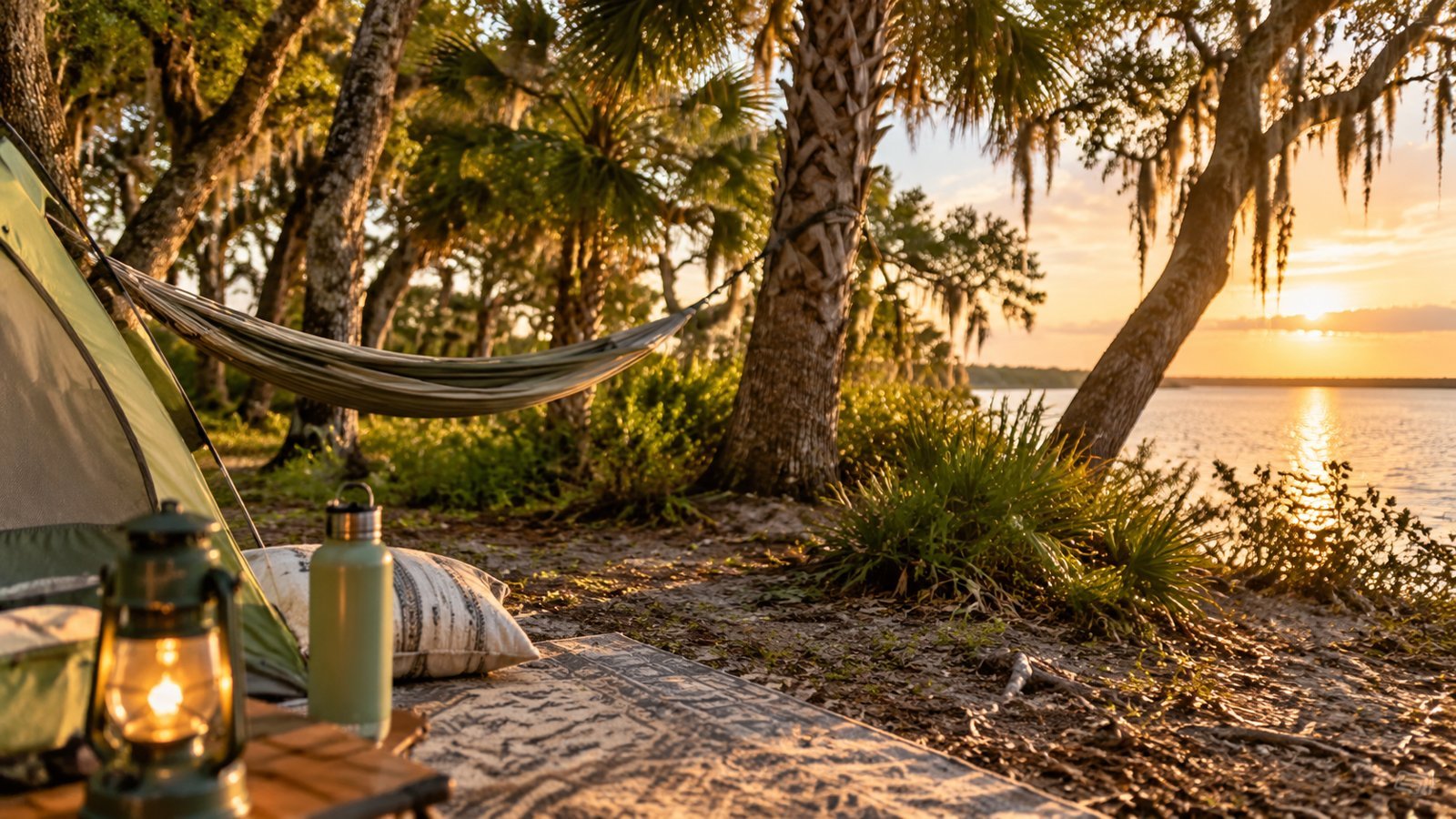
Florida’s climate is often described in terms of a wet season and a dry season. According to the National Weather Service offices that cover the state, the wet season generally runs from about May to October, with frequent showers and thunderstorms, while the dry season runs from about November to April, with less rain and lower humidity. The exact onset varies by region. NWS offices in South Florida, Tampa Bay and East Central Florida each publish their own typical dates, which tend to cluster around mid to late May for the start of the wet season and mid October for the start of the dry season.
These are patterns, not promises. A wet season day can be sunny until early afternoon and then turn stormy. A dry season stretch can still bring cold fronts, rain and wind. For camping, the difference shows up in how you plan your day: during the wet season, schedule activities for the morning and expect to shelter later, while in the dry season you have more flexibility.
Temperature varies too. Summers are hot across the state, and the CDC lists heat as a serious health concern in hot climates, so plan accordingly. Winters are milder than in northern states, though cold fronts can bring chilly nights, especially in northern Florida and the Panhandle. Pack for both warm days and a cool night, and read our guide on camping in the rain before a wet season trip.
Dry Season Camping: November Through April
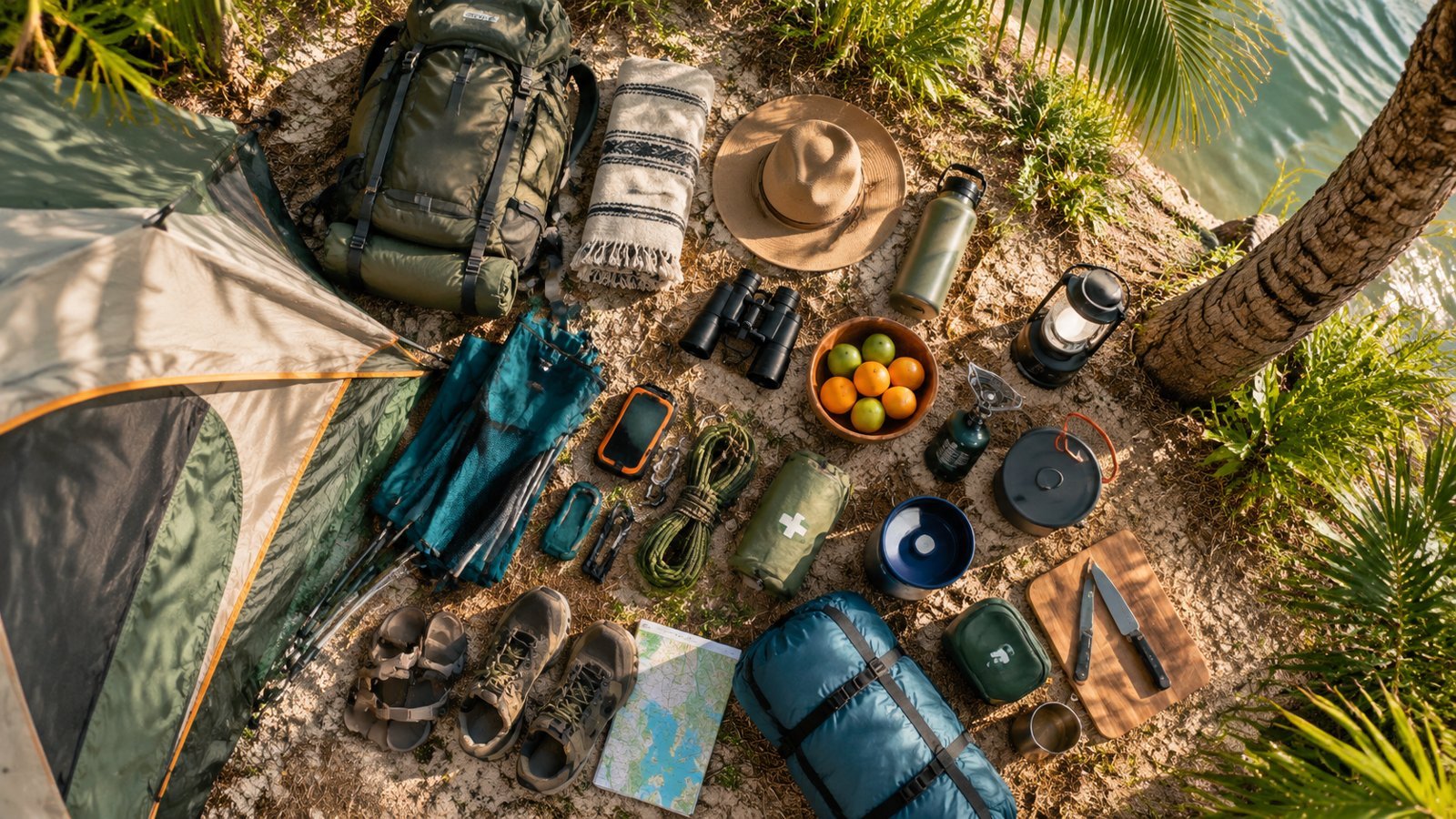
Many campers consider the dry season the best time to camp in Florida, for good reason. Humidity is lower, rain is less frequent and daytime temperatures are more comfortable for hiking, paddling and sitting around a campfire. Fewer storms mean fewer interrupted plans and less time spent drying out gear.
Popularity follows comfort. When the weather is pleasant, sought-after campgrounds fill up, particularly on weekends and holidays. Florida State Parks allow Florida residents to book campsites and cabins up to 11 months in advance and non-residents up to 10 months in advance, according to the park system’s reservation information. Florida residents must provide a valid Florida driver license or ID number to use the 11-month window. To land a specific park on a winter holiday, mark your calendar for the day the window opens.
Do not assume dry means safe from fire hazards. A lack of rain can raise wildfire risk, and counties sometimes issue burn bans. Check local fire rules, and follow the practices in our guide to campfire safety. A camp stove is an easy alternative when fires are restricted.
Nights can still be chilly. Bring a sleeping bag rated for the expected lows, a warm hat, and an insulating pad. Cold nights are a time to remember carbon monoxide safety: never heat a tent with a stove or burn charcoal inside a shelter, as the CDC warns.
Wet Season Camping: May Through October
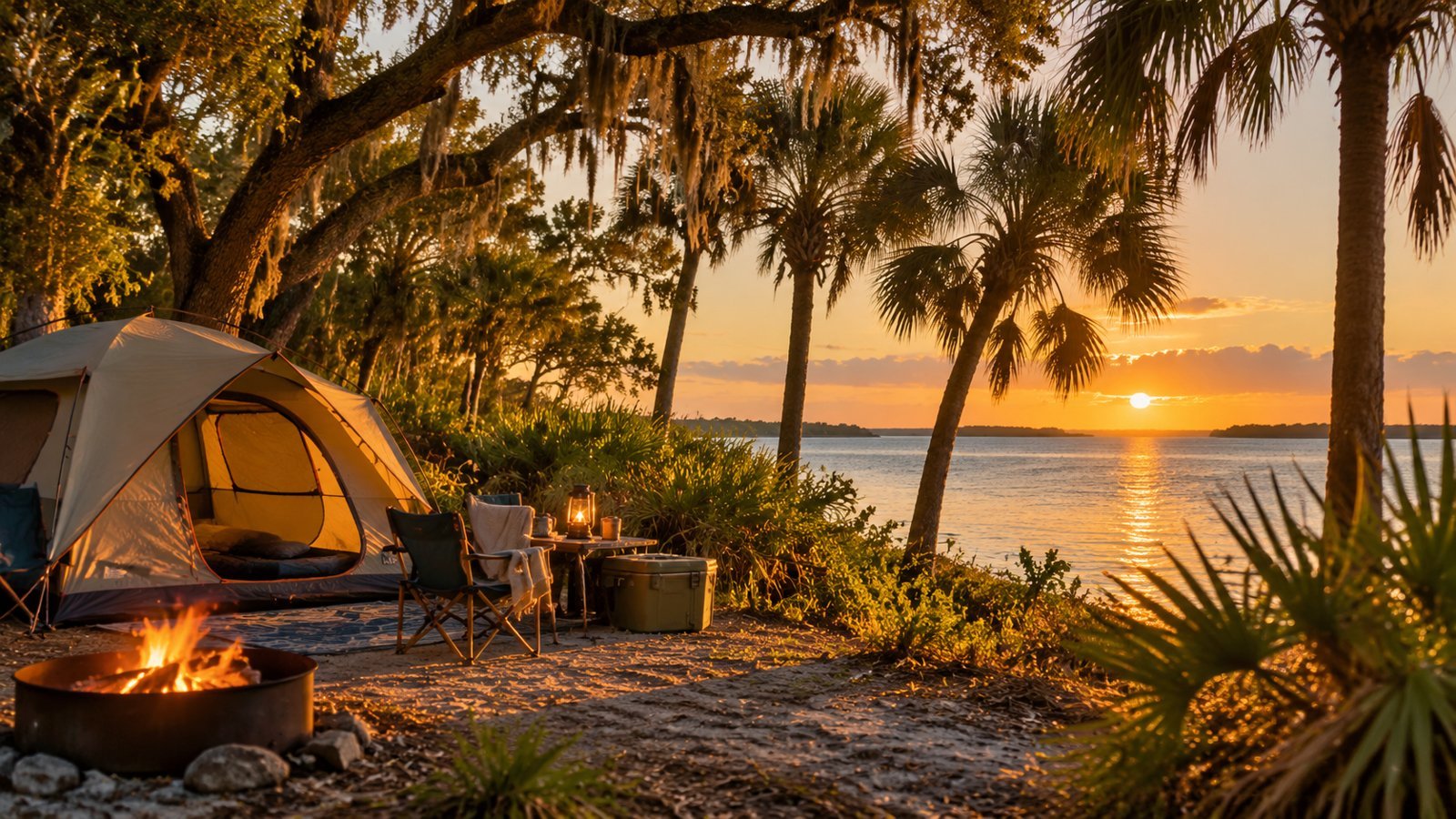
The wet season is not a reason to cancel a trip, though it does change the plan. Frequent thunderstorms are the central feature, and the NWS reminds everyone that there is no safe place outside when thunderstorms are in the area. A tent, a picnic shelter or a covered porch does not protect you from lightning. At a campsite, the safe options are a substantial building or a hard-topped vehicle, and the NWS recommends waiting 30 minutes after the last thunder before going back out.
Build your day around that pattern. Do hiking, paddling and swimming early, while skies are clear. Check the radar before launching a kayak or going to the beach. Park the car where you can reach it quickly, and keep keys handy. Our campsite safety basics guide goes through the storm routine in more detail.
Heat and humidity are the other factors. The CDC advises people in hot conditions to stay in the shade, drink water regularly, rest, and do strenuous activity during cooler hours. Dizziness, weakness, nausea or unusually heavy sweating call for a break and, if severe, medical care, and heat stroke is an emergency. Choose a shaded site, use a tarp or canopy for extra shade, and bring more water than you think you need.
Insects are most active in warm, humid weather. Mosquitoes breed in standing water, and ticks live in grassy and wooded areas. The CDC and the Florida Department of Health recommend using an EPA-registered insect repellent, wearing long sleeves and pants, checking for ticks after outdoor activity and showering soon after coming in. Screen rooms and tents with mesh help at dusk and dawn. Empty any standing water around camp, such as water pooled in a tarp or bucket.
Hurricane Season: June 1 Through November 30
The Atlantic hurricane season officially runs from June 1 to November 30, according to the National Hurricane Center and Ready.gov. Not every year brings a storm that affects Florida, and not every storm affects the whole state, but camping plans in this window should include a plan for weather changes. The season overlaps both the wet season and the early dry season, which is why October trips still need a forecast check.
Monitor forecasts from the National Hurricane Center and your local NWS office in the days before a trip. Parks and campgrounds sometimes close or cancel reservations when a storm approaches, and officials can order evacuations. Check the park’s alerts page or call the office before you drive. Buy travel flexibility if you can: look at cancellation policies before booking, and consider whether a refundable option makes sense.
Should a storm threaten while you are camping, leave early. Do not wait for conditions to deteriorate, because roads can flood and bridges can close. Ready.gov says that when officials order an evacuation, residents and visitors should follow it immediately. A tent offers no real protection from high winds or surge, so move to a safe location out of the storm’s path, and keep your fuel tank full, your phone charged and a weather radio ready.
RV campers face extra risk because high-profile vehicles are vulnerable to wind. Check evacuation guidance for your area and do not wait until the last minute to hitch up. Our guide to RV first trip mistakes includes a short departure checklist that works well when you need to leave in a hurry.
Florida Wildlife: Alligators and More
Alligators live in freshwater lakes, rivers, ponds and many wet areas around the state. The FWC advises keeping a safe distance, never feeding them, which is illegal and makes them associate people with food, and swimming only in designated areas and during daylight hours. Keep pets on a leash and away from the water’s edge, and never allow them to swim in fresh or brackish water where alligators may be present. Do not approach nests or young. Should an alligator pose a threat to people, pets or property, the FWC says to call its Nuisance Alligator Hotline, which is 866-392-4286.
Other wildlife needs respect as well. Raccoons, armadillos and birds are quick to raid food that is left out. Store food, coolers and trash securely in a hard-sided vehicle or a campground locker, and follow the Leave No Trace principle of never feeding wild animals. Our guide to Leave No Trace for campers explains how to keep wildlife wild.
At the coast, check the local rules on beach camping, wildlife nesting and lighting. Some beaches and parks restrict lights at night during seasons when sea turtles nest, and rules vary by site, so read the notices posted at your campground. Ask a ranger about any closures or local advisories.
Pick the Right Campground and Pack Smart
Florida offers state park campgrounds, national seashore and forest sites, county parks and private campgrounds. State parks give you shaded sites near springs, rivers and beaches, and the reservation system gives a clear picture of availability. Private campgrounds often add amenities such as pools and full hookups. National forests and some public lands offer dispersed or primitive options with different rules, and check the rules of the agency that manages the land before you plan on staying.
Pack for the season. In the wet season, bring extra tarps, a sturdy tent with a full rain fly, dry bags, quick-drying clothes, and a plan for drying gear. In the dry season, bring warm layers for nights and a good sleeping bag. Year-round, pack sunscreen, a hat, insect repellent, a refillable water bottle, a first aid kit and a flashlight. A battery or hand-crank weather radio is worth having when storms are possible.
Keep gear in good shape for humid weather. Mildew thrives in warm, damp places, so dry tents and bags before you put them away, as described in our article on camping gear care. Humidity can also affect electronics and paper, so use zip-top bags and dry sacks.
A simple planning timeline helps. Eleven to ten months out, check the reservation window for the parks you want and book the dates that matter most. A few weeks before, review the typical weather for the region, check burn bans, park alerts and closures, and decide what to pack for the season. In the final week, watch the forecast daily and look at the National Hurricane Center outlook if it is storm season. The day before, confirm your reservation, fill the gas tank, charge your phone and weather radio, and tell someone your plans.
Finally, build flexibility into your plan. A rainy afternoon can be spent at a nature center or a diner nearby, and a hot midday can be spent swimming or resting. A trip that adapts to the weather feels much better than one that fights it.
Frequently Asked Questions
What is the best month to camp in Florida?
There is no single best month, but the dry season, roughly November through April, tends to bring lower humidity and less rain. Check the forecast and local conditions for your region and dates.
How far ahead can I reserve a Florida state park campsite?
Florida State Parks allow Florida residents to reserve up to 11 months ahead and non-residents up to 10 months ahead. Residents need a valid Florida driver license or ID number for the 11-month window.
When is hurricane season?
The Atlantic hurricane season runs from June 1 to November 30. Check National Hurricane Center forecasts before and during any trip in that window.
Is it safe to swim where alligators live?
The FWC advises swimming only in designated areas, during daylight, and keeping pets out of the water in fresh or brackish areas where alligators may be present. Never feed or approach alligators.
How do I protect myself from mosquitoes and ticks?
Use an EPA-registered repellent, wear long sleeves and pants, check for ticks after being outdoors, and shower soon after. Remove standing water around camp.
Leave a Reply