
Quick answer: dry everything completely before it goes into storage, clean tents with cool water and mild soap, keep sleeping bags loose in a large breathable sack instead of a stuff sack, and store gear in a cool, dry place away from garages, attics and car trunks.
Camping gear is expensive to replace and surprisingly easy to ruin. Most of the damage does not come from rough use on the trail. It comes from the way equipment is put away after the trip: a damp tent folded into a bag, a sleeping bag squeezed into a stuff sack for months, a stove stored with fuel residue in the lines. A few simple habits can double the working life of the equipment you already own.
This guide walks through the care routine for the two items that cost the most and suffer the most, tents and sleeping bags, and then covers the rest of the kit. The core instructions come from the outdoor retailer REI’s published expert advice, which reflects common manufacturer guidance. Your product’s care label and manual always take precedence, since fabrics, coatings and insulation differ.
Set aside an hour after each trip. A short unpacking routine is far less work than repairing mildew or replacing a ruined bag a year later.
Unpack and Dry Everything First
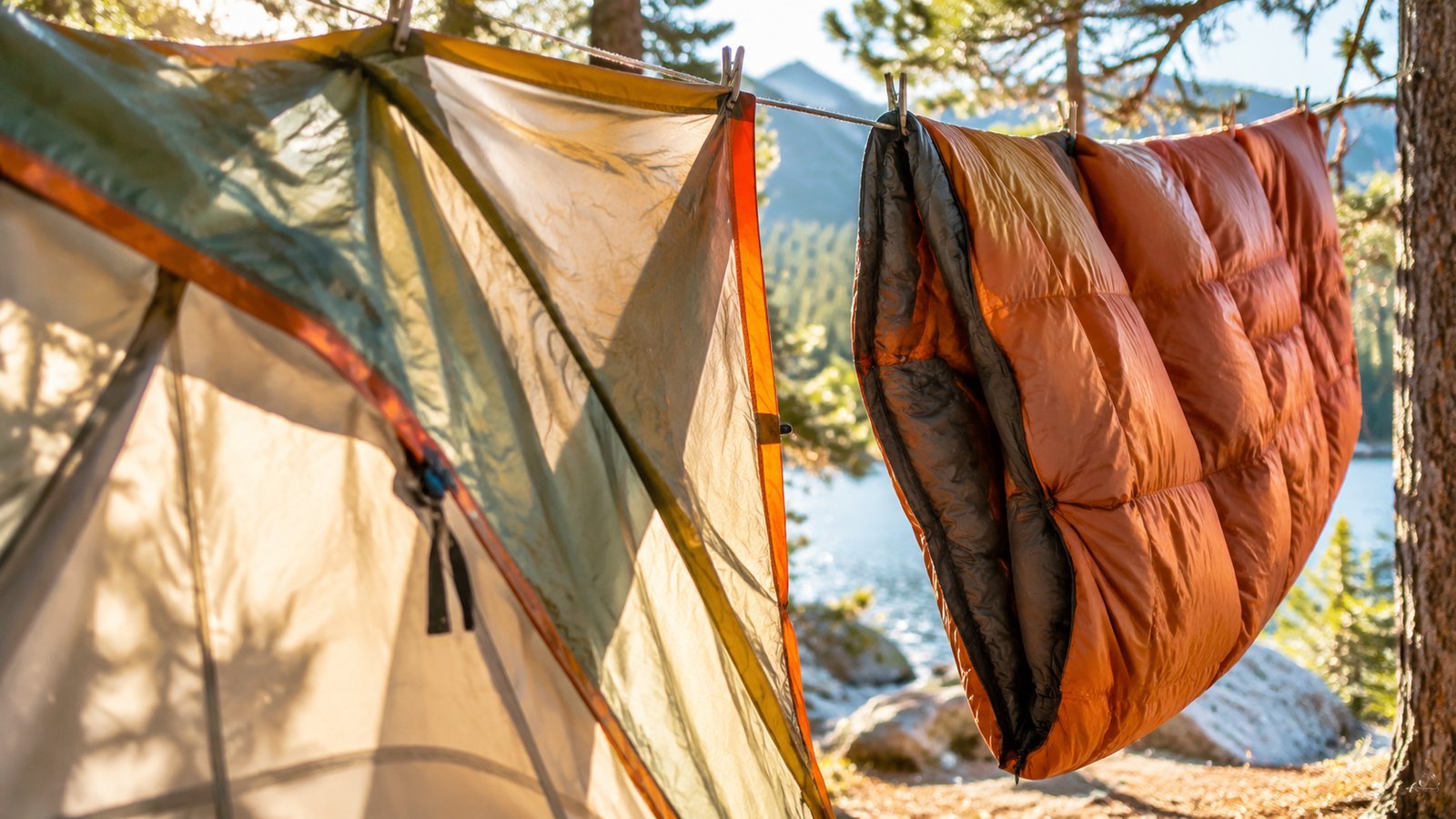
Moisture is the enemy of nearly all camping gear. Mold and mildew can grow on fabric and inside insulation if items are put away damp, which creates odors, weakens materials and can damage waterproof coatings. The simplest rule is also the most valuable: nothing goes into storage until it is completely dry.
As soon as you get home, take everything out of the vehicle. Pull tents, tarps, sleeping bags, pads, clothing, towels and chairs out of their bags and let them air. Open the zippers, doors and vents on the tent. Spread out wet items in a garage, on a porch, in a basement or in a spare room with good airflow. A fan or a dehumidifier speeds the process in a damp space.
Avoid long periods in direct sunlight. According to REI, sunlight can weaken sleeping bag fabric because of ultraviolet rays, and the same caution applies to tent fabric and nylon gear. Shade with a breeze is the safest way to dry most items. If a tent was set up wet on a rainy trip, our guide to camping in the rain explains how to pack and dry it quickly.
While the gear dries, sort it. Make three piles: clean and ready to store, needs washing, and needs repair or replacement. Making this triage a habit means that you will find a broken zipper or a missing stake at home instead of in the dark at the campsite.
How to Clean a Tent
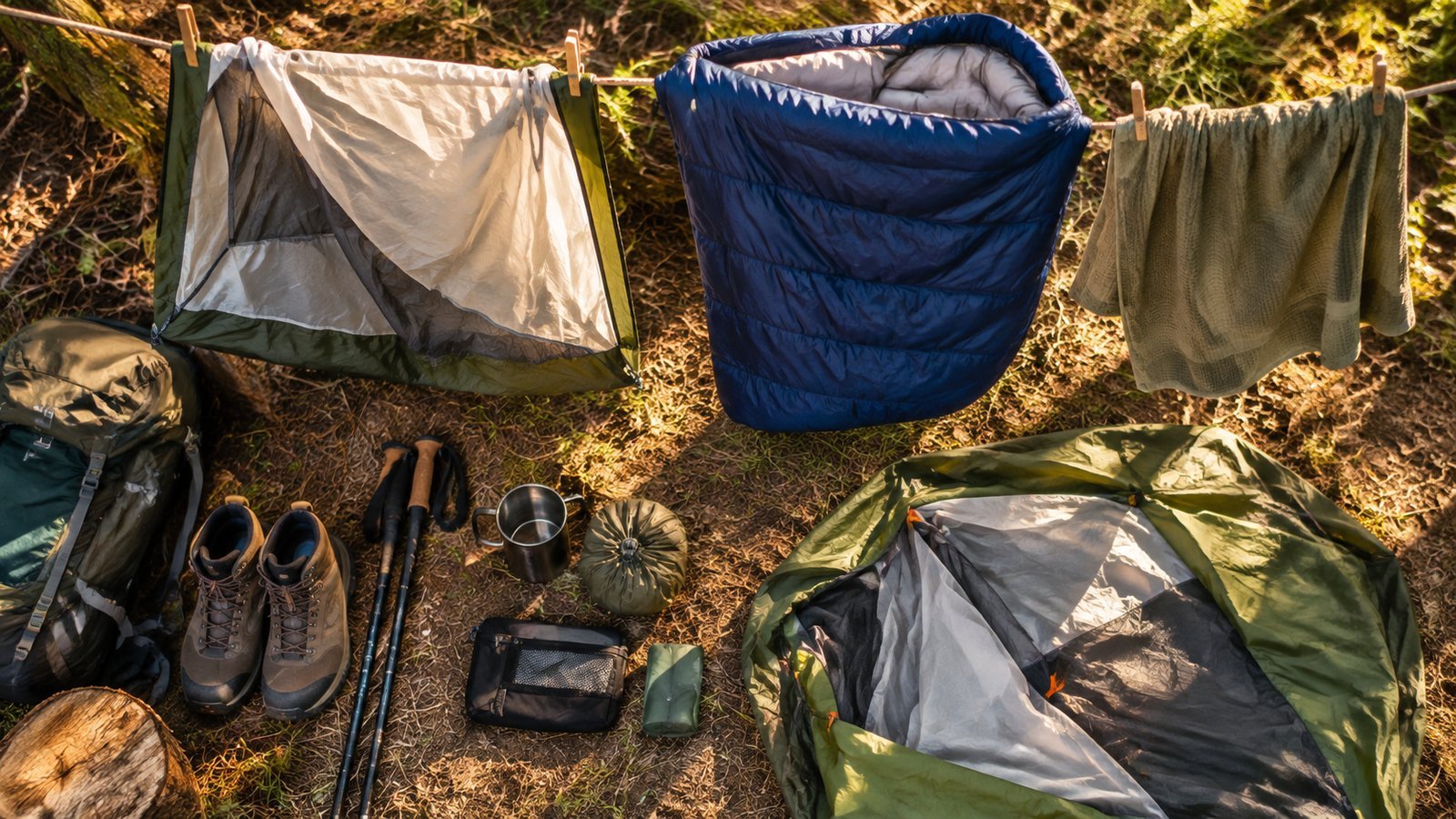
Most tents need cleaning less often than you might think, but dirt, sand, sap and mildew can cause real harm if left alone. REI’s step-by-step method starts with brushing off or shaking out the dirt, then sweeping or vacuuming the inside carefully, and then spot cleaning before any full soak.
- Gather supplies: cool to lukewarm water, mild fragrance-free dish soap, a cleaner made for outdoor gear, a non-abrasive sponge or cloth, and a bathtub or other large tub.
- Spot clean the extra-dirty areas with a little mild soap, using the sponge or cloth gently.
- Fill the tub with cool to lukewarm water and add the gear cleaner, following the directions on the bottle.
- Unzip the doors, turn the tent inside out, and immerse the tent and rainfly for the time the cleaner label gives.
- Drain the tub, refill it with clean water and rinse. Repeat until all soap is gone.
- Set up the tent or hang it in a cool, shaded area until it is completely dry.
A few cautions matter. Do not use hot water, harsh detergents or bleach, and do not put a tent in a washing machine or dryer, since agitation and heat can damage coatings and seams. Check the manufacturer’s care instructions if you are unsure.
Special problems have special fixes. For mildew, mold or odors, REI recommends an enzyme cleaner, following its directions closely, since soaking for longer than the stated time risks hydrolysis, a process where water starts to break down polyurethane waterproof coatings. For pine sap, REI suggests spot cleaning with mineral oil without scrubbing too hard, or trying an alcohol-based product such as hand sanitizer, followed by a thorough rinse. For sticky zippers, scrub out sand, dirt and salt residue with a toothbrush, rinsing if needed. Wipe poles with a rag.
When the tent no longer sheds rain as it used to, the waterproof coating may be wearing out. Renewing the coatings is possible, and the tent maker can tell you which products are suitable for your model. Test a repair or reproofing product on a small area first.
How to Dry and Store a Sleeping Bag
Sleeping bags have a different problem: they rely on loft, the fluffiness of the insulation that traps warm air. Leaving a bag compressed in its stuff sack for several months reduces its resiliency and ability to loft, REI explains, and synthetic fills tend to do worse than down in this regard, though both are affected. The stuff sack is a tool for travel, not for storage.
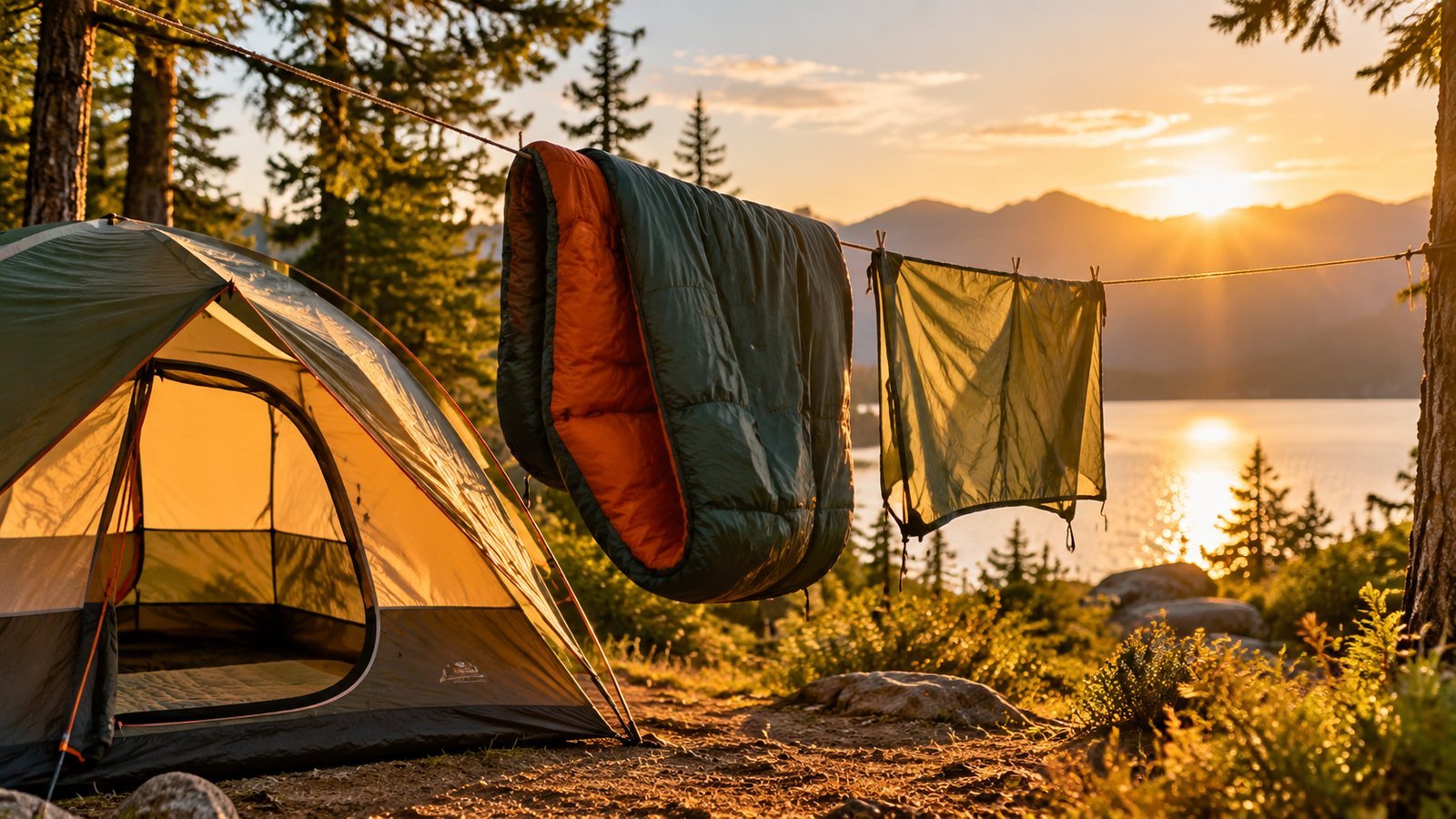
First, dry the bag. Skip this step, and mold and mildew can grow on the surface and inside the insulation. The retailer suggests fully unzipping the bag, then hanging it over a line or on a large hanger in a covered outdoor space for 6 to 8 hours, out of direct sunlight. Turning it inside out for roughly the first four hours and right side out for the next four helps moisture escape, which matters most when the outer shell is waterproof. Without outdoor space, hang it in a dry, temperature-controlled indoor area with a fan or dehumidifier.
Second, store it loose. Take the bag out of its stuff sack, make sure it is dry, and place it loosely inside a large breathable cotton or mesh sack. Many bags come with a large cotton storage bag for this purpose. A king-size pillowcase works in a pinch, says REI, though a roomy cotton or mesh sack of about 90 liters is better. Keep the bag in a cool, dry place such as a closet, and avoid damp basements, unheated and uncooled garages or attics, and car trunks, since moisture and temperature extremes are hard on insulation.
Wash it only when needed. Body oils, sweat and dirt in the insulation can reduce performance, so periodic washing is wise, typically every few years for casual campers and once a season for avid backpackers. Use a cleaner suited to the insulation type, follow the label, and dry at low heat with a few clean tennis balls to fluff the fill, checking often. Large commercial dryers handle this better than home models. Down and synthetic bags have different care needs, so read the tag.

Care for Pads, Pillows and Bedding
Sleeping pads and pillows suffer from moisture trapped inside and from long compression. For an inflatable pad, the manufacturer’s guidance is the best source, but common advice is to wipe off dirt, let the pad dry fully with the valve open, and store it unrolled or loosely rolled with the valve open. Avoid sharp objects and rough ground when you set it up, and carry the patch kit that came with the pad.
Closed-cell foam pads need little more than a wipe and a dry place. Self-inflating pads should be stored with the valve open so the foam can keep its shape. Keep any pad away from heat sources and from long periods in a hot car, which can stress seams and adhesives.
Cots, air mattresses and camp bedding follow similar rules: clean, dry and store loosely. Wash blankets and sheets after each trip. A dry bedding bin with a tight lid keeps rodents and moisture out of the pile.

Stoves, Lanterns, Coolers and Cookware
Cooking gear collects grease, food and soot. Clean stoves after they cool, following the instructions in the manual, and store them with fuel handled according to the label. Do not store fuel cartridges or bottles in hot cars, and follow the maker’s advice about disconnecting them. Check hoses, regulators and connections for cracks or damage before each trip, and replace parts that show wear instead of repairing them yourself.
Never run a stove, lantern or heater inside a tent or other enclosed space, because carbon monoxide can build up quickly, as the Centers for Disease Control and Prevention warns. For cookware, wash cast iron according to its care instructions, dry it completely and rub on a light layer of cooking oil. Stainless and aluminum pots can be cleaned with soap and water, and nonstick pans should be washed gently with non-abrasive tools. Our list of campfire cooking equipment offers a good idea of what needs care.
Coolers need to be washed and fully dried with the lid open between trips, since closed lids trap odors and invite mildew. A diluted solution of mild dish soap and warm water works for most, and a rinse and air dry finishes the job. Store the cooler in a dry location with the lid cracked. Clean lantern globes and batteries, and take batteries out of devices that you will not use for months to prevent corrosion.

Tarps, Chairs, Stakes and the Small Stuff
Tarps, ground sheets and footprints should be brushed off, rinsed if muddy, dried completely and folded loosely. Cord and guy lines can be untangled and coiled, and stakes should be brushed clean, counted and stored together. Bent stakes can usually be straightened, but repeated bending weakens them. Replace any that are cracked or badly rusted.
Camp chairs and tables benefit from a wipe and a thorough dry. Check hinges, folding mechanisms and fabric seams, and tighten screws as needed. Headlamps and flashlights should be checked for working lights and fresh batteries. Our rundown of camping gadgets includes several items worth testing before each season.
Finally, repair as you go. Patch a small hole in the tent fabric before it spreads, replace a missing toggle, wax or lubricate a sticking zipper according to the maker’s advice, and sew loose seams. A small repair kit with tent pole sleeves, fabric tape, a needle and thread, spare buckles and cord is cheap insurance, and it can be stowed with the tent.

Build a Storage System That Works
Choose a place that is cool, dry and out of direct sunlight. A closet shelf, a spare room or a climate-controlled basement works better than a hot attic or a humid garage. Use clear bins with labels or a rolling rack, and group items by function: sleep, shelter, kitchen, lighting, and tools. When you open a bin, you should know what is inside without digging.
Keep a master checklist taped inside one lid. Our family camping checklist can serve as a template, with notes on items that need replacing. Add dates for services such as waterproofing the tent, washing the sleeping bags or testing the stove.
Do a quick preseason check each spring or before the first trip of the year. Set up the tent in the yard, shake out the sleeping bags, inflate the pads, light the stove, and test the lanterns. Anything that fails at home can be fixed or replaced before you are miles from help.

Frequently Asked Questions
How often should I wash my tent?
Only when it needs it. Brush off dirt after each trip and wash the tent when it is stained, smelly or has mildew, using cool water and mild soap or a cleaner made for outdoor gear. Avoid washing machines and dryers.
Can I store my sleeping bag in its stuff sack?
Not for long. Compressed insulation loses resiliency and lofting ability over months. Store the bag loose in a large breathable cotton or mesh sack in a cool, dry place.
How do I get mildew smell out of a tent?
REI recommends an enzyme cleaner, following the label closely and not soaking longer than directed, because extended soaking can break down polyurethane waterproof coatings. Dry the tent completely afterward.
Is it okay to dry gear in the sun?
Short periods are usually fine for many items, but REI warns that direct sunlight and ultraviolet rays can weaken sleeping bag fabric. Shade with good airflow is safer.
Where should I store camping gear?
In a cool, dry, climate-stable space such as a closet. Avoid damp basements, unheated garages, hot attics and car trunks.


Leave a Reply