Quick answer: choose a nearby, developed campground with restrooms and water, do a practice night in the backyard first, and build a sleep setup that keeps a toddler warm without loose adult bedding: an insulated pad, a toddler-sized sleeping bag or wearable blanket, and layered sleep clothes. Keep routines familiar, supervise closely around fire and water, use sunscreen and age-appropriate insect repellent, pack extra clothes and diapers, and plan to pack out everything you bring.
Camping with a toddler is a different trip from camping with older children or adults, and that is not a bad thing. Toddlers are fascinated by dirt, sticks, bugs, pinecones and the simple fact of sleeping in a tent. With realistic expectations and a little preparation, a short trip can be one of the best family outings of the year.
The challenges are predictable: sleep, safety, food, diapers and the unpredictable moods of a one- to three-year-old far from home. Most of them are solved before you leave, with the right campground, a tested sleep setup and a short list of rules everyone follows.
This guide is part of our camping gear and checklists guide, which covers packing for every type of trip, and it pairs with our printable family camping checklist. Safety information here draws on guidance from the American Academy of Pediatrics (AAP), the Centers for Disease Control and Prevention (CDC) and the U.S. Consumer Product Safety Commission (CPSC). It is general information, so ask your pediatrician about anything specific to your child.

Plan a Toddler-Friendly First Trip
Start Close to Home
A first trip works best within an hour or two of home, for one or two nights. If the weather turns or sleep falls apart, home is close. Many families start with a night in the backyard; our guide to backyard camping with kids has ideas for making that practice night fun.
Pick the Right Campground
Developed campgrounds with flush toilets, running water, level tent pads and nearby parking make toddler camping much easier. Walk-in and backcountry sites can come later. Look at the campground map before booking and avoid sites right next to water, steep drop-offs or busy roads. A site near, but not beside, the restroom saves many nighttime walks.
Choose the Season
Mild weather is easiest. Toddlers lose heat quickly in cold weather and overheat quickly in hot weather, and both make sleep harder. In warm places such as Florida, cooler months are often the most comfortable for young children.

The Toddler Sleep Setup
Sleep is the part parents worry about most, and it is where safety and comfort overlap.
Safe Sleep Basics
The AAP’s safe sleep guidance for babies under one year old calls for a firm, flat sleep surface with no pillows, blankets, bumpers or soft toys, and placing the baby on their back to sleep. That guidance still applies at camp, so infants need a safe sleep space such as a portable play yard that meets the federal safety standard, used only with the mattress or pad supplied by the manufacturer. The CPSC warns against adding extra mattresses or padding to play yards.
Toddlers over one year old have more flexibility, but a tent full of adult sleeping bags, pillows and loose blankets is still not an ideal space for a small child. A dedicated sleep area for the toddler is simpler and safer.
Sleeping Pads
Insulation from the ground matters even more for small bodies. Give a toddler a pad with good insulation, rated by R-value under the ASTM F3340 standard where listed, and consider a foam pad underneath for extra warmth. A small pad keeps the toddler from rolling off onto cold ground; some families place pads inside a portable play yard or a travel bed designed for toddlers.
Sleeping Bags and Wearable Blankets
Adult sleeping bags are too large for toddlers. Extra space leaves cold air to heat, and long bags can bunch around a small child. Better options are toddler-sized sleeping bags or a wearable blanket, also called a sleep sack, rated for cooler temperatures, layered with sleep clothes. Many parents bring the wearable blanket their child already sleeps in at home, since it is familiar and simple.
Dressing for Sleep
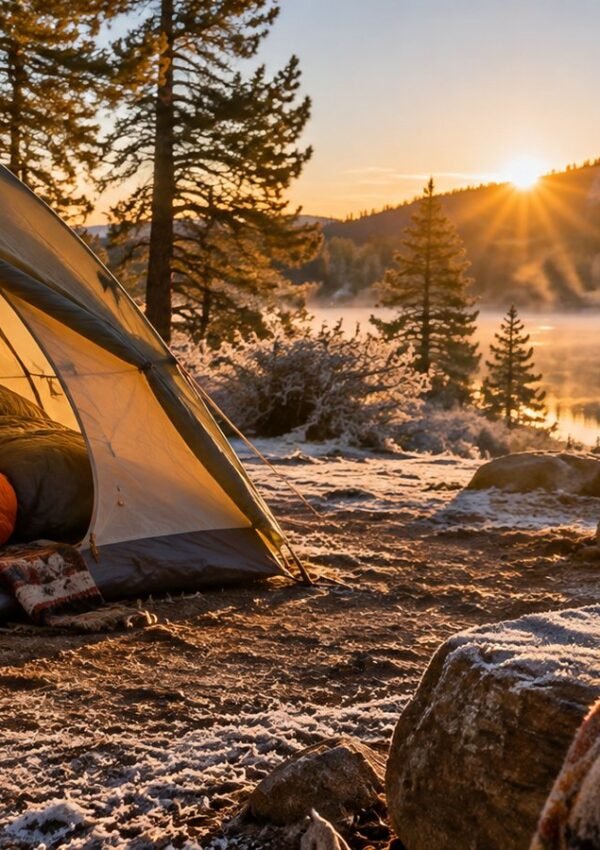
Layer sleep clothes the way you would for an adult camper: a snug base layer of wool or synthetic fabric, a fleece layer if nights are cool, warm socks and, on cold nights, a soft hat. Avoid overheating; check the back of the neck or the chest, which should feel warm but not sweaty. Avoid cotton when nights are cold and damp, because it holds moisture.
Tent Setup
Put the toddler’s sleep space in the middle of the tent, away from the walls where condensation collects and drafts enter. A battery-powered night light or a headlamp on its red setting helps with nighttime checks without fully waking anyone. Never use a heater, stove or lantern that burns fuel inside a tent; the CPSC warns that carbon monoxide can build up quickly in enclosed spaces.

Toddler Gear Checklist
- Sleep: insulated pad, toddler-sized sleeping bag or wearable blanket, familiar small comfort item, play yard or travel bed if used.
- Clothing: two or three complete outfits per day, base layers, fleece, rain jacket, warm hat, sun hat, extra socks, water shoes and closed-toe shoes.
- Diapering: diapers, wipes, changing pad, sealable bags for used diapers, hand sanitizer.
- Feeding: sippy cups, plates, spoons, a clip-on or portable booster seat, bibs, familiar snacks.
- Safety: first aid kit with child-appropriate medicines, sunscreen, age-appropriate insect repellent, a bright jacket or headlamp for visibility, and a whistle for older toddlers.
- Comfort and play: a few small toys, books, a bucket and shovel, chalk.
- Getting around: a child carrier or hiking backpack, a stroller with large wheels if the campground has paved paths.
- Potty: a portable potty seat for toddlers who are potty training.
Carriers and Short Hikes
A structured child carrier makes short hikes possible long after little legs give out. Check the carrier maker’s weight and age limits, adjust it to fit the adult wearing it, and take breaks so the child can stretch. Dress a carried toddler a layer warmer than a walking adult, since a child sitting still in a pack cools faster, and protect them from sun with a hat or carrier canopy.
A Rain Plan
Rain is harder with toddlers than with older kids. Pack rain gear for the child, a tarp over the picnic table to make a dry play area, and a few indoor-style activities such as stickers, books and crayons. If a storm is forecast with lightning, plan to wait it out in a hard-topped vehicle or a building rather than the tent.
Safety Around Fire, Water and the Campsite
Campfire
Toddlers move fast and do not understand heat. Set a clear boundary around the fire ring, keep an adult within arm’s reach whenever a toddler is near the fire, and let the fire burn down and go fully out before bed. Keep matches, lighters, stove fuel and hot pans well out of reach.
Water
The CDC reports that drowning is the leading cause of death for children ages one to four. Lakes, rivers, ponds and even large puddles and buckets are risks. Assign a dedicated adult to watch the toddler near water, with no phones or distractions, and use a U.S. Coast Guard-approved life jacket sized for the child near open water and on boats.
Plants, Mushrooms and Small Objects
Toddlers explore with their mouths. Sweep the site for small items, berries, mushrooms and litter before letting a toddler play, and keep the Poison Help line, 1-800-222-1222 in the United States, saved in your phone. Teach the simple rule that nothing found outside goes in the mouth.
Cars and Roads
Campground roads carry cars, trailers and bikes. Keep toddlers away from the road and parking area, and never leave a child alone in a vehicle, even briefly, since cars can heat up quickly.

Sun, Bugs and Ticks
Sun protection matters at camp, where shade can be patchy. The AAP recommends keeping babies under six months out of direct sun and, for older children, using sun-protective clothing, hats and a broad-spectrum sunscreen. Reapply sunscreen after water play and sweating.
Insect repellents need age-appropriate choices. The CDC advises that EPA-registered repellents such as DEET and picaridin can be used on children, while products containing oil of lemon eucalyptus or para-menthane-diol should not be used on children under three years old. Apply repellent to your hands first and then to the child, avoiding hands, eyes and mouth.
Check toddlers for ticks every evening, including behind ears, in hair, under arms and around the waist. The CDC advises removing a tick with fine-tipped tweezers, grasping it close to the skin and pulling upward with steady pressure.

Food, Diapers and Daily Routine
Food
Pack familiar foods. A new place is not the moment to introduce new meals. Bring easy snacks, and plan simple meals that can be ready quickly when a toddler is hungry. Keep hot pots and stoves out of reach and well away from play areas. Cut grapes, hot dogs and other round foods into small pieces, as pediatric choking guidance recommends, and keep toddlers seated while eating.
Diapers and Waste
Used diapers must be packed out or placed in campground trash, never buried or burned. Sealable bags and a lidded container keep odors down and help with wildlife-safe storage. Leave No Trace principles apply to families too; our guide to Leave No Trace for campers explains how to keep the site clean.
Naps and Bedtime
Keep the usual routine as much as possible: the same bedtime story, song or comfort item. Long summer evenings can make bedtime tricky, so a dark tent or an eye-shade canopy over the play yard helps. Expect the first night to be lighter sleep for everyone, and plan a calm next morning.
Activities
Toddlers do not need a packed schedule. Collecting leaves, digging, splashing in a shallow area with an adult, short walks and simple games keep them happy. Our list of camping games for kids and adults includes several that work for little ones.
A Practice Night and Backup Plans
Set up the tent at home and let the toddler play in it for a few days before the trip. Then try a full night in the backyard with the same pad, bag and clothing you plan to bring. That one night reveals what works: whether the bag is warm enough, whether the night light is needed and how long it takes everyone to settle.
At camp, have a backup plan. If sleep falls apart, a nap in the car or an early drive home is not a failure. Short, positive trips build the next ones, and each outing teaches you what your child needs next time.

Frequently Asked Questions
What age can a toddler go camping?
Families camp with children of all ages. Many find the toddler years manageable with a nearby campground, a tested sleep setup and close supervision.
Can my toddler sleep in an adult sleeping bag?
It is better not to. A toddler-sized bag or wearable blanket fits better and keeps a small child warmer.
How do I keep my toddler warm at night in a tent?
Use an insulated pad, a toddler-sized bag or sleep sack, layered wool or synthetic sleep clothes and a hat on cold nights, and check the child’s chest or neck for warmth.
Which bug sprays are safe for toddlers?
The CDC says EPA-registered repellents such as DEET and picaridin can be used on children, but oil of lemon eucalyptus and PMD should not be used under age three.
What should I do with dirty diapers while camping?
Seal them in bags and pack them out or use the campground trash. Never bury or burn them.
Should infants sleep in a play yard while camping?
For babies under one year, the AAP advises a firm, flat surface without soft bedding, such as a play yard that meets federal safety standards, used with its own mattress.