Quick answer: winter camping is safe and enjoyable when you plan for cold, short days and moisture. Start with a one-night car camping trip close to home when the forecast is mild, wear a three-layer clothing system with no cotton against your skin, sleep on an insulated pad with a warm-rated bag, and never run a stove or heater inside a closed tent because of carbon monoxide. Eat and drink regularly, keep your boots and water from freezing, and tell someone your plan and your return time. Know the early signs of hypothermia and frostbite and be ready to retreat to the car or home.
Cold-weather camping has a reputation for being hard, but the extra challenges are mostly about preparation. Campgrounds are quiet, the air is clear, and a frosty morning with a hot drink is one of the best parts of the outdoors. The difference between a miserable night and a cozy one usually comes down to a few choices: how you dress, what you sleep on, how you manage moisture and how conservative you are with your first trip.
In this guide
- Is Winter Camping Right for You?
- Choosing a First Winter Trip
- The Layering System
- Sleeping Warm: Bags, Pads and Bedding
- Choosing and Pitching a Winter Tent
- Heating Safely: Carbon Monoxide
- Cooking and Water in the Cold
- Daylight, Light and Navigation
- Cold-Weather Health: Hypothermia and Frostbite
- Snow, Ice and Avalanche Awareness
- Cold-Weather Camping Checklist
- Winter Camping with an RV or Van
- After the Trip: Drying and Storing Winter Gear
- Mistakes First-Time Winter Campers Make
- The Bottom Line
- Frequently Asked Questions
This guide is the hub for our cold-weather articles. It builds on the basics in our camping safety guide and links to focused guides on each topic, so you can go as deep as you like. It is general information for recreational campers, not a substitute for local advice or mountaineering training.
Sources: National Park Service (NPS) winter safety and backcountry guidance; Centers for Disease Control and Prevention (CDC) pages on hypothermia, frostbite and carbon monoxide poisoning; National Weather Service (NWS) wind chill chart and winter weather safety; avalanche.org and regional avalanche center guidance for backcountry travel; REI Co-op Expert Advice on winter camping, sleeping bags and pads; manufacturer notes on ISO 23537 sleeping bag ratings and the ASTM F3340 R-value standard; state natural resource agency ice safety guidance. Conditions, ratings and local rules vary. Checked November 2026. This article is general safety information, not medical advice.

Is Winter Camping Right for You?
Winter camping suits people who like quiet trails, dislike crowds and are willing to plan more than they would in July. It is not a good fit if you dislike being cold, dislike dealing with gear or cannot get to a warm shelter quickly if conditions change. The good news is that you can ease into it, using the same car and gear you already own and adding a few warm-weather upgrades.
Consider your first trip a test, not an expedition. A first winter night is often best spent at a drive-in campground within an hour of home, where your car is steps away and you can leave at midnight if you need to. Many state parks stay open in winter and offer heated bathhouses or cabins. Cabins and yurts are a great stepping stone, covered in our guide to camping cabins and yurts.

Choosing a First Winter Trip
Pick a trip that keeps risks low while you build skills:
- Choose the right temperature range. Aim for lows in the 20s to 30s °F (about -7 to 0 °C) on your first night, not single digits.
- Pick a spot near your car. Car camping lets you carry extra clothing, warm food and a heater for the vehicle.
- Check access. Winter closures, snow-covered roads, gates and plowing schedules vary. Call the park or check the agency website before you leave.
- Look up the forecast from the National Weather Service for the exact location, including overnight lows, wind speed and precipitation. Remember that temperatures drop with elevation, and that wind speed changes how cold it feels.
- Keep it short. One night is plenty for a first trip.
- Have a bail-out plan such as a nearby motel, a cabin or a drive home.
- Share your itinerary with a friend or family member: where you will be, when you will return and when to call for help.
Cold-weather camping on a tight budget is possible too. Our guide to winter camping on a budget shows how to borrow, rent and upgrade gear in the right order.

The Layering System
Staying warm is about managing heat and moisture, not wearing the thickest coat. A three-layer system lets you adjust to activity and weather:
- Base layer. Worn against skin, it wicks sweat away. Choose merino wool or synthetic fabrics such as polyester. Avoid cotton, which holds moisture and dries slowly, making you colder.
- Insulating layer. Fleece, down or synthetic puffy jackets trap warm air. Bring more than one, so you can add or remove as needed.
- Shell layer. A windproof and waterproof or water-resistant jacket and pants block wind, snow and sleet, ideally with vents so sweat can escape.
Extremities lose heat quickly, so add:
- A warm hat that covers your ears and a neck gaiter or balaclava
- Insulated gloves or mittens, with a thin liner pair and a spare set
- Wool or synthetic socks, with at least two extra pairs, kept dry
- Insulated, waterproof boots with room for circulation. Tight boots restrict blood flow and make feet colder
Take off a layer before you start sweating, and put one back on before you cool down. Dry clothes for sleeping, such as a clean base layer and socks that never get worn during the day, make a huge difference. Our guide to the camping clothing layering system breaks down fabrics and fits.

Sleeping Warm: Bags, Pads and Bedding
More people get cold from the ground than from the air. A good sleep system has an insulated pad, a bag rated for the conditions and a dry space to sleep.
Sleeping bag ratings
Many sleeping bags use the ISO 23537 standard (previously EN 13537), which gives several temperatures: a comfort rating (what a standard woman can sleep at comfortably), a limit rating (what a standard man can sleep at without getting cold), and an extreme rating (survival only, not comfort). Choose a bag with a comfort or limit rating at or below the expected low. If you are unsure, pick a warmer rating or bring a liner. Down is lightest and most compressible but loses insulation when wet, while synthetic insulation keeps more warmth when damp and is easier to care for.
Our article on choosing a sleeping bag and pad by temperature has a chart to match ratings to conditions.
Sleeping pads and R-value
R-value measures resistance to heat flow, and higher is warmer. The ASTM F3340 standard provides a consistent way for manufacturers to test it. As a general guide, an R-value around 4 or higher suits winter, and a value of 5 or more is better for snow camping. You can stack two pads, such as a closed-cell foam pad under an inflatable one, to add insulation and protect against punctures.
Bedding tips
- Warm up before you get in: do a few light exercises, but stop before you sweat.
- Eat a snack with fat and protein before bed, which gives your body fuel to produce heat through the night.
- Use the bathroom before you get in the bag. Holding it keeps your body working to keep urine warm.
- Fill a hard-sided bottle with hot water, make sure the lid is tight, and tuck it in the bag near your core or feet.
- Wear a hat to bed and cinch the hood around your face, leaving a small opening to breathe. Avoid breathing into the bag, which adds moisture.
- Keep tomorrow’s clothes, boot liners and electronics in the bag with you so they are not frozen in the morning.

Choosing and Pitching a Winter Tent
Three-season tents work for mild winter nights in a campground, but are not suited to heavy snow or high winds. Four-season tents have stronger poles, less mesh and a more rugged fabric. All winter shelters need ventilation, even though it feels counterintuitive, because your breath adds moisture that condenses and freezes inside.
Tips for setting up:
- Pick a sheltered spot, away from dead trees or heavy branches that could fall, and away from avalanche slopes, gullies where cold air pools, or low ground that floods when snow melts.
- Pack down the snow before pitching, and let it harden. Stakes may need to be buried horizontally as deadman anchors, or tied to sticks or snow stakes.
- Orient the door away from the wind and use a windbreak, such as a snow wall or your car.
- Vent the tent. Open vents slightly even in cold weather. A little airflow reduces condensation.
- Brush snow off the tent before it builds up, and shake frost off the walls before packing.
Our guides on camping in high wind and how to waterproof a tent help if the weather turns.
Heating Safely: Carbon Monoxide
Every winter, people die from carbon monoxide poisoning in tents, campers and cabins. CO is odorless and colorless. It builds up whenever fuel is burned in an enclosed space, from stoves, heaters, lanterns, charcoal and grills.
The CDC and public safety agencies give the same advice:
- Never use a gas or charcoal stove, grill, heater or lantern inside a tent, camper or any enclosed shelter, even with the door cracked.
- Do not leave a vehicle running in a closed garage or with the tailpipe blocked by snow.
- Use a battery-powered CO detector in campers and cabins.
- If you have a headache, dizziness, nausea or confusion, get into fresh air immediately and call 911.
Our guide to tent safety, heaters, candles and carbon monoxide explains safer ways to stay warm, such as hot water bottles, warm clothing and a hot meal.
Cooking and Water in the Cold
Cold air slows everything, including stoves and water. Plan your kitchen with these points in mind:
- Stoves. Canister stoves lose pressure in the cold, while liquid-fuel stoves tend to work better at low temperatures. Keep canisters warm in a jacket pocket or your sleeping bag before use, and use a windscreen. Our guide to camping stove fuel types compares options.
- Cook outside the tent, in a spot where the stove sits on a stable base, and never inside.
- Plan for more calories. Your body burns more energy staying warm. Pack fatty and high-carbohydrate foods, such as nuts, cheese, oatmeal, soup and chocolate. Hot drinks help but are not a substitute for food.
- Drink regularly. Cold air is dry, and you may not feel thirsty. Dehydration increases cold risk.
- Keep water from freezing. Store bottles upside down so the ice forms at the bottom, use insulated sleeves, and sleep with a bottle in your bag. Melting snow takes time and fuel, so plan for it.
- Prevent frozen food. Cooler boxes also keep food from freezing. Keep items such as fruit and drinks away from the car trunk if it gets below freezing.

Daylight, Light and Navigation
Winter days are short, and darkness comes early. You may spend 12 hours or more in the dark, so lighting is essential.
- Bring two light sources, such as a headlamp and a lantern, and spare batteries. Cold drains alkaline batteries quickly, and lithium batteries tend to work better. Keep spares in an inside pocket.
- Plan your day to finish setting up before sunset. Hiking or shuffling around camp in the dark is how many winter slips and falls happen.
- Carry a paper map and compass, and know how to use them. Phone batteries lose charge quickly in the cold, so keep your phone warm and consider a power bank.
Our guide to camping lighting and battery options covers the details.
Cold-Weather Health: Hypothermia and Frostbite
Hypothermia happens when your body loses heat faster than it can make it. The CDC describes early signs: shivering, exhaustion, confusion, fumbling hands, memory loss, slurred speech and drowsiness. As it worsens, shivering may stop, which is a danger sign rather than a sign of improvement.
If someone seems to have hypothermia:
- Call 911 if the person is confused, unresponsive or severely cold.
- Move them out of the wind and wet, gently, and handle them with care.
- Remove wet clothing and wrap them in dry blankets or a sleeping bag, covering the head, leaving the face clear.
- Warm the center of the body first, with warm, dry compresses or body heat.
- Give warm, sweet, non-alcoholic drinks only if the person is awake and able to swallow.
- Do not rub the arms and legs, and do not apply direct heat, which can cause heart problems.
Frostbite is freezing of skin and the tissue below. Signs include numbness, a stinging or prickling sensation, and skin that looks white, grayish-yellow or waxy and feels hard or firm. Get into a warm place, remove tight clothing and jewelry, and warm the area gently with warm (not hot) water. Do not rub, and do not rewarm if it might refreeze, since repeated freezing and thawing causes more damage. Seek medical care.
Pack the supplies in our guide to a camping first aid kit, and add extra warm layers, hand warmers and an emergency blanket.

Snow, Ice and Avalanche Awareness
Most beginners will not travel in avalanche terrain, but if you head into mountains with snow, you must know the basics. Check the local avalanche forecast at avalanche.org or the regional avalanche center, take a course, and carry a beacon, probe and shovel only if you know how to use them. Avoid slopes steeper than about 30 degrees and the runout zones below them.
Frozen lakes and rivers can be dangerous. Many state agencies advise at least four inches of clear, new ice for walking, but ice thickness varies, and moving water, springs and recent thaws make ice unreliable. Do not camp or drive on ice unless local authorities or experienced guides confirm that it is safe.
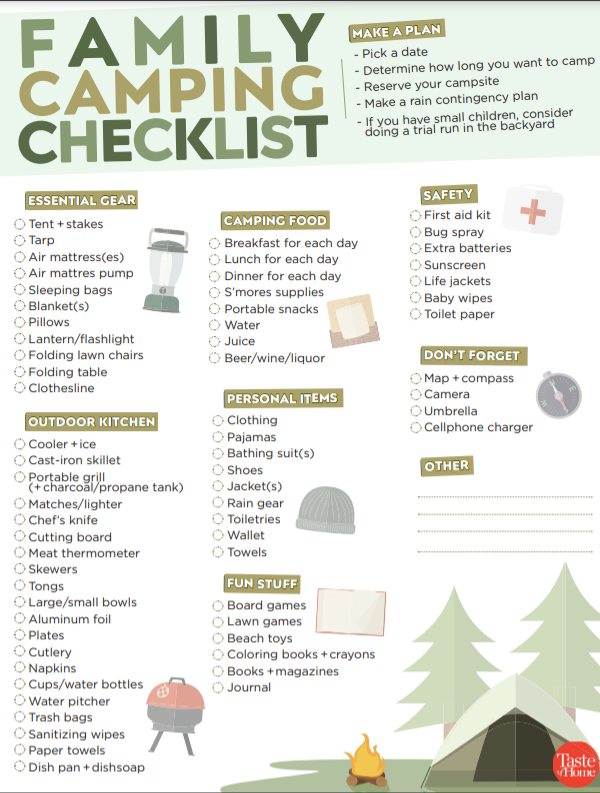
Cold-Weather Camping Checklist
Beyond your regular gear, pack:
- Sleeping bag rated for the low, plus a liner
- Two sleeping pads or one insulated winter pad
- Extra base layers, insulating layers and shell layer
- Warm hat, mittens or gloves, neck gaiter and extra socks
- Insulated boots, camp shoes and gaiters if you expect snow
- Headlamp, lantern and spare batteries
- Stove, extra fuel, lighter and matches in a waterproof container
- Insulated water bottles and a thermos
- Hand and foot warmers
- Shovel, snow stakes or extra guy lines
- Tarp or ground cloth, and a foam pad for sitting
- First aid kit, emergency blanket and whistle
- Map, compass and a portable charger
- Snacks high in fat and carbohydrate
- Sunscreen and sunglasses, because snow reflects sunlight
- Spare keys and a printed itinerary

Winter Camping with an RV or Van
Campers and RVs can make winter trips easier, but cold brings its own problems: frozen water lines, propane use and condensation. Guidance on winterizing and managing systems is in our article on how to winterize an RV. Keep a CO detector working, check propane supply and avoid parking where snow can block the exhaust.

After the Trip: Drying and Storing Winter Gear
Cold-weather gear takes more care after a trip because moisture and frost soak into everything. Within a day or two of getting home, set up the tent in a garage or living room and let it dry fully, wiping the floor and the inside of the rainfly. Hang your sleeping bag loosely or lay it flat to dry, and fluff down bags in a dryer on low heat with clean tennis balls if the care label allows it. Store bags uncompressed in a large cotton or mesh sack, never in the stuff sack, so the insulation keeps its loft. Wash base layers and socks, re-treat water-repellent shells as needed and replace batteries in lights and carbon monoxide detectors. Refill your first aid kit and note anything that failed or felt missing, so your next trip starts a step ahead. Small habits like these also make your gear last through many winters.

Mistakes First-Time Winter Campers Make
- Wearing cotton, which stays wet and chills
- Over-dressing for the hike and sweating, then freezing at camp
- Skimping on the sleeping pad
- Sealing the tent completely and getting soaked in condensation
- Using a heater or stove in a closed tent
- Skipping food and water because it is cold
- Starting the trip too late and setting up in the dark
- Picking a remote site and having no easy way out
- Not telling anyone the plan

The Bottom Line
A good winter camping trip begins long before you leave the driveway. Choose an easy first trip close to home, build a layered clothing system, sleep on an insulated pad in a warm bag, and keep fuel-burning devices out of the tent. Eat well, drink often, watch for the first signs of hypothermia and give yourself an easy exit. Once your first quiet frosty morning is behind you, the rest of the season opens up.

Frequently Asked Questions
How cold is too cold for camping?
It depends on your gear, experience and the conditions, including wind. A beginner with standard equipment should avoid temperatures far below freezing. With proper gear and training, people camp in much lower temperatures, but wind chill and wet conditions raise the risk.
Can I use a regular tent in winter?
A three-season tent can work for mild winter nights without heavy snow or high winds. For snow loads and strong wind, choose a four-season tent or a sturdy shelter built for winter.
Will I stay warmer if I wear all my clothes in the bag?
Not necessarily. Tight clothes can limit circulation and compress insulation. Wear dry base layers, socks and a hat, and keep your bag uncompressed so it can trap warm air.
Is it safe to use a hot-water bottle in my sleeping bag?
Yes, if you use a bottle designed for hot liquids, close it tightly, wrap it in a sock or sleeve and avoid water that is boiling. Check it for leaks before bed.
Can kids camp in winter?
Children cool faster than adults, so keep trips short and mild, choose cabins or car camping and watch them carefully for shivering or numb fingers. Do not take infants on cold-weather camping trips.
What should I do if my tent gets wet inside?
Wipe away condensation with a towel, vent the tent, and keep wet items away from your sleeping bag. In the morning, shake off frost and dry the tent in the sun when you can.
Do I need a permit or reservation for winter camping?
Rules vary. Some campgrounds are first come in winter, some require reservations and some require permits for backcountry travel. Check with the managing agency before you go.