Quick answer: start with the American Red Cross family first aid kit list (bandages, gauze, tape, antiseptic wipes, antibiotic ointment, gloves, an instant cold pack, scissors, tweezers, a thermometer, an emergency blanket and a first aid guide), then add camping extras: blister care, fine-tipped tweezers for ticks, an elastic bandage, burn care, insect repellent, sunscreen, any personal medications and a written list of allergies and emergency contacts. Pack it in a waterproof bag, check it before every season and learn how to use it.
Most camping injuries are small: a blister on the first hike, a splinter from firewood, a burn from a hot pan, a scrape on a rock, a tick found during the evening check. Handled quickly, they stay small. Ignored or handled with the wrong supplies, a minor problem can end a trip early or, occasionally, become serious.
A good first aid kit is one of the Ten Essentials that the National Park Service recommends carrying on every outing. It does not need to be large, but it should match your group, your destination and how far you will be from help. A family car camping at a state park needs different supplies than a pair of backpackers two days from a road.
This guide is part of our camping gear and checklists guide, which covers what to pack for every type of trip. Below is what to put in a camping first aid kit and why. Everything here is general information, not medical advice; for training, take a first aid course, and for any serious injury or illness, call 911 or seek medical care.

Start With a Standard Family Kit
The American Red Cross publishes a recommended list of contents for a first aid kit for a family of four. That list is a sound foundation for car camping and a good checklist whether you buy a ready-made kit or build your own. The Red Cross list includes:
- Absorbent compress dressings.
- Adhesive bandages in assorted sizes.
- Adhesive cloth tape.
- Antibiotic ointment packets.
- Antiseptic wipe packets.
- Aspirin packets, low dose.
- An emergency blanket.
- A breathing barrier with a one-way valve, for CPR.
- An instant cold compress.
- Nonlatex gloves.
- Hydrocortisone ointment packets.
- Scissors.
- Roller bandages.
- Sterile gauze pads in two sizes.
- An oral thermometer, non-mercury and nonglass.
- Triangular bandages.
- Tweezers.
- A first aid instruction booklet.
Ready-made kits vary widely in quality. Many are padded with dozens of tiny bandages and little else, so compare the contents to the list above before buying, and expect to add items either way.
A note on aspirin: the Red Cross includes it for specific emergency uses such as suspected heart attack in adults. Aspirin is not appropriate for everyone and should not be given to children or teenagers because of the risk of Reye’s syndrome, so follow the instructions in your first aid guide and on the package.

Camping Extras Worth Adding
Camping brings its own common problems, and a few additions handle most of them.
Blisters and Feet
Blisters are among the most common outdoor complaints. Pack moleskin or blister bandages, a small pair of scissors, and tape that sticks well to skin. Treat hot spots as soon as you feel them, before a blister forms. Extra dry socks belong in the kit’s spirit, if not in the kit itself.
Ticks and Splinters
Fine-tipped tweezers work far better than the flat tweezers in many kits. The Centers for Disease Control and Prevention (CDC) advises removing a tick by grasping it as close to the skin as possible and pulling upward with steady, even pressure, then cleaning the bite area with rubbing alcohol or soap and water. The CDC advises against folklore remedies such as nail polish, petroleum jelly or heat. A small magnifying lens helps with splinters and tiny ticks.
Burns
Camp stoves, campfires and hot pans make burns a real risk. For minor burns, the Red Cross advises cooling the burn with cool running water, then covering it loosely with a sterile dressing. Pack sterile non-stick dressings and a small bottle of clean water if water may be limited. Large, deep or facial burns, and burns on young children, need medical care. Our guide to campfire safety covers how to prevent burns in the first place.
Sprains and Strains
An elastic wrap bandage supports a sprained ankle or wrist, and the instant cold pack from the standard list helps with swelling. Some campers add a moldable padded splint, which can be shaped to support an injured limb.
Bites, Stings and Plants
Pack an antihistamine if your doctor or pharmacist agrees it is appropriate for your family, plus hydrocortisone cream for itching. If anyone has a known severe allergy, carry their prescribed epinephrine auto-injector, make sure several adults know where it is and how to use it, and check its expiration date. The CDC advises washing skin with soap and water as soon as possible after contact with poison ivy, oak or sumac.
Cleaning Wounds
Clean water is the most important tool for cleaning scrapes and cuts. An irrigation syringe helps flush dirt out of a wound. Add extra gauze, antiseptic wipes and a few larger adhesive dressings for scrapes that small bandages cannot cover.
Sun and Bugs
Sunscreen, lip balm with SPF and insect repellent prevent many problems before they start. The CDC recommends EPA-registered insect repellents, such as those containing DEET, picaridin, IR3535, oil of lemon eucalyptus, PMD or 2-undecanone.
Other Useful Items
- Safety pins and a few zip-top bags.
- Hand sanitizer with at least 60 percent alcohol, as the CDC recommends when soap and water are not available.
- A small headlamp or flashlight dedicated to the kit.
- A whistle for signaling.
- Electrolyte packets for hot weather.
- A pen and small notepad to record symptoms and times.

Personal Medications and Information
The most important items in many kits are the ones specific to your group.
- Prescription medications, with enough for the trip plus extra in case of delays.
- Over-the-counter medicines your family normally uses, such as pain relievers, in age-appropriate forms.
- Allergy medications and any prescribed epinephrine.
- Inhalers, glucose tablets or other condition-specific supplies.
- A written card for each person with allergies, medical conditions, medications, doctor contacts and emergency contacts.
- Copies of insurance cards.
Keep medications in original containers or clearly labeled, and store them away from heat in the car. Ask a pharmacist about storage temperatures for anything sensitive to heat.

Kits for Kids and Pets
Children
Children need child-appropriate doses of any medicines you carry, along with a child-friendly thermometer and colorful bandages, which can make treatment less stressful. Never give children medicine without checking the label or a doctor’s guidance for their age and weight. Teach children to tell an adult right away about any cut, bite, rash or tick.
Pets
Dogs at camp can cut paws, pick up ticks and burrs or get stung. A small pet kit includes gauze, self-adhering wrap that does not stick to fur, tweezers or a tick tool, saline to rinse eyes and wounds, any pet medications, vaccination records and your veterinarian’s number, plus the nearest emergency vet to your campsite. Ask your veterinarian before giving any human medicine to a pet, since some are dangerous to animals. Our guide to camping with dogs covers other pet safety basics.
Heat and Cold
Weather causes some of the most serious camping emergencies, and a few supplies help. In hot weather, carry extra water, electrolyte packets and a cloth you can wet to cool skin, and learn the CDC’s warning signs of heat exhaustion and heat stroke. Heat stroke, which can include confusion, a high body temperature and loss of consciousness, is a medical emergency that needs a 911 call. In cold or wet weather, the emergency blanket from the standard list, a warm hat and dry spare clothing help prevent hypothermia while you get the person somewhere warm.
Where to Keep It at Camp
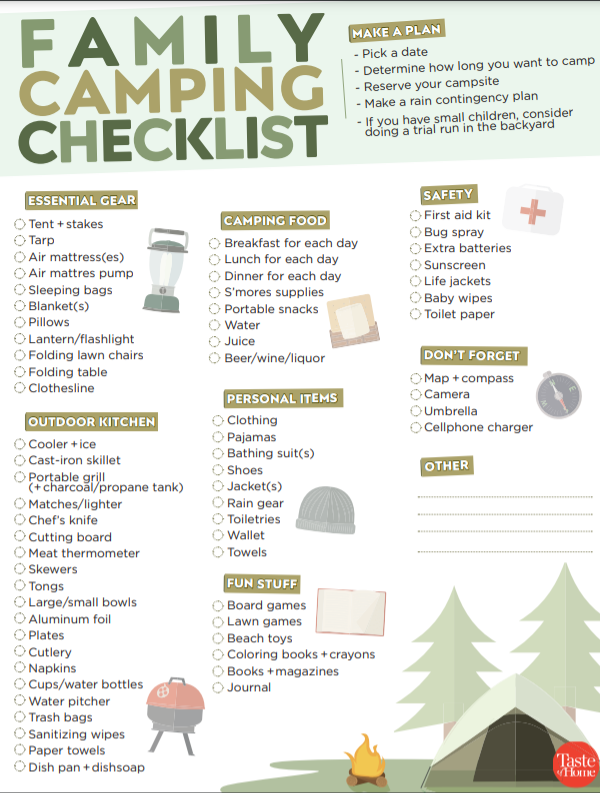
Pick one spot for the main kit, such as the camp kitchen bin or the front seat of the car, and keep it there for the whole trip. Everyone in the group, including older children, should know that spot. A kit that is buried under gear or locked in a car someone drove to the trailhead does not help in an emergency. Our family camping checklist is a good place to record where the kit lives and what it holds.

Sizing the Kit for Your Trip
Car Camping
Weight barely matters, so a full family kit plus camping extras makes sense. Keep it in a clearly labeled bag in an easy-to-reach spot, not buried under the camp kitchen.
Day Hikes From Camp
Carry a smaller kit in the daypack with blister care, a few bandages, gauze, tape, tweezers, antiseptic wipes, any essential personal medications and an emergency blanket. The large kit stays at camp.
Backpacking and Remote Trips
Weight matters, but distance from help raises the stakes. Prioritize items for bleeding control, wound cleaning, blisters, sprains, allergies and hypothermia prevention, and consider wilderness first aid training. Many outdoor schools offer wilderness first aid courses that focus on situations where help is hours away.

Packing, Checking and Restocking
A kit is only useful if it is complete, dry and easy to find.
- Pack it in a waterproof bag or hard case, organized by purpose so items are easy to grab.
- Label the outside clearly and tell everyone in the group where it is.
- Check contents and expiration dates before each camping season.
- Restock anything used as soon as you get home.
- Replace medications that have expired or been exposed to heat.
- Keep a copy of the contents list inside the lid.

Know When to Get Help
First aid supplies handle small problems; they do not replace emergency care. Call 911 or seek medical help for severe bleeding that does not stop with firm pressure, signs of a severe allergic reaction, difficulty breathing, chest pain, head injuries with confusion or vomiting, suspected broken bones, deep or large burns, snakebites, high fever, or symptoms of heat stroke or hypothermia.
Before every trip, find out where the nearest hospital or urgent care is, whether your phone has service at the campsite, and how to reach the campground host or ranger. Leave your trip plan with someone at home. Our guide to campsite safety basics covers weather, wildlife and carbon monoxide risks that a first aid kit cannot fix.
Training
The Red Cross and other organizations offer first aid and CPR courses, including online and blended options. A few hours of training makes every item in the kit more useful, and many campers find it worth repeating every couple of years.

Frequently Asked Questions
What should be in a basic camping first aid kit?
Start with the Red Cross family kit list, then add blister care, fine-tipped tweezers, an elastic bandage, burn dressings, insect repellent, sunscreen and personal medications.
How do I remove a tick at camp?
The CDC advises grasping the tick close to the skin with fine-tipped tweezers and pulling upward with steady pressure, then cleaning the area.
Should I buy a ready-made kit or build my own?
Either works. Compare any ready-made kit to the Red Cross list and add camping extras and personal medications.
How often should I check my first aid kit?
Before every camping season and after every trip, restocking anything used or expired.
Do I need a first aid kit for car camping?
Yes. A first aid kit is one of the Ten Essentials, and minor injuries are common at camp.
What should I do for a burn at camp?
For minor burns, cool the area with cool running water and cover it loosely. Seek care for large, deep or facial burns and burns on children.
What size first aid kit do I need for a family?
A kit built on the Red Cross list for a family of four suits most car camping trips. Larger groups and longer trips need more dressings, bandages and medications, so scale up the quantities and restock between trips.