Quick answer: winter camping does not require expensive gear, but it does require the right gear in the right places. Put your money first into insulation underneath you (a sleeping pad system with a high combined R-value; stacking a cheap closed-cell foam pad under an inflatable pad is an affordable way to get there) and a sleeping bag rated for the temperatures you expect, then build clothing layers from wool and synthetics you already own or buy used, avoiding cotton. Save on sites by camping in off-season campgrounds, free dispersed areas on national forest and BLM land, or cabins and yurts in state parks. Never use fuel-burning heaters, stoves or grills inside a tent, because carbon monoxide can kill.
Winter is one of the best seasons for camping on a budget. Campgrounds are quieter, some fees drop, popular areas that are impossible to book in summer have space, and in many places the scenery is at its best. The catch is that cold weather leaves less room for mistakes, so spending wisely matters.
This guide covers where to camp cheaply in winter, what gear to prioritize, how to stay warm without spending a lot, and the safety basics that are not optional. For the basics of free camping on public land, see our complete guide to free camping in the U.S..
Sources: U.S. Centers for Disease Control and Prevention (CDC), hypothermia, frostbite and carbon monoxide poisoning guidance; National Weather Service (NWS) wind chill and winter safety guidance; ASTM F3340 sleeping pad R-value standard; ISO 23537 / EN 13537 sleeping bag temperature rating standards; USDA Forest Service and Bureau of Land Management dispersed camping guidance; state park winter camping pages. Checked October 2026.

Where to Winter Camp Cheaply
Free dispersed camping
Dispersed camping on national forest and BLM land is usually free year-round where it is allowed. In winter, the main limits are access, since many forest roads are not plowed and some are gated seasonally. Desert BLM land in the Southwest is a popular winter destination because daytime temperatures are mild, though nights can still drop below freezing. Check the Forest Service Motor Vehicle Use Map or the BLM field office for seasonal closures before you go.
Off-season campgrounds
Many public campgrounds close for winter, but others stay open with reduced services, such as no running water or with vault toilets only, and some lower their fees during that time. State and national park websites list which campgrounds stay open in winter. Because demand is lower, it is often possible to get good sites without booking far ahead.
Cabins, yurts and lean-tos
Some state parks rent rustic cabins or yurts year-round, often with a heat source, bunks and a roof, for a price that can be modest when split among a group. They are a low-risk way to try winter camping without needing the warmest gear. Book early, since winter cabins can be popular.
Car camping first
Camping near your vehicle in winter means you can carry heavier, cheaper gear, retreat to the car if you get too cold and leave easily if the weather turns. It is the most forgiving way to start.

The Gear That Matters Most
If you only upgrade one or two things for winter, make them the items between you and the cold ground and the item around you at night.
Sleeping pads: insulation underneath you
The ground pulls heat from your body much faster than the air does, and a sleeping bag’s insulation is compressed under your body weight, so it does little to stop that heat loss. A sleeping pad is what insulates you from the ground.
Pad warmth is measured by R-value. Since the ASTM F3340 standard was introduced, many manufacturers rate pads using the same test, making them easier to compare. Higher numbers mean more insulation. For camping on frozen ground or snow, many outdoor retailers and guides suggest a total R-value of at least about 5, and higher for very cold conditions.
The budget trick: R-values of stacked pads add together. A basic closed-cell foam pad is inexpensive, durable and cannot pop. Putting one under an inflatable or self-inflating pad you already own can raise your total insulation significantly for little money.
Sleeping bags: rating for the real temperature
Many sleeping bags are tested to the ISO 23537 standard (which replaced the older EN 13537), which gives a “comfort” rating and a “limit” rating. The comfort rating is the temperature at which a standard adult who sleeps cold should be comfortable; the limit rating is the lowest temperature at which a standard adult who sleeps warm can sleep curled up for eight hours. For winter, choose a bag based on the comfort rating, not the limit rating.
If a winter-rated bag is beyond your budget, layering a summer bag inside a three-season bag, adding a fleece blanket or using a bag liner can add warmth. Our guide on choosing a sleeping bag and pad by temperature explains the ratings in more detail.
Tents
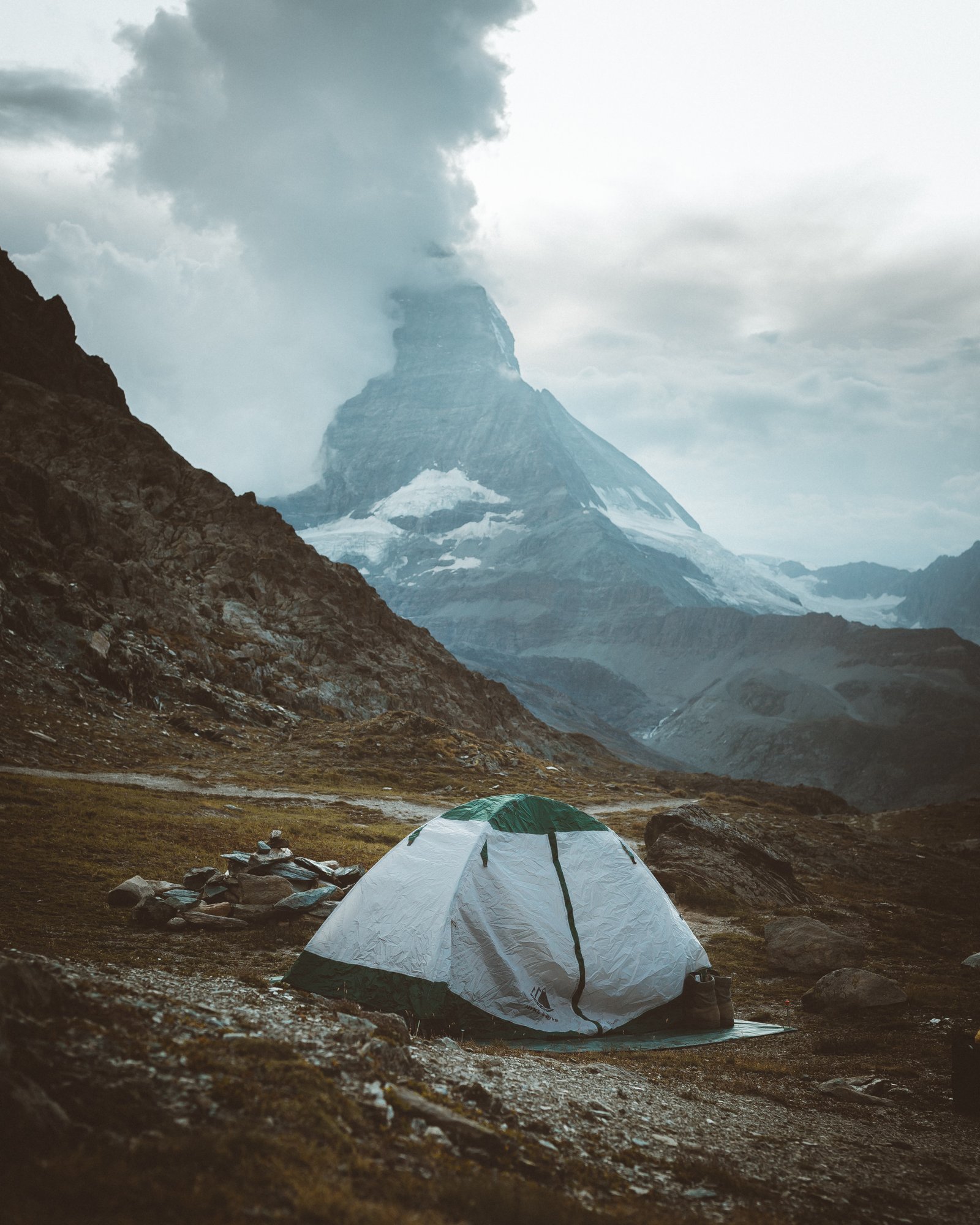
A three-season tent is often fine for car camping in mild winter conditions without heavy snow or high winds. Four-season tents are stronger and block more wind but cost more. Pitch in a sheltered spot, vent the tent to reduce condensation and knock snow off the fly.

Clothing Layers on a Budget
You do not need new technical clothing to stay warm, but you do need the right materials:
- Base layer: wool or synthetic long underwear. Avoid cotton, which loses its insulating ability when wet and dries slowly.
- Mid layer: fleece, a wool sweater or a synthetic or down jacket.
- Outer layer: a wind- and water-resistant shell.
- Extremities: a warm hat, a neck gaiter or buff, insulated gloves or mittens (mittens are warmer), wool socks and insulated, waterproof boots.
- Camp clothes: a dry set of base layers and socks just for sleeping.
Thrift stores and used gear sales are excellent places to find wool sweaters, fleece and down jackets cheaply. Our guide to a camping clothing layering system explains how the layers work together.

Buying Used and Borrowing
Winter gear is often used only a few times a year, so a lot of good-quality used gear is available through gear swaps, outdoor co-op used gear programs, online marketplaces and thrift shops. Check sleeping bags for flattened insulation and broken zippers, pads for leaks and tents for damaged poles and seams. Our guide to buying used camping gear covers what to inspect. Renting or borrowing a winter bag or pad for your first trip is another way to try it before you buy.
Low-Cost Ways to Stay Warm
- Eat and drink well. Your body makes heat by burning food. Have a hot dinner with fats and protein, and keep a snack for the middle of the night.
- Stay hydrated. Dehydration makes it harder to stay warm. Insulate water bottles or store them upside down in the tent so ice forms at the bottom, not at the lid.
- Use a hot water bottle. Fill a leak-proof, hard-sided bottle rated for hot liquids with hot water, close it tightly and put it in a sock in your sleeping bag. Make sure the lid seals securely to avoid burns.
- Go to bed warm. Do a few minutes of light exercise before getting into your bag, but do not sweat.
- Change into dry clothes before bed; damp clothing makes you cold.
- Wear a hat and cover your neck in the sleeping bag.
- Use the toilet before bed, since your body works to keep a full bladder warm.
- Keep electronics and batteries warm in the sleeping bag; cold drains batteries fast.
Our guide on how to stay warm while camping in cold weather has more tips.
Safety: Carbon Monoxide, Hypothermia and Frostbite
Carbon monoxide
The CDC warns never to use a fuel-burning heater, stove, lantern, grill or generator inside a tent, camper or other enclosed space, because carbon monoxide (CO) can build up quickly and kill. CO is invisible and odorless. Keep stoves outside and away from the tent door, and if you run a vehicle for heat, make sure the exhaust pipe is clear of snow. Our guide to tent safety with heaters, candles and carbon monoxide explains the risks in more detail.
Hypothermia
The CDC defines hypothermia as a dangerously low body temperature, below 95°F (35°C). Warning signs include shivering, exhaustion, confusion, fumbling hands, memory loss, slurred speech and drowsiness. Get the person to a warm place, remove wet clothing, warm the center of the body first and seek medical care.
Frostbite
Frostbite most often affects the nose, ears, cheeks, chin, fingers and toes. The CDC lists warning signs such as redness or pain in skin, followed by white or grayish-yellow skin, skin that feels unusually firm or waxy, and numbness. Get out of the cold and seek medical care; do not rub the affected area or use a heating pad or fire to warm it.
Weather
Check the NWS forecast, including wind chill and winter storm warnings, before you go. Wind chill describes how cold it feels on exposed skin, and frostbite can develop faster at low wind chill values. If a storm is coming, change your plans.
Food and Water in the Cold
Cold weather changes how you cook and drink, and planning for it keeps costs down and energy up.
Simple, warm, calorie-dense meals
Winter is not the time for elaborate cooking. One-pot meals such as pasta, rice dishes, chili and soups are cheap, filling and easy to make with cold hands. Adding butter, cheese, nuts or olive oil raises calories without much extra cost. Hot drinks such as cocoa, tea and broth help with warmth and hydration.
Stoves in the cold
Canister stoves that burn butane blends can lose pressure and perform poorly in freezing temperatures. Keeping the canister warm in a jacket or sleeping bag before use, or using a fuel blend designed for cold weather, helps. Liquid-fuel stoves perform better in deep cold but cost more. Always cook outdoors or in a well-ventilated area away from the tent.
Keeping water liquid
Water bottles and hoses freeze quickly. Insulated bottle sleeves or a wool sock help during the day, and bottles stored inside your sleeping bag overnight will not freeze. Melting snow takes a lot of fuel, so bring more fuel than you think you need if you plan to rely on it, and treat melted snow as you would any untreated water.
A Budget Winter Camping Packing List
- Closed-cell foam pad plus your existing pad, for a combined high R-value
- Sleeping bag rated (comfort) for the expected low, or layered bags plus a liner
- Wool or synthetic base layers, plus a dry set for sleeping
- Fleece or wool mid layer and an insulated jacket
- Wind- and water-resistant outer layer
- Warm hat, neck gaiter, mittens and spare gloves
- Wool socks, spare socks and insulated waterproof boots
- Stove and fuel for hot meals and drinks, used outdoors only
- Insulated water bottles and a leak-proof hot water bottle
- Headlamp with spare batteries kept warm
- Shovel or brush for snow, if snow is likely
- First aid kit and a way to call for help

Frequently Asked Questions
What is the cheapest way to stay warm winter camping?
Stack a cheap closed-cell foam pad under your existing pad, wear dry wool or synthetic layers, eat a hot meal before bed and use a sealed hot water bottle in your sleeping bag.
What R-value do I need for winter camping?
Many guides suggest a combined R-value of around 5 or more for frozen ground or snow, and higher for very cold conditions. R-values of stacked pads add up.
Is it safe to use a propane heater in a tent?
The CDC warns against using any fuel-burning heater, stove or grill inside a tent or enclosed space because of the risk of carbon monoxide poisoning.
Where can I go winter camping for free?
Dispersed camping on national forest and BLM land is usually free where allowed, though many roads close or are unplowed in winter. Check the local ranger district or BLM field office for seasonal closures.
Can I use my summer sleeping bag for winter camping?
On its own, probably not in freezing conditions. Layering it inside another bag, adding a liner or blanket and using a warm pad system can help, but check the temperature ratings first.

The Bottom Line
Winter camping on a budget is about spending on the few things that matter most, a warm pad system and a sleeping bag rated for the real temperatures, and making the rest work with layers, food and good habits. Choose off-season, free or cabin sites, start near your car, watch the forecast and never bring a fuel-burning heater into the tent.