Quick answer: most free camping in the U.S. is on public land managed by the USDA Forest Service and the Bureau of Land Management (BLM). To find it, download the free Motor Vehicle Use Map (MVUM) for the national forest you want to visit, which shows roads open to vehicles and where dispersed camping is allowed alongside them; call or visit the local ranger district or BLM field office and ask where people camp; look for free developed campgrounds on agency websites and Recreation.gov; then use satellite imagery and camping apps to narrow down spots. Arrive in daylight, have a backup, follow the stay limit (often 14 days) and be ready for no water, toilets or trash service.
Free campsites are out there, often in beautiful places, but they rarely come with a sign that says “free camping here.” Finding them is a skill that combines a few official tools, some map reading and a phone call or two to the people who manage the land.
This guide focuses on the “how” of finding free sites. For the rules, types of free camping and etiquette in more depth, see our complete guide to free camping in the U.S..
Sources: USDA Forest Service, dispersed camping guidance and Motor Vehicle Use Maps; Bureau of Land Management (BLM), camping on public lands and field office information; Recreation.gov; U.S. Army Corps of Engineers recreation pages; Avenza Maps listing of official Forest Service maps; Leave No Trace Center for Outdoor Ethics. Checked October 2026. Rules vary by forest, district and field office; always confirm locally.
Where Free Camping Exists
National forests
The Forest Service manages about 193 million acres of national forests and grasslands. Dispersed camping, meaning camping outside developed campgrounds with no services, is allowed in much of that land unless an area is posted closed. Many forests also have a few small developed campgrounds with no fee.
BLM land
The BLM manages about 245 million acres, mostly in the western states and Alaska. Dispersed camping is generally allowed on BLM land unless posted otherwise, typically for up to 14 days within a 28-day period at one location. Some BLM areas also have free developed campgrounds or long-term visitor areas, which charge a fee.
Other public lands
- U.S. Army Corps of Engineers lake and river projects include some free or very low-cost campgrounds, though most charge a fee.
- State forests, wildlife management areas and state trust lands sometimes allow free camping, with rules that vary widely by state. Some require a permit or a license.
- County and city parks occasionally offer free or donation-based campgrounds, especially in rural areas.
The rules for national forests and BLM land differ in important ways; our guide to dispersed camping rules on national forests and BLM land explains them side by side.
Tool 1: Forest Service Motor Vehicle Use Maps
The Motor Vehicle Use Map is the single most useful official tool for finding legal dispersed camping on national forests. Each forest or ranger district publishes one, free, as a PDF on its website and through the Avenza Maps app, where it can show your GPS location.
How to read an MVUM
- Roads and trails shown on the map are the ones open to motor vehicles, with symbols showing which vehicle types and what seasons.
- Many MVUMs mark roads with dots alongside them, which typically indicate that motor vehicle use is allowed a short distance off the road for dispersed camping, often up to a set distance such as 300 feet. Check the legend for your specific map.
- Roads not on the MVUM are closed to motor vehicles, even if they look drivable.
The MVUM does not show the best sites, only where driving and camping are legal. Combine it with the other tools below to find the actual spots.
Tool 2: Rangers, Field Offices and Visitor Centers
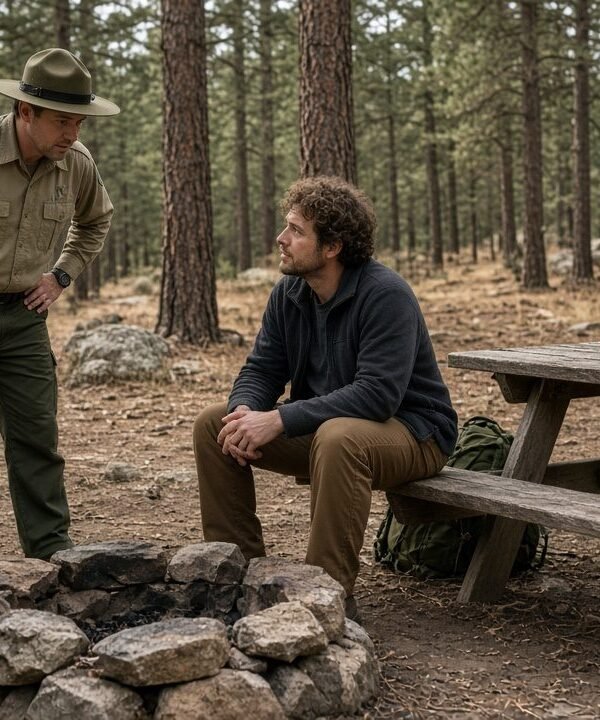
The people who manage the land know where camping is allowed, which roads are passable, where fire restrictions apply and which areas get crowded. Call or visit:
- The ranger district office for the national forest
- The BLM field office for the area
- Visitor centers in or near the forest or public land
Ask specific questions: “Where do people usually disperse camp near this town?” “Are there any closures or fire restrictions right now?” “Is the road suitable for a car or a trailer?” Staff can also tell you about any free campgrounds that are not well publicized. Fire restrictions in particular change through the season; our guide to fire restrictions on public lands explains what Stage 1 and Stage 2 mean.
Tool 3: Agency Websites and Recreation.gov
Agency websites list developed campgrounds with fees, amenities and seasons. Recreation.gov, the federal reservation site, includes many campgrounds that are free or first-come, first-served, and its listings note whether a fee applies. Searching an area on Recreation.gov and filtering by availability can surface small free campgrounds that are easy to miss.
BLM state websites often have pages on dispersed camping for each field office, with maps of popular areas and any special rules.
Tool 4: Maps, Satellite Imagery and Apps
Once you know where camping is legal, map tools help find the actual spots:
- Satellite imagery shows clearings, pullouts and existing fire rings along forest roads. Existing, well-used sites are the best choice under Leave No Trace guidance.
- Topographic maps show slope, water and elevation, helping you find flat ground and avoid washes.
- Public land map layers in many navigation apps show which land is national forest, BLM, state or private, which helps you avoid trespassing.
- Crowd-sourced camping apps and websites list user-reported free sites with photos and reviews. They can be very helpful but are not official. Sites may be closed, private, illegal or overused, so cross-check against the MVUM and agency information.
Download offline maps before you go, since many free camping areas have little or no cell service.
Tool 5: Overnight Parking Options
Not all free overnight stays are in the woods. Some travelers use:
- Rest areas where state rules allow overnight parking; many states limit stays to a few hours, so check the state’s department of transportation rules.
- Some retailers, truck stops and casinos that allow RVs or vehicles to park overnight. Policies vary by location, and local ordinances may prohibit it, so always ask the manager and look for posted signs.
- Some trailheads and sno-parks, where overnight parking may be allowed with a permit.
These are for sleeping in a vehicle, not setting up camp. Keep a low profile, do not put out chairs or grills, and leave early.
How Free Camping Differs by Region
Free camping is not spread evenly across the country, and knowing what to expect in each region saves time.
The West
Most federal public land is in the western states, so this is where free camping is easiest to find. Large areas of national forest and BLM land in states such as Arizona, Utah, Nevada, Colorado, Idaho, Montana, Wyoming, New Mexico, Oregon and California offer dispersed camping, from high mountain forests to open desert. Popular areas near national parks and towns can still fill on summer weekends, and some heavily used areas now require camping in designated dispersed sites only.
The Midwest and East
National forests in the Midwest and East, such as those in the Appalachians, the Ozarks and the Great Lakes states, also allow dispersed camping in many areas, but there is far less federal land overall and more private land in between. Forest roads may have numbered dispersed sites rather than open camping. State forests and wildlife management areas fill some of the gap, though rules vary widely and some require permits.
Deserts in winter, mountains in summer
Seasons shape where free camping works. Desert BLM land in the Southwest is popular from late fall to spring, when temperatures are mild, and can be dangerously hot in summer. High-elevation forests are often snowed in from late fall to late spring, with roads gated or impassable. Plan around the season and check road status before you go.

Timing and Crowds
Free sites are first-come, first-served. A few habits make finding one much easier:
- Go midweek when possible. Sunday to Thursday nights are far less crowded in most areas.
- Arrive early on Fridays and before holiday weekends, ideally by early afternoon.
- Drive a little farther. Sites closest to pavement and towns fill first; a few more miles of forest road often means more choice.
- Avoid camping right next to someone else if other sites are open, and ask politely if you need to share a large area.
Good manners matter on free land too; our guide to campground etiquette at campgrounds and free sites covers noise, generators, spacing and more.
How to Scout a Free Site
- Pick an area, not a single site. Have two or three possible roads or areas in mind.
- Arrive in daylight, ideally by mid-afternoon on weekends and holidays, when popular areas fill up.
- Check road conditions. Forest roads can be rough, steep or muddy; if in doubt, park and walk ahead.
- Look for existing sites: hardened ground, an existing fire ring if fires are allowed, room to turn around.
- Check for hazards: dead trees overhead, washes, exposed ridges.
- Respect distance rules: from water, roads, trailheads and developed recreation sites, as set by the local agency.
- Have a backup plan, including a paid campground, in case everything is full.
What to Bring When There Are No Services
Free sites usually have no water, toilets, trash service or picnic tables. Bring:
- Enough water for drinking, cooking and cleaning, or a way to treat water; our guide on finding and treating water while camping covers options
- A trowel and bags for human waste, or a portable toilet, following local rules
- Trash bags to pack out everything
- A camp stove, since fires may be restricted
- A first aid kit and a way to call for help without cell service
Stay Limits and Respecting Free Sites
Most federal lands limit stays at one location, commonly 14 days within a set period, after which you must move a set distance. These limits help protect sites and give everyone a chance. Do not leave gear unattended to “hold” a site, and leave each site cleaner than you found it.
Free camping depends on campers taking care of the land. Areas are closed when trash, waste and damage pile up, so following Leave No Trace principles is how free camping stays available.
Frequently Asked Questions
How do I find free camping near me?
Start with national forest and BLM land nearby. Download the forest’s Motor Vehicle Use Map, check the BLM field office website and call the local ranger district or field office to ask where dispersed camping is allowed.
Is free camping legal anywhere on public land?
No. It is allowed on much of the national forest and BLM land unless posted closed, but rules, closures and distance limits vary by area. National parks generally do not allow dispersed car camping.
What is an MVUM?
A Motor Vehicle Use Map is a free Forest Service map that shows which roads and trails are open to vehicles and, on many maps, where dispersed camping is allowed alongside roads.
How long can I stay at a free campsite?
Commonly up to 14 days at one location on national forest and BLM land, within a set period, though local rules vary. Check with the ranger district or field office.
Are camping apps reliable for free sites?
They are useful for ideas and recent conditions, but they are not official. Always confirm with the MVUM, land agency maps or a ranger before you camp.

The Bottom Line
Finding free campsites is mostly a matter of knowing where to look and who to ask. Start with national forests and BLM land, use the free MVUM and field office information to confirm where camping is legal, use satellite imagery and apps to find specific sites, and always have a backup. Arrive early, bring everything you need, follow stay limits and leave no trace so free camping stays free.