
Quick answer: use a camp stove when you want fast, steady heat, when it is windy, wet or dry enough for fire restrictions, or when you are cooking for a crowd on a schedule. Use a campfire when fires are allowed, you have time, and the goal is flavor and atmosphere. Many campers bring both, relying on the stove for coffee and breakfast and the fire for dinner.
Few camping debates are as friendly as stove versus fire. One side likes the control and speed of a burner. The other likes smoke, embers and the slow rhythm of cooking over coals. Both sides have a point, and the right answer changes with the weather, the campground and the meal.
Before comparing them, one rule matters above everything else: follow local fire restrictions. In dry seasons, agencies such as the U.S. Forest Service and state parks may ban campfires entirely while still allowing certain stoves. Check the rules for your exact campground the week you travel, and again at check-in.
This guide compares the two methods on the factors that matter, from speed and cost to safety and cleanup, then offers a simple way to decide. For deeper fire basics, our guide to campfire safety covers building, managing and extinguishing a fire.
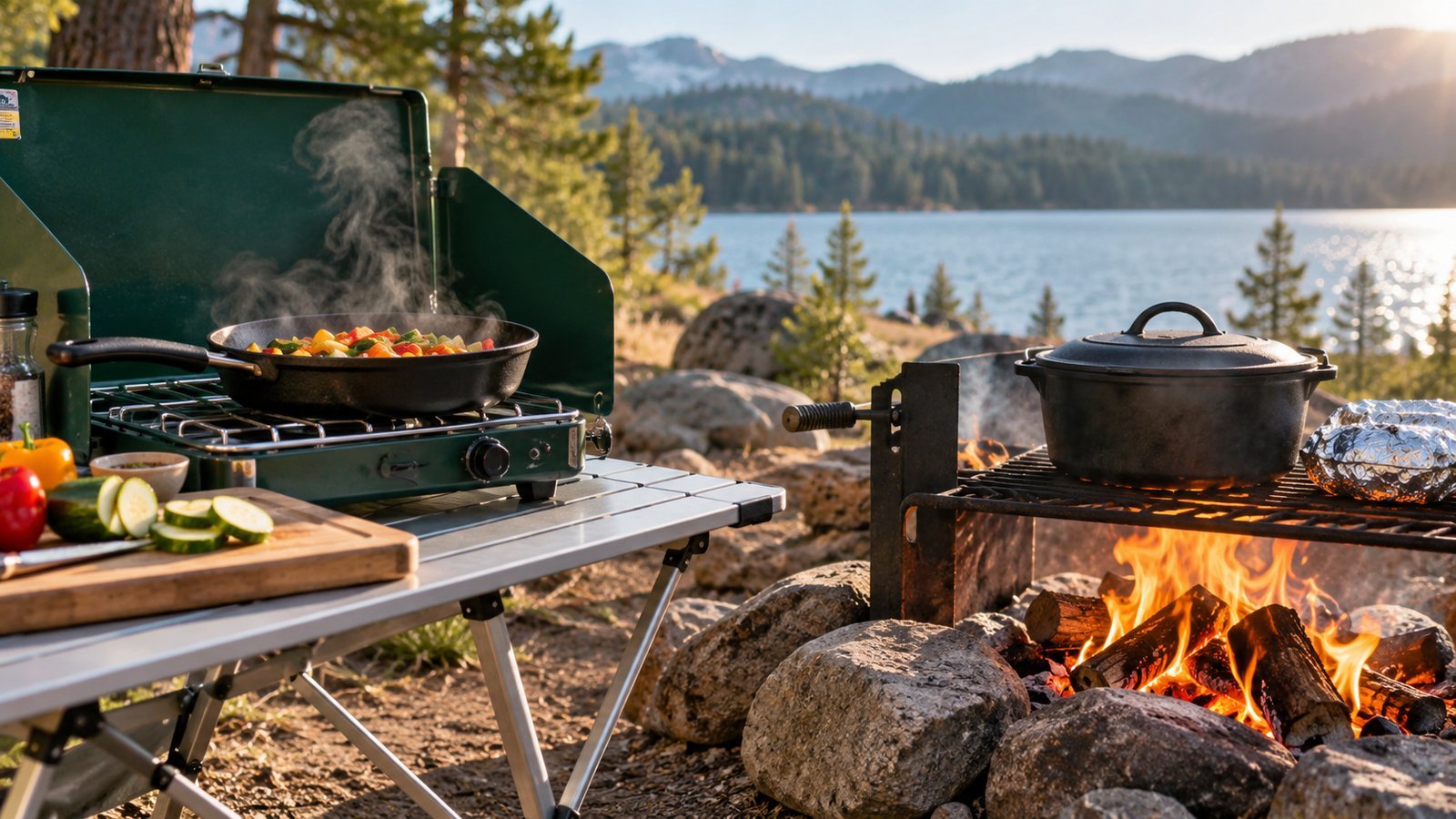
Speed and Control
A stove wins on speed and control. Turn a knob and you have a flame. Water boils in minutes, and you can lower the heat to simmer rice or keep eggs from burning. The flame is steady in most conditions, and you can stop cooking instantly by turning it off.
A campfire is slower and less predictable. A fire needs time to burn down to a bed of coals, which often takes 30 to 45 minutes after lighting. Flames are uneven, and the temperature changes with the wood and the wind. Cooks learn to manage heat by moving the food, adjusting the grate, and shifting coals. That skill takes practice, and early attempts often burn the outside of food while leaving the inside raw.
Fire excels at certain jobs. Coals radiate steady heat for foil packets, Dutch oven stews and roasted vegetables. Direct flame is great for toasting marshmallows and warming hot dogs. For quick meals, though, such as coffee at dawn, oatmeal or a fast pasta dinner after a long hike, a stove is usually easier.
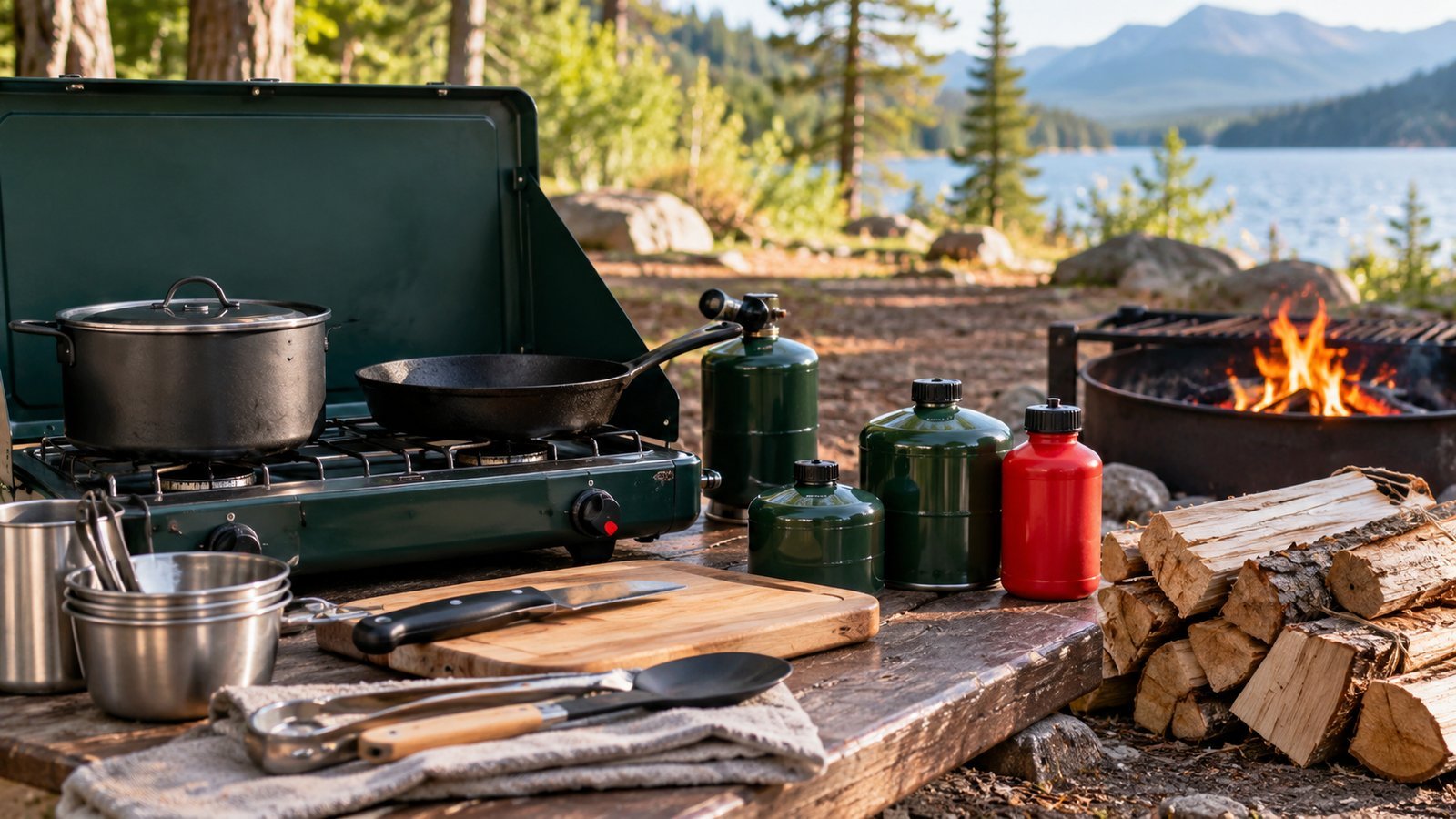
Cost, Fuel and Gear
Fire is cheap on paper. A bundle of firewood costs a few dollars at many campgrounds, and a grill grate or fire pit grate is often included at the site. You will want a few extras, such as a lighter, kindling, gloves, tongs and a heavy pan, but the total is modest.
A stove has a higher upfront cost, which ranges from a small canister burner to a full two-burner propane model, plus fuel. Fuel is a repeating expense, though a one-pound propane canister lasts for several meals for a small group. Having a stove also saves money by letting you cook at any campsite, including those with no fire rings.
Firewood needs a note. Many states and agencies ask campers to buy firewood near where they will burn it, or to use certified heat-treated wood, because moving firewood can spread invasive insects and tree diseases. Check local guidance before you load a trunk of wood from home.
Gear lists differ. Stove cooking calls for a stove, fuel, a lighter, a windscreen if the design allows and cookware. Fire cooking calls for a grate or tripod, heavy-duty foil, cast iron, long-handled tools and heat-resistant gloves. Match the kit to the menu before you pack, and keep things you will not use at home.
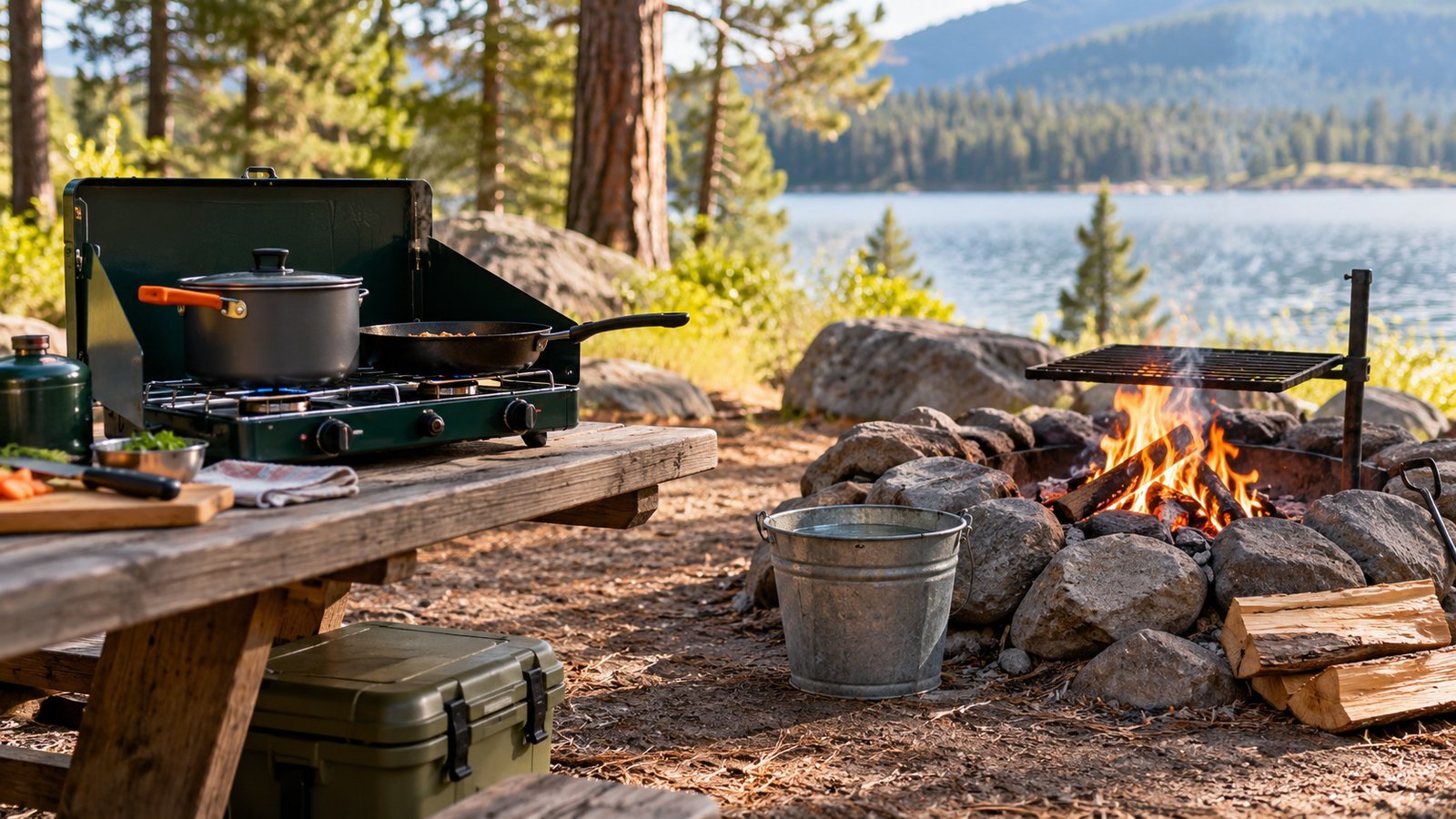
Safety Considerations
Both methods burn fuel and carry risks, so use sensible habits.
For stoves, the major risks are carbon monoxide and tipped flames. Never use a stove, grill or heater inside a tent, camper, vehicle or other enclosed space. Carbon monoxide has no smell and can kill. Set the stove on a flat, stable surface, away from tent walls, dry grass and overhanging branches. Check hoses and connections for leaks before each trip, and follow the manufacturer’s instructions about canisters and storage.
For fires, keep a bucket of water and a shovel nearby, keep the fire small, and never leave it unattended. Build only in established fire rings, keep flammable items well back, and drown the fire completely before you sleep or leave. Stir the ashes and feel for heat. A pile too hot to touch is too hot to leave. Our article on campsite safety basics explains carbon monoxide and other hazards in more detail.
Wind changes the risk for both. Strong wind can carry embers far from a fire pit, so do not build one in gusty conditions. Wind can also blow out a stove flame and spread fuel vapors. Park a vehicle upwind as a barrier, or choose a sheltered spot.
Pay attention to supervision. Children and pets should stay a safe distance from any flame or hot surface. Establish a clear circle around the cooking area and a simple rule that no one runs through it.
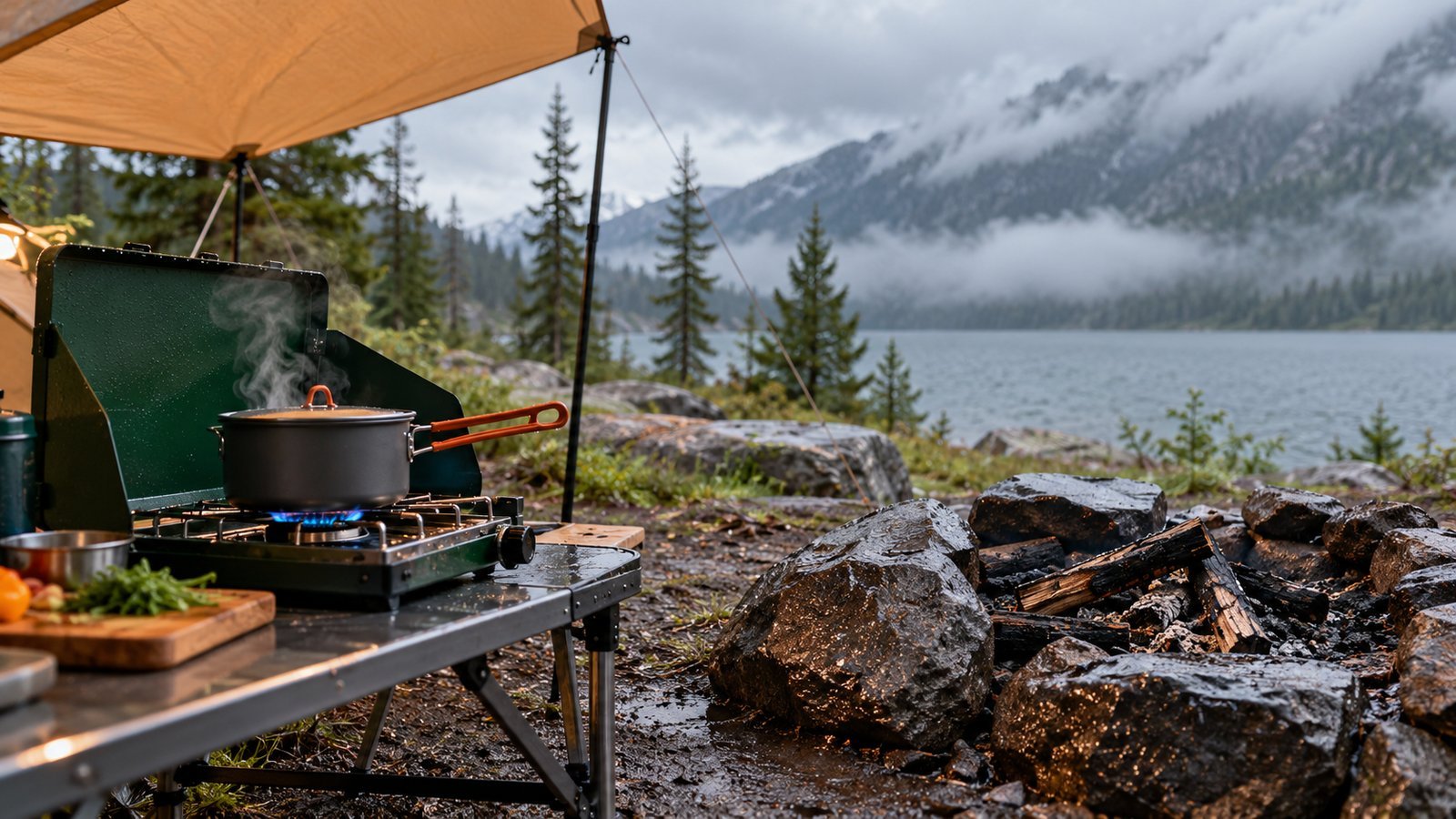
Weather and Fire Restrictions
Weather can decide for you. In rain, a stove under a tarp or picnic shelter keeps working, while a wet fire is a struggle. Our guide on camping in the rain covers how to set up a dry cooking area safely. Always keep tarps well clear of flames and hot stove parts, and never cook under a low, flammable cover.
In high wind, a stove is easier to shield than a fire. In cold weather, both work, but a stove lights faster and warms drinks quickly, which keeps morale up. Fuel behaves differently in cold, and some canisters lose pressure at low temperatures, so check the specifications for your fuel.
Fire restrictions are the biggest limit. In many dry regions, restrictions prohibit wood and charcoal fires but allow stoves with a shut-off valve, though the exact rules vary by agency and level of restriction. Some places ban all open flames. Read the posted notice, ask a ranger, and respect the rules, because wildfires can start from a single spark.
Having a stove means a fire ban does not end dinner. That alone justifies bringing one.
Flavor, Fun and Cleanup
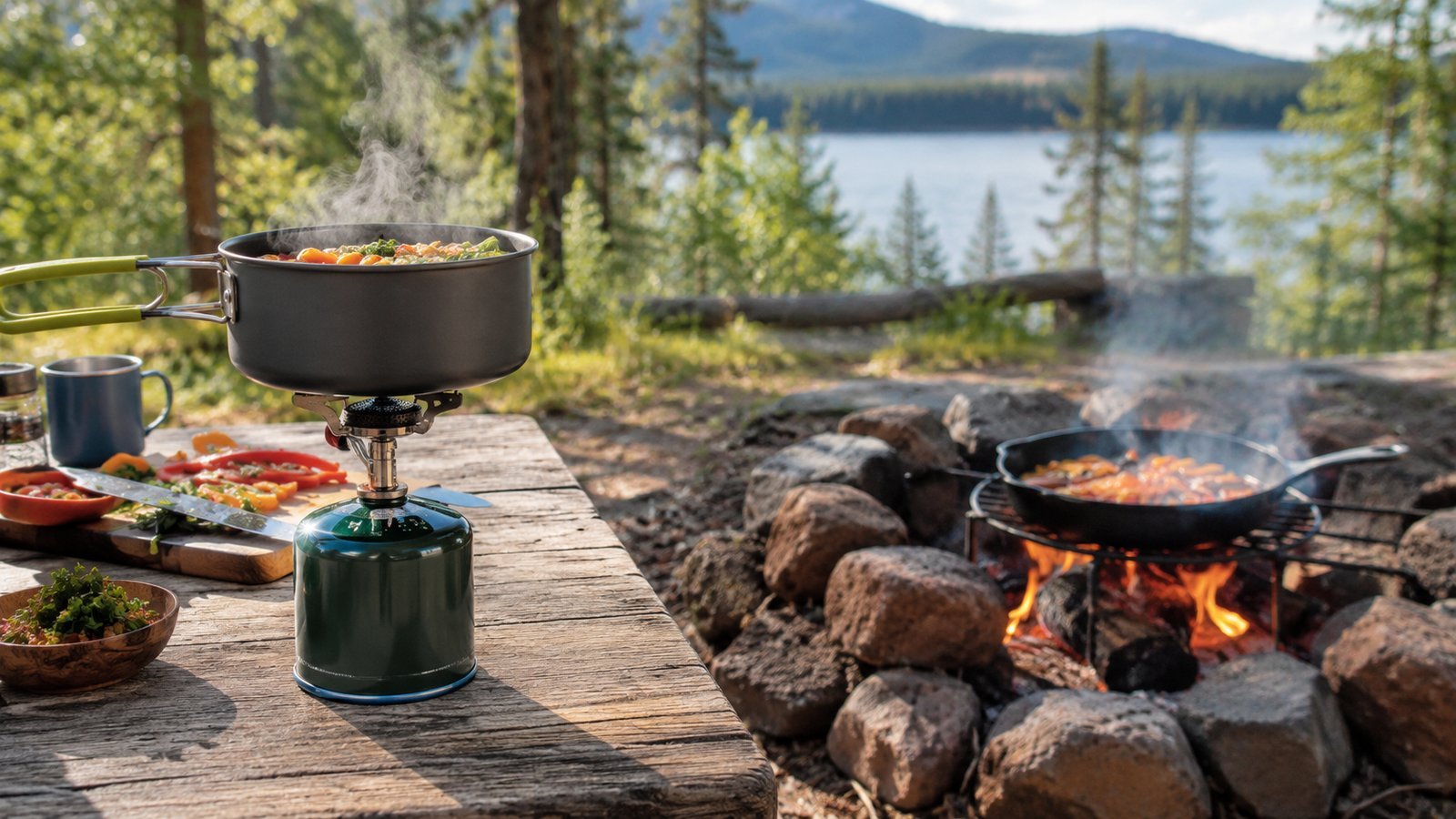
Flavor is where fire shines. Smoke, char and slow-cooked coals give food a quality that burners do not. Foil packets, grilled corn, charred peppers and roasted potatoes all benefit. Beyond taste, a fire gives a group a gathering point, which is a big part of the experience for many families.
Cleanup is the reverse. Soot blackens pots, and ash and grease need disposal. Stove cooking leaves cleaner cookware and a smaller footprint. Leave No Trace guidance calls for keeping fires small, using existing fire rings and burning wood down to ash. Pack out any trash that does not burn completely, including foil.
Foil deserves a mention. It does not burn up, and it lingers in fire rings. Pack it out once it cools. Likewise, never burn plastic, cans or food scraps, since they leave residue and attract animals.
For dishes, a stove allows hot water on demand for washing, which helps with sanitation. Our guide on budget camping also notes how a single pot and a simple stove can reduce both cost and cleanup.
Techniques for Each Method
Stove cooking rewards a few habits. Preheat the pan before adding food, keep the flame at medium for most meals, and use a lid to save fuel and speed up boiling. Measure water for pasta and rice, since extra water burns extra fuel. Cook one-pot meals when possible, and pre-chop ingredients at home to shorten stove time.
Fire cooking rewards patience. Let the fire burn down until the flames are low and the coals glow, then spread them in an even bed. Place the grate a few inches above the coals and test the heat by holding your hand about six inches above the grate. A count of two or three seconds before it feels too hot suggests medium-high heat. Move food to cooler edges when it browns too fast. Use hardwood where allowed, since it burns longer and hotter than softwood, and avoid treated or painted wood, which releases harmful fumes.
Other Options Worth Knowing
Some campers use a portable gas grill, which acts like a stove with a grate and works at many campgrounds that ban wood fires. Charcoal grills sit in the middle, since they burn longer than wood but are often restricted along with wood fires. Small wood-burning backpacking stoves use twigs and burn efficiently, though they too fall under fire restrictions in some areas. Solar ovens work in bright sun and need no fuel at all, though they are slow and depend on the weather.
Backpackers lean on canister stoves because of weight. RV and van campers often have built-in stoves, which are convenient but still need ventilation, with working carbon monoxide detectors recommended by most RV manufacturers and safety agencies. Read the manual for any appliance you plan to use.
How to Choose: A Simple Guide
Ask a few questions before each trip.
- Are fires allowed this week at this site? Otherwise, bring a stove.
- Will the weather be windy, wet or very dry? A stove is the safer option.
- Are you cooking for many people, or on a tight schedule? A stove helps.
- Is cooking part of the fun, with time to spare? A fire adds to it.
- Are you backpacking or traveling light? A small canister stove wins.
- Do you want specific foods, such as foil-packet meals or a Dutch oven bake? Plan on a fire if it is permitted.
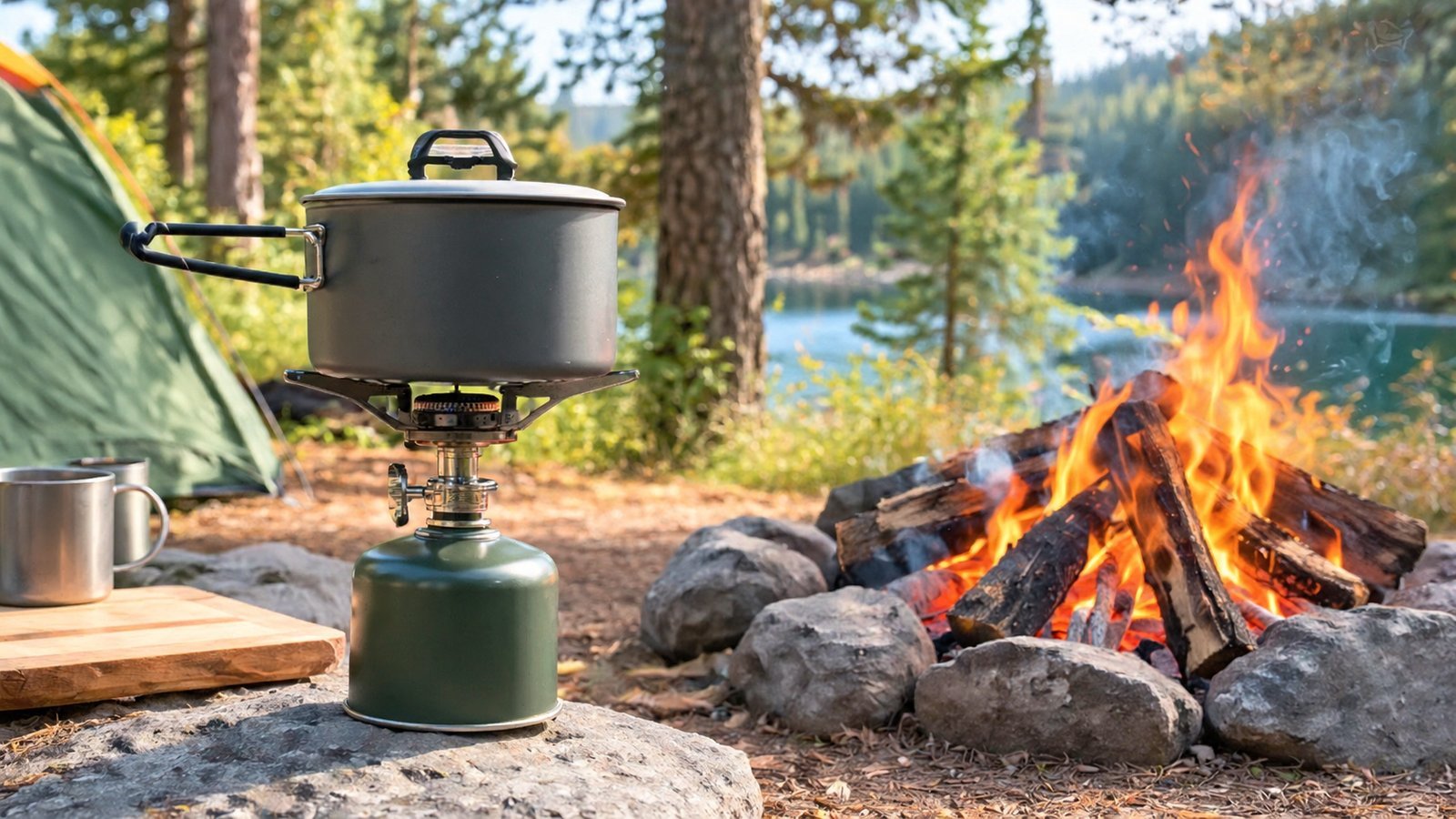
For most car campers, the best answer is to bring both. Use the stove for coffee, breakfast, boiling water and any meal that needs precision. Use the fire for evening cooking when conditions are right, and treat it as a bonus rather than a requirement. Having a backup means a closed fire pit never ruins dinner.
Planning Fuel and Wood
Estimate fuel before you leave. A small group cooking three simple meals a day often uses a one-pound propane canister every day or two, depending on the menu and weather, so check the manufacturer’s burn-time rating and bring a spare. Store canisters upright in a cool, shaded spot, never in a hot car, and pack out empties by following local recycling rules.
Wood needs similar math. A typical evening fire for cooking and warmth uses a few armfuls of wood, and buying one bundle per night is a common rule of thumb. Keep the woodpile well away from the fire ring and sleeping areas, and buy more only when you need it, so you do not end up hauling leftovers home or burning them in a rush.
Sample Day Using Both
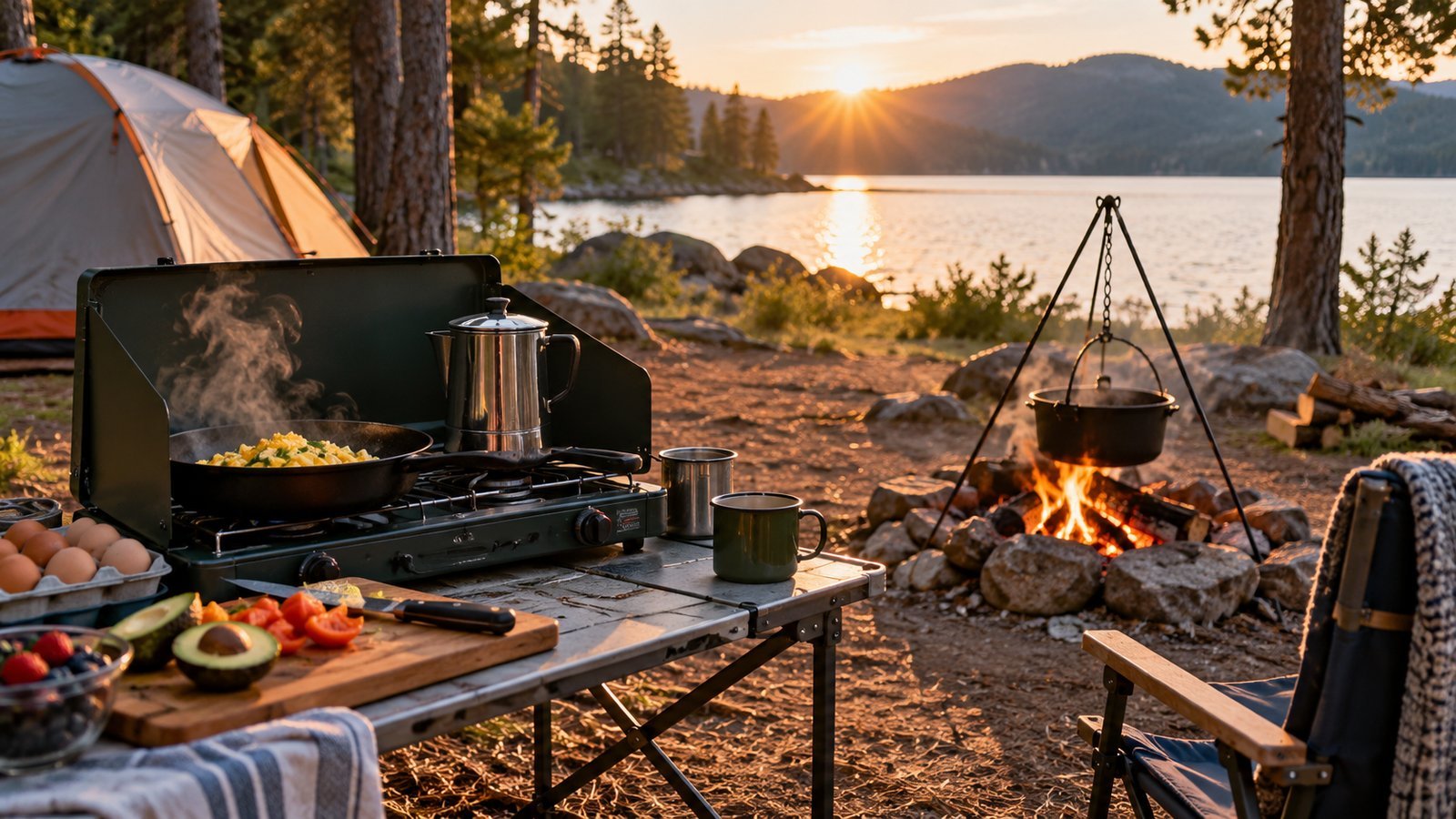
Imagine a weekend plan. Breakfast uses the stove for quick eggs and coffee. Lunch is no-cook sandwiches and fruit. Dinner takes advantage of a campfire, with foil packets of potatoes, vegetables and sausage cooked on coals, plus fruit for dessert. Should the fire be banned, the same meal moves to a skillet on the stove. Pack ingredients so either method works.
Sources used for this article include U.S. Forest Service and National Park Service guidance on fire restrictions and campfire safety, Leave No Trace principles on campfire impacts, and standard carbon monoxide safety guidance.
Frequently Asked Questions
Is a camp stove safer than a campfire?
Each has risks. Stoves involve carbon monoxide if used indoors or in tents and fuel leaks, while fires involve embers and burns. Follow the rules, use both outdoors on stable ground, and never leave either unattended.
Can I use a camp stove during a fire ban?
Often, but not always. Many restrictions allow stoves with a shut-off valve while banning wood and charcoal fires, though some bans cover all open flames. Check the posted rules or ask a ranger.
How long does it take to cook over a campfire?
A fire usually needs 30 to 45 minutes to burn down to usable coals, and cooking times then vary by food. Plan ahead for dinner.
Should I bring firewood from home?
Check local rules first. Many agencies ask campers to buy local or certified firewood to avoid spreading invasive pests.
Leave a Reply