
Quick answer: the easiest camping breakfasts fall into four groups: no-cook options like overnight oats and yogurt parfaits, make-ahead burritos you reheat, one-pan stove meals such as scrambled eggs and pancakes, and campfire options like foil-packet hash. Keep eggs, dairy and meat at 40°F or below in the cooler, and cook eggs until the yolk and white are firm and sausage to 160°F.
Breakfast sets the tone for a camping day. A hot meal in cold morning air feels wonderful, while a rushed or messy start makes everything else harder. The good news is that camp breakfasts do not need to be fancy. A short list of dependable recipes, matched to the weather and your gear, covers almost every trip.
The fifteen ideas below are sorted by cooking method, so you can choose based on what you have: a stove, a fire, only a cooler, or nothing but a kettle. Each one uses ordinary grocery store ingredients and skips specialty gear. Quantities are given for a group of four, and you can scale up or down.
Planning breakfast is easier when you see the whole trip on paper, so pair this list with our guide to a three-day camping food list. For coffee, which many campers consider part of breakfast, read how to make coffee while camping.
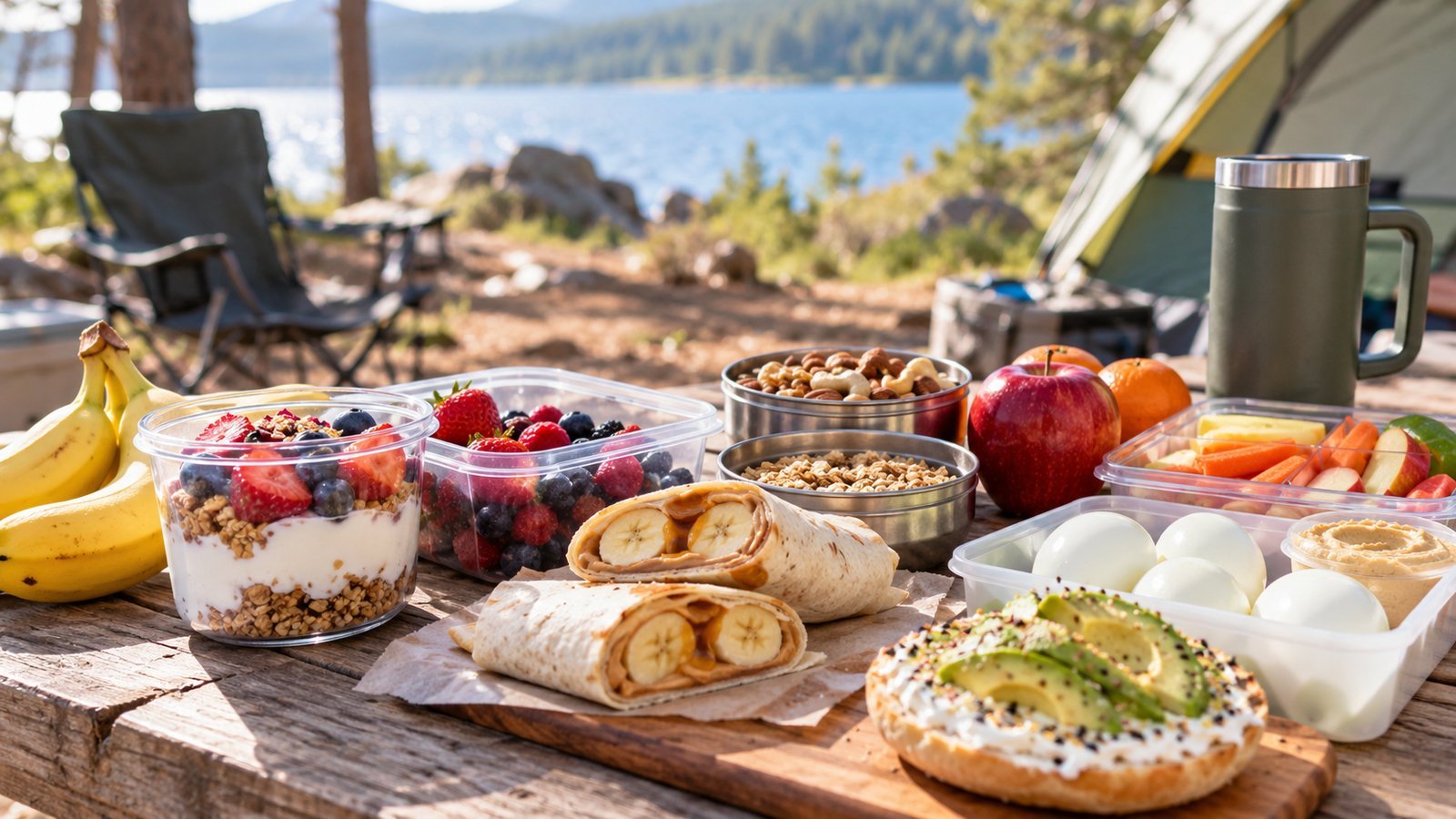
No-Cook Breakfasts for Fast Mornings
No-cook meals are ideal for rainy mornings, early starts and trips where fires are banned. They need no fuel and almost no cleanup.
1. Overnight oats
Mix one cup of rolled oats with one cup of milk or a milk alternative and a spoonful of yogurt in a jar. Add fruit, cinnamon or a drizzle of honey. Seal it and keep it in the cooler overnight. Make four jars for four people. The oats soften as they sit, and you can eat them cold.
2. Yogurt parfaits
Layer yogurt, granola and berries in a cup. Pack granola in a separate container so it stays crisp, and assemble at breakfast. Yogurt should stay in the cooler until you eat it.
3. Peanut butter banana wraps
Spread peanut butter over a tortilla, lay a banana on it, roll it up and slice it. This one is sturdy, filling and easy for kids to make. Swap in sunflower seed butter for a nut-free version.
4. Fruit, cheese and nut plate
Apples, grapes, cheese slices or sticks, and a handful of almonds or crackers make a good grazing breakfast. Hard cheeses hold up well in a cooler.
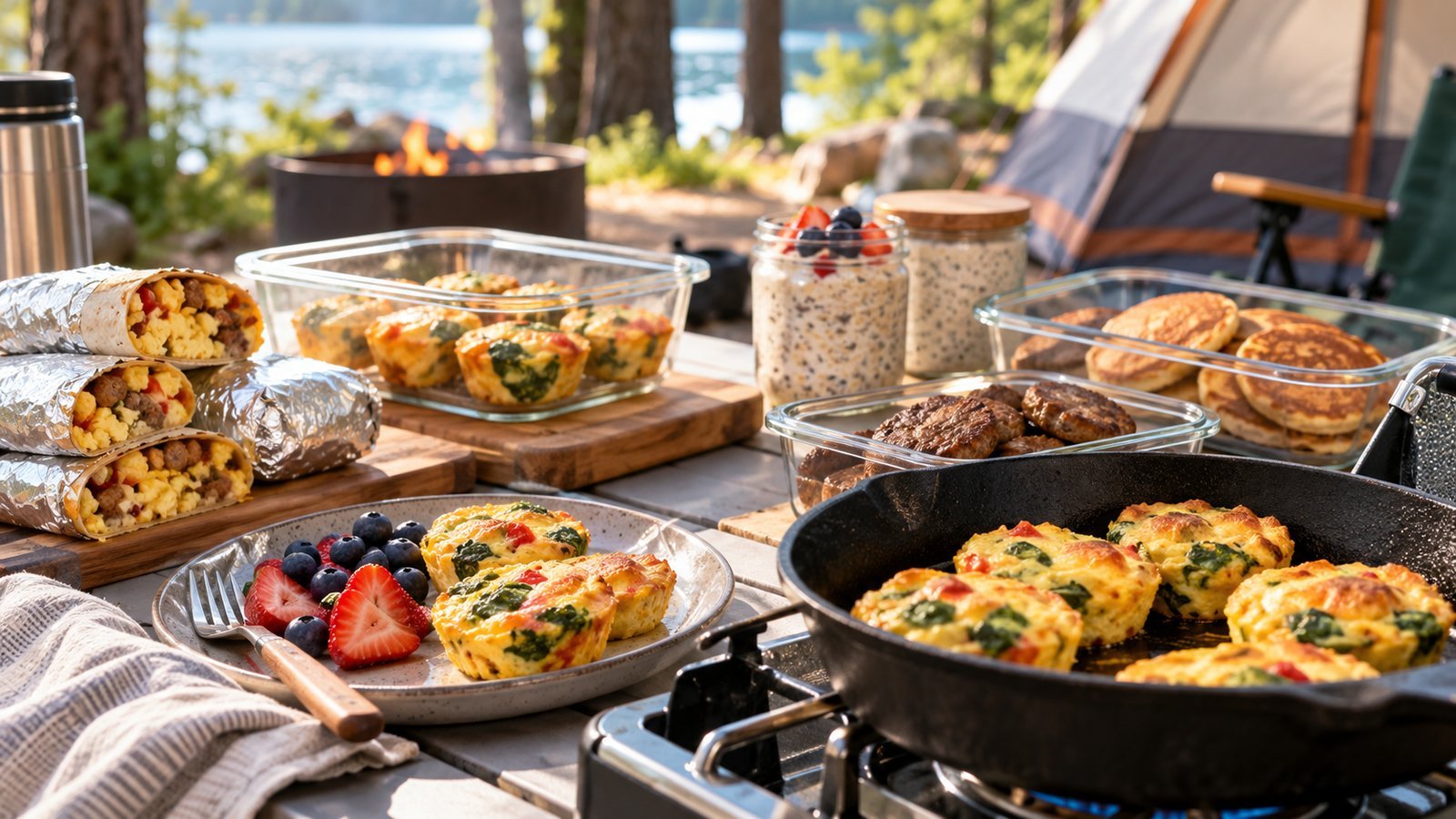
Make-Ahead Breakfasts That Reheat in Minutes
Cooking at home saves time at camp. These recipes freeze well, which also helps keep the cooler cold.
5. Breakfast burritos
Scramble eggs with cooked sausage, cheese and peppers at home. Roll them in tortillas, wrap each in foil, and freeze. At camp, keep them in the cooler until the morning and reheat the foil packets over a stove burner or on a grate above coals, turning them until hot through. Reheat leftovers until steaming hot, which means 165°F in the center.
6. Egg muffins
Whisk eggs with chopped vegetables and cheese, pour into a muffin tin, and bake at home at 350°F until set, about 20 minutes. Chill or freeze, then warm in a skillet with a lid at camp.
7. Pancake mix in a bottle
Measure dry pancake mix into a clean plastic bottle at home. At camp, add water and shake. Pour batter straight onto a lightly oiled griddle. It cuts down on bowls and mess.
8. Baked oatmeal squares
Bake a pan of oatmeal with fruit, then cut it into squares. They keep for a few days and taste fine cold or warmed.
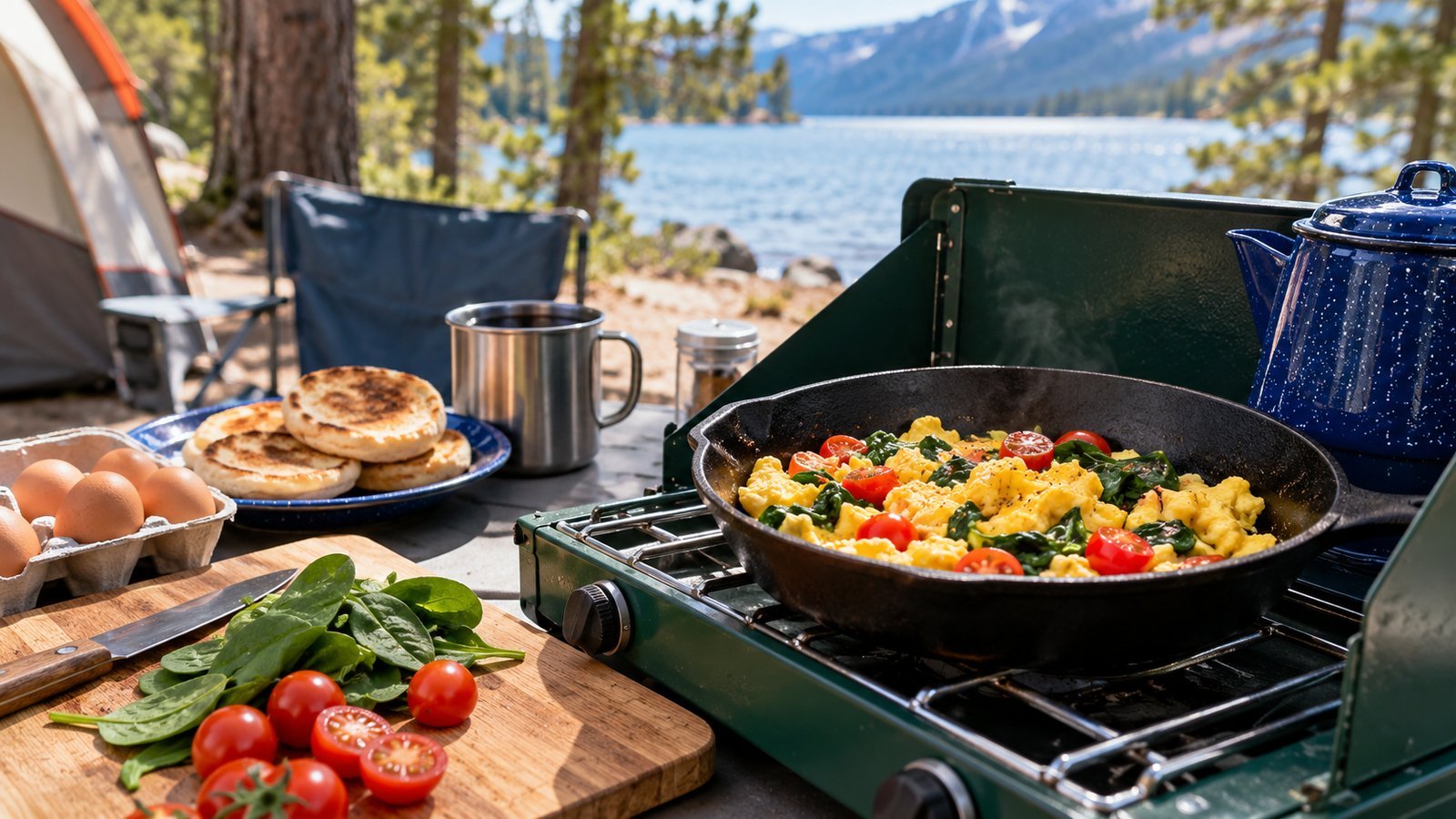
Camp Stove Breakfasts
A two-burner stove gives you a griddle, a skillet and a pot, and that is enough for a full menu.
9. Scrambled eggs with veggies
Crack eggs into a bottle or container at home to save space and avoid breakage, or carry them whole in a sturdy carton. Cook in a lightly oiled skillet over medium heat, stirring, until the eggs are firm and no liquid remains. The USDA advises cooking eggs until the yolk and white are firm, and that dishes made with eggs reach 160°F. Raw eggs belong in the cooler, and they should not sit out for over two hours, or one hour in hot weather.
10. Pancakes and French toast
A griddle turns out batches quickly. Finished pieces stay warm under foil. Bring syrup in a squeeze bottle and add fruit or nut butter for protein.
11. Sausage and potato skillet
Brown sausage links or patties, then add diced pre-cooked potatoes and onions. Pork sausage should reach 160°F internally, and pre-cooked chicken sausage should be heated to 165°F. Use a food thermometer to check.
12. Hot cereal
Bring water to a boil, stir in oats, and simmer for a few minutes. Offer brown sugar, dried fruit, nuts and cinnamon. It is cheap, warm and ready quickly.
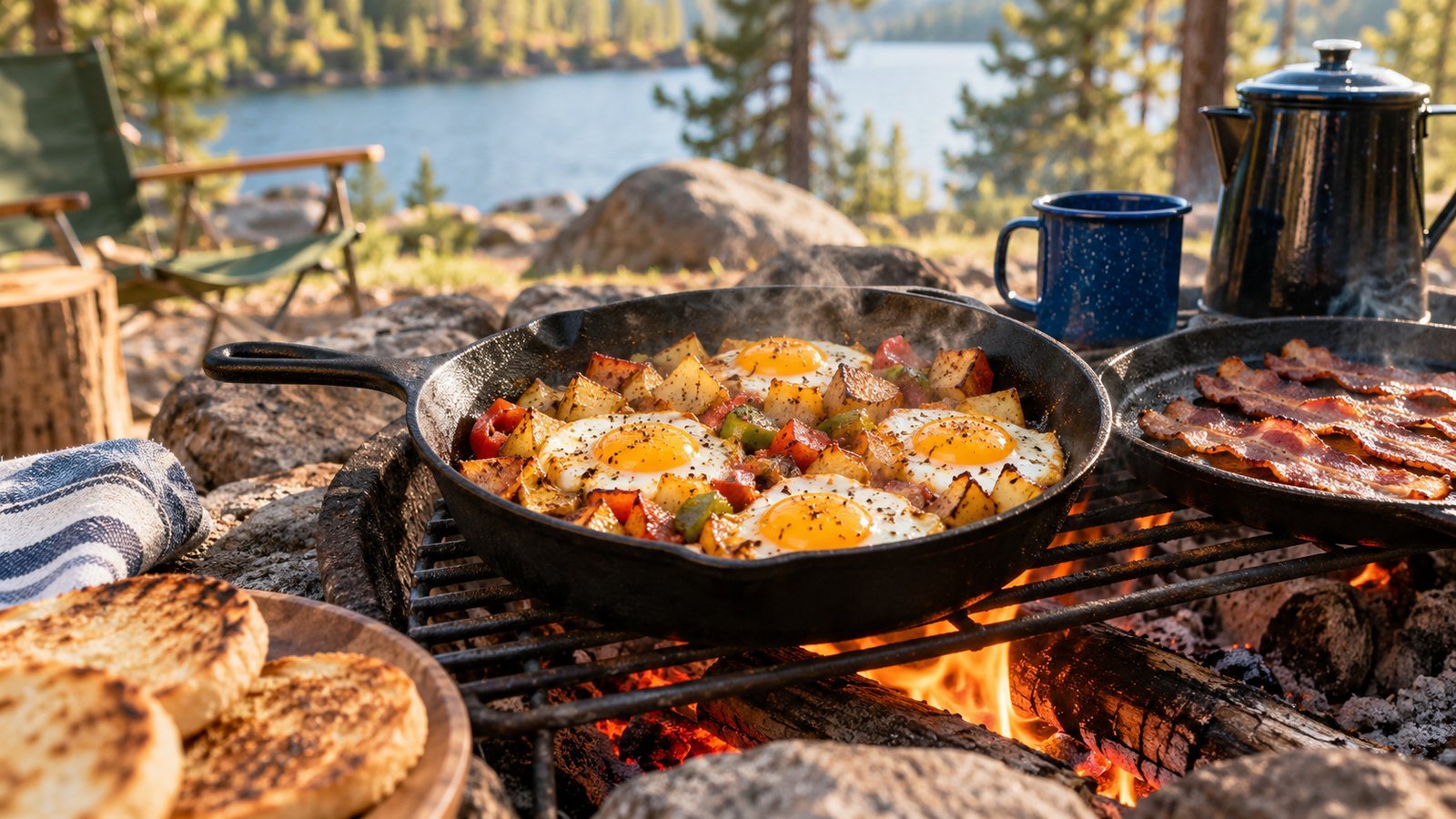
Campfire Breakfasts
Cooking over coals takes a little patience, and it makes breakfast feel like part of the experience. Fires must be allowed, so check local restrictions first, and read our guide to campfire safety before you light one.
13. Foil-packet breakfast hash
Toss diced potatoes, peppers, onions and cooked sausage with a little oil and seasoning. Wrap in heavy-duty foil with the seam up, and place on a grate over hot coals. Cook for about 20 to 30 minutes, turning once, until the potatoes are tender. Open the packet carefully, since steam can burn.
14. Eggs in a bell pepper or orange
Cut a bell pepper into rings, place them in a skillet or on foil, and crack an egg into each ring. Cook until the egg is set. For a sweeter option, cook muffin batter inside hollowed orange halves on coals, wrapped in foil.
15. Toasted breakfast sandwiches
Layer cheese and cooked ham or sausage on bread or an English muffin. Toast in a hinged cast iron sandwich iron or wrap in foil and warm on coals, turning once.
Packing, Safety and Cleanup
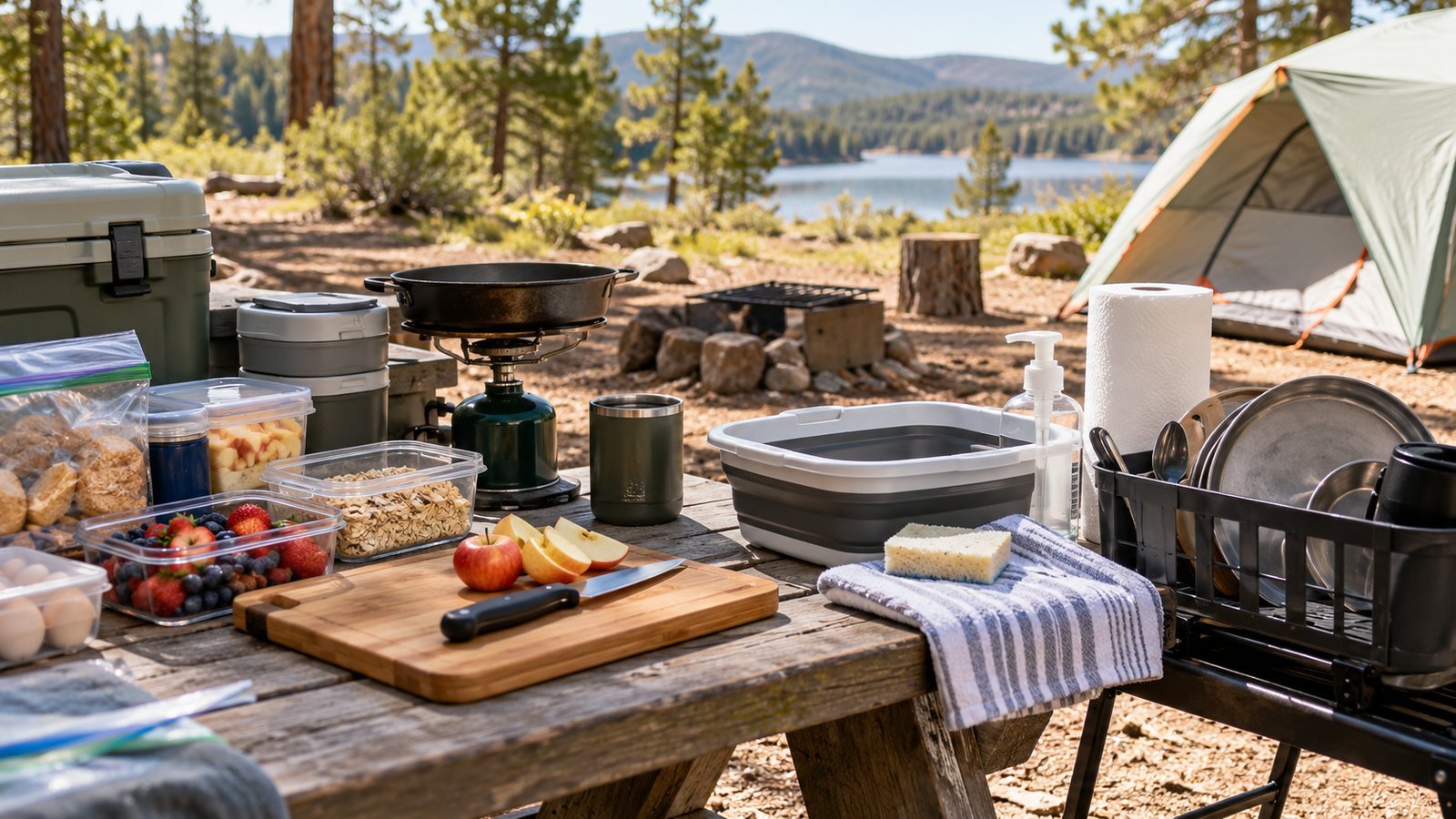
Food safety matters most with breakfast, because it includes eggs, dairy and meat. Raw ingredients need to stay at or below 40°F in the cooler, so pack raw meat separate from everything else. Wash your hands before cooking, and use a separate utensil for raw and cooked food.
Organize the cooler by meal. Pack breakfast items together so you open the cooler once. A small thermometer inside the cooler helps you discard any perishable item that has stayed above 40°F for over two hours. When the temperature is above 90°F, shorten that to one hour.
Wildlife is attracted to breakfast smells. Store food, coolers and trash in a hard-sided vehicle or an approved container as soon as you finish eating. Never leave dishes or food out overnight. Our guide on campsite safety basics explains how to protect both your family and the animals.
Clean up well. Scrape plates, wash dishes away from natural water, and pack out scraps. Pre-planning meals that use one pan means less cleanup, which helps when the morning is cold and wet. Our overview of Leave No Trace principles covers dishwater and trash.
Gear and Troubleshooting for Camp Breakfasts
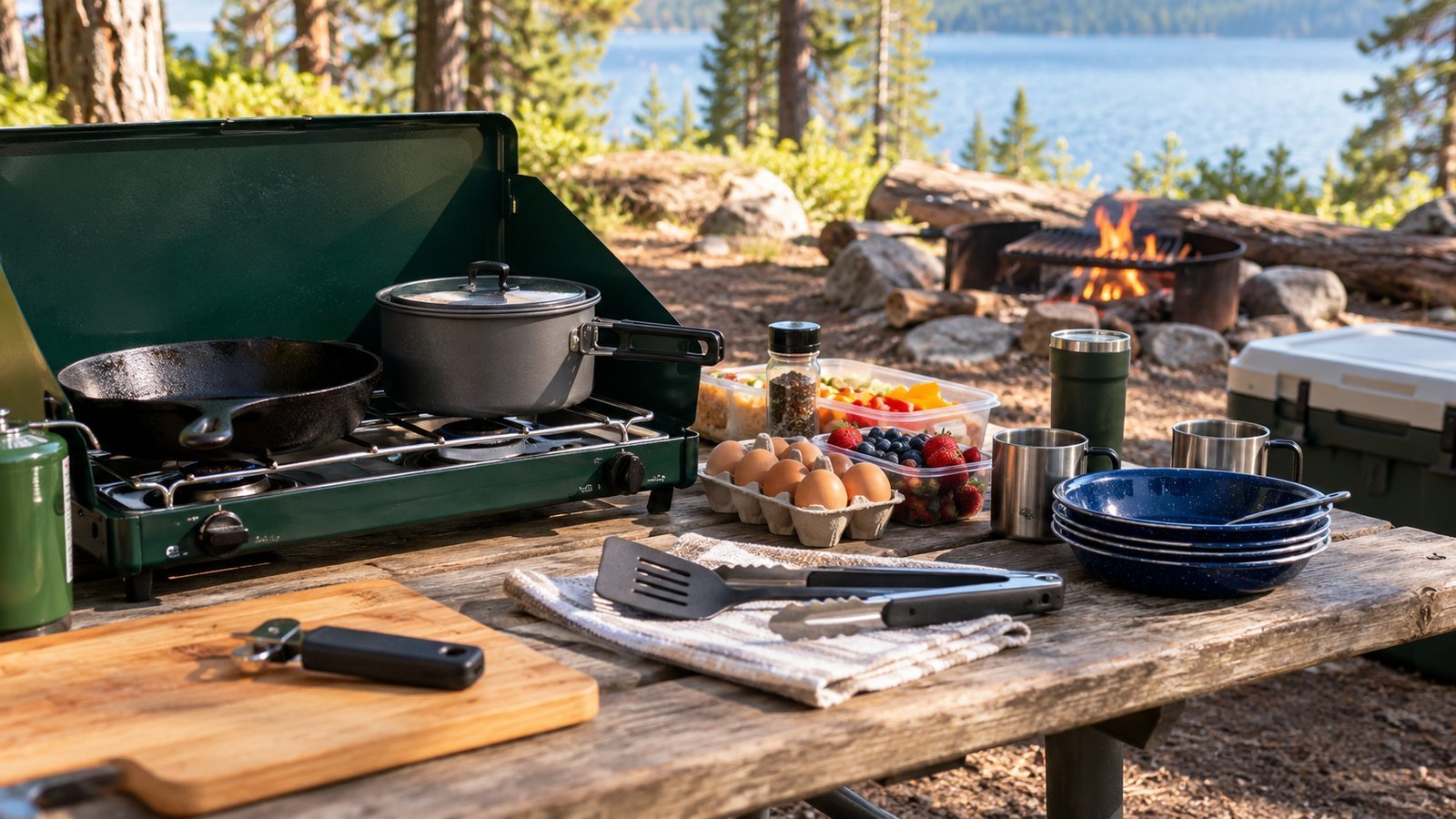
A short gear list covers every recipe above. Bring a stove with a griddle or large skillet, a lid, a spatula, a whisk or fork, a sharp knife, a small cutting board, a mixing bowl, a food thermometer, foil, tongs and a pair of heat-resistant gloves. A reusable squeeze bottle for syrup and a wide-mouth jar for overnight oats round out the kit. A small tub of cooking oil and a bit of salt and pepper make plain ingredients taste like a real meal.
Wind is the most common stove problem. A stove that flickers or burns unevenly wastes fuel and takes forever to boil water. Place a windscreen around the burners if the stove design allows it, or park the vehicle so it blocks the breeze. Never use a windscreen that traps heat around a fuel canister, because that can overheat it. Always follow the stove manufacturer’s instructions, and never cook inside a tent or an enclosed space, since carbon monoxide can build up.
Pancakes that burn outside and stay raw inside usually mean the heat is too high. Turn the burner down and let the griddle warm for a couple of minutes before pouring. A thin layer of oil helps, and so does waiting until the surface bubbles before flipping. Scrambled eggs turn rubbery when cooked too hot, so use medium heat and remove the pan just before the eggs finish, since they keep cooking from residual heat.
Foil packets can leak or burn on the bottom. Use heavy-duty foil, fold the seams tightly, and place the packet on a bed of coals instead of in open flames. Rotate it halfway through. Open it carefully away from your face, because escaping steam burns.
Make Breakfast More Filling
A morning meal that includes protein, fiber and some fat keeps hunger away until lunch, which matters on hiking days. Add nut butter to oats, cheese to burritos, seeds or nuts to yogurt, and fruit to almost anything. Pair carbohydrates such as pancakes with eggs or sausage. Pack small bags of trail mix for the trail so no one gets hungry between meals.
Breakfast for Special Diets
Plenty of these ideas adapt. Use gluten-free oats and tortillas, check labels on sausage and mix, and use dairy-free yogurt for people avoiding milk. Allergen-free items should live in their own container with their own utensils, and cook them first on a clean surface to prevent cross-contact. For people who prefer plant-based meals, tofu scramble, peanut butter wraps and oatmeal all work well.
Shopping List for a Weekend of Breakfasts
Turn the plan into a list before you shop, and check what you already have. For a group of four and three breakfasts, a typical list includes a dozen eggs, a pound of sausage, a package of large tortillas, a bag of shredded cheese, two cups of rolled oats, a box of pancake mix, a quart of milk, a tub of yogurt, a bag of granola, bananas, apples and berries, a jar of peanut butter, syrup, cooking oil and salt. Add butter or oil spray, coffee, tea and cocoa, plus instant oatmeal as the backup meal.
Pack by day, not by category. Put Saturday’s items in one bag and Sunday’s in another, so each morning’s ingredients come out together. Mark bags with the day and keep the most perishable items, such as raw sausage and eggs, for the first morning when the ice is fresh.
Sample Breakfast Plan for a Weekend
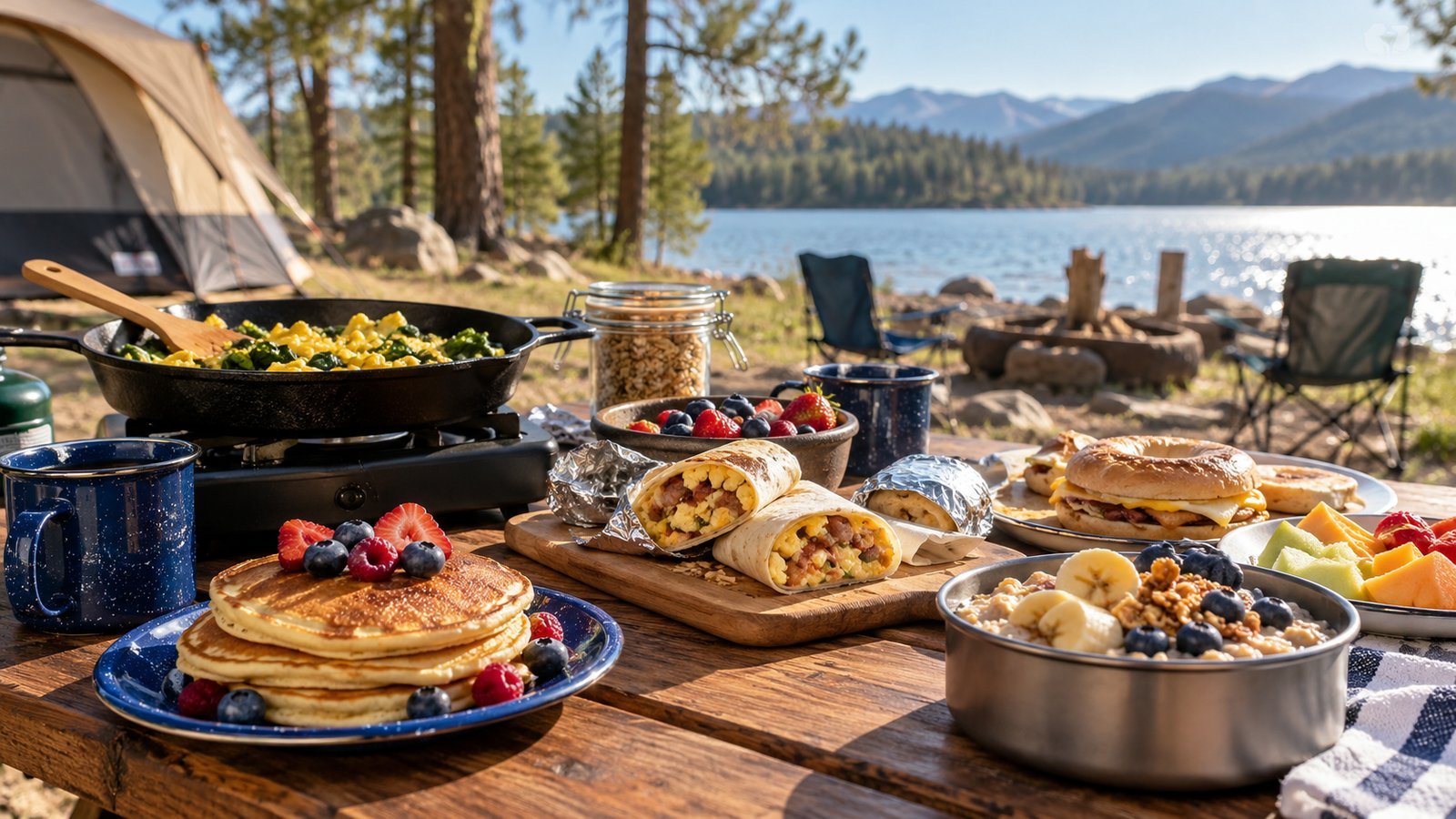
Here is one way to combine the ideas:
- Saturday: egg and sausage burritos reheated in foil, plus fruit
- Sunday: pancakes from the bottle, with sausage and berries
- Monday, if you stay: overnight oats in a jar for a quick pack-up
Adjust the plan based on the weather. Cold mornings call for hot options, while warm days suit no-cook ones. Always pack a back-up breakfast, such as instant oatmeal and bars, in case the stove or fire is not an option.
Sources used for this article include USDA Food Safety and Inspection Service guidance on safe minimum cooking temperatures, egg safety and the two-hour rule, and National Park Service advice on storing food away from wildlife.
Frequently Asked Questions
What is an easy camping breakfast for kids?
Peanut butter banana wraps, pancakes from a shaker bottle and yogurt parfaits are easy for kids to help with. Use a sunflower seed butter wrap for nut-free groups.
How do I keep eggs safe while camping?
Keep eggs at 40°F or below in the cooler, cook them until the yolk and white are firm, and do not leave them out more than two hours, or one hour in hot weather.
Can I cook breakfast without a stove?
Yes. Overnight oats, yogurt parfaits and wraps need no cooking, and foil-packet meals cook on campfire coals where fires are allowed.
What temperature should breakfast sausage reach?
The USDA lists 160°F for fresh pork sausage and 165°F for poultry sausage. Check with a food thermometer in the thickest part.
Leave a Reply