Quick answer: RV camping for beginners is easiest if you rent before you buy, start with a smaller rig you feel comfortable driving or towing, book a campground with full hookups for your first trip, and practice the basics (hooking up power, water and sewer, leveling, and dumping tanks) before you need them in the dark. Learn your rig’s height, length and weight ratings, carry working smoke, carbon monoxide and propane alarms, and keep the first trip short and close to home.
RV camping combines the freedom of the road with a bed, a kitchen and a bathroom that come along for the ride. It can be a comfortable way to camp with kids, pets or anyone who does not love sleeping on the ground. It also comes with a learning curve: hookups, holding tanks, towing, propane and campground rules that tent campers never think about.
In this guide
- What Is RV Camping?
- Types of RVs Explained
- Rent Before You Buy
- What RV Camping Really Costs
- RV Hookups, Power and Water Basics
- Weight, Towing and Driving Basics
- Where to Camp With an RV
- RV Safety Essentials
- Setting Up and Leaving a Campsite
- Campground Etiquette for RVers
- First-Trip Mistakes to Avoid
- A Simple Plan for Your First RV Trip
- Frequently Asked Questions
- Related RV and Van Camping Guides
- Sources
This guide walks through the decisions and skills that matter most for beginners, from choosing between a Class C motorhome and a travel trailer to finding campsites and avoiding the mistakes that make first trips stressful. Use it as a hub: each section links to our more detailed guides where they exist.
Sources: RV Industry Association (RVIA) and Go RVing descriptions of RV types; National Highway Traffic Safety Administration (NHTSA) on tire safety and towing; U.S. Fire Administration and National Fire Protection Association (NFPA) on RV fire, smoke and carbon monoxide safety; National Park Service, USDA Forest Service, Bureau of Land Management and U.S. Army Corps of Engineers camping pages; Recreation.gov; state DMV licensing pages. Checked October 2026.
What Is RV Camping?
RV camping means traveling and sleeping in a recreational vehicle, either one you drive (a motorhome or camper van) or one you tow (a travel trailer, fifth wheel or pop-up). Most RVs include sleeping space, a small kitchen and some combination of fresh water, a toilet, a shower and electrical systems.
RV camping vs tent camping
The biggest differences are comfort and complexity. An RV keeps you dry, warm and off the ground, and it lets you carry more food and gear. In exchange, you manage systems (water, waste, power and propane), you need a larger site, and you pay more for fuel and campground hookups. Many families do both: tent camping for simple weekends and RV trips for longer road trips.
Van camping
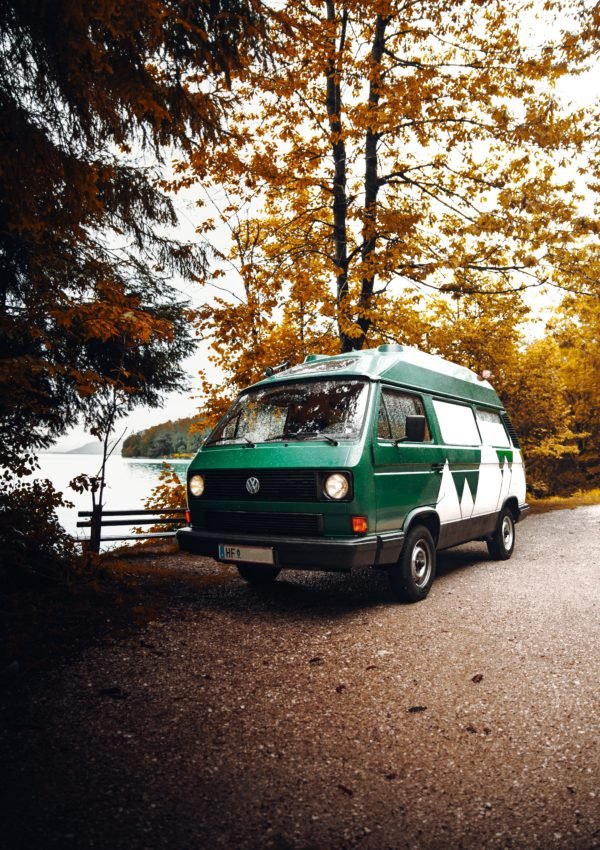
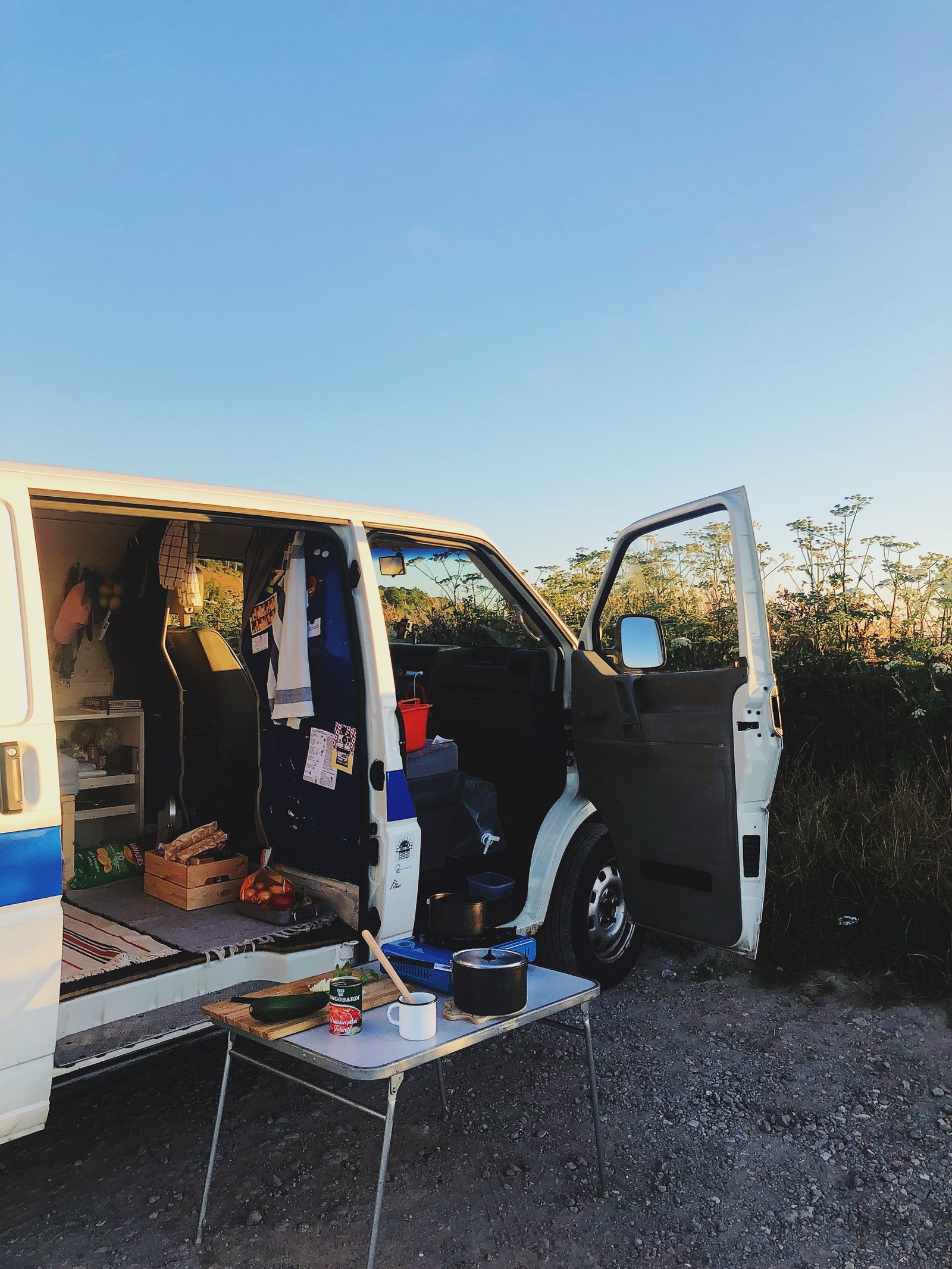
Camper vans sit between the two. A converted van is easier to park and drive than a large motorhome but has less interior space and smaller tanks. Our earlier guide to van camping for beginners covers van-specific planning in more depth.

Types of RVs Explained
The RV Industry Association groups RVs into motorized and towable types. Each has trade-offs in size, cost, ease of driving and how you get around once parked.
Motorhomes (drivable)
| Type | What it is | Typical length | Good for |
|---|---|---|---|
| Class A | Bus-style motorhome built on a motorhome or commercial chassis | Roughly 26-45 ft | Long trips, full-time travel, maximum space |
| Class B (camper van) | Built inside a van body | Roughly 17-24 ft | Couples, solo travelers, easy parking |
| Class C | Built on a cutaway van or truck chassis, with the familiar over-cab bunk | Roughly 21-35 ft | Families, first-time renters |
Towables
| Type | What it is | Towed by | Good for |
|---|---|---|---|
| Travel trailer | Hitches to a bumper-mounted or frame-mounted ball hitch | Truck or capable SUV | Wide range of sizes and budgets |
| Fifth wheel | Raised front section hitches in the bed of a pickup | Pickup truck with fifth-wheel hitch | Larger living space, stable towing |
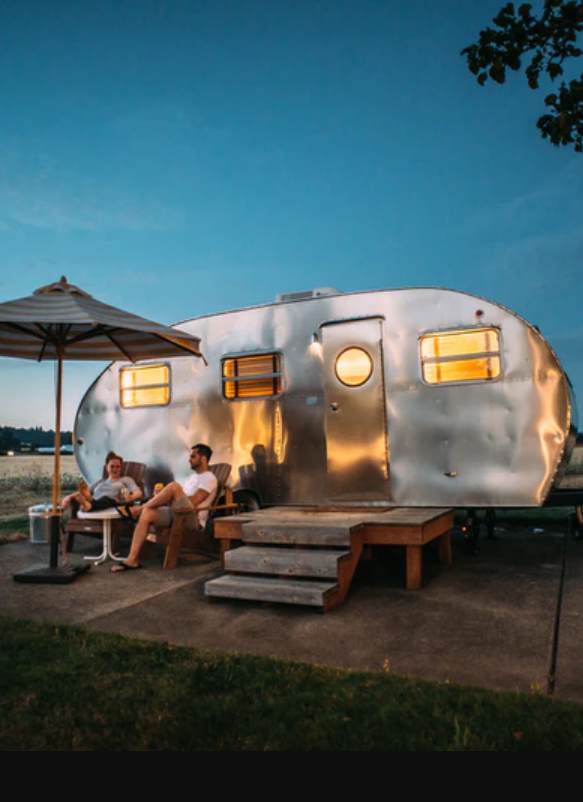
| Pop-up (folding) camper | Collapsible trailer with fabric sides | Many SUVs and some cars | Light towing, budget, tent-like feel |
| Teardrop trailer | Small trailer with a bed inside and a rear galley kitchen | Many cars and small SUVs | Couples, simple setups |
| Truck camper | Slides into a pickup bed | Pickup truck | Rugged roads, compact travel |
| Toy hauler | Trailer or motorhome with a rear garage for ATVs or bikes | Truck (or motorized) | Hauling recreational gear |
Drive or tow?
A motorhome is simple at stops: you park, and everything is inside. But you either tow a small car behind it or take the whole rig to the grocery store. A towable lets you unhitch and use your truck for day trips, but you need a properly rated tow vehicle and the skills to back up a trailer. For many beginners, a Class C rental or a small travel trailer is the most forgiving starting point.

Rent Before You Buy
Renting an RV for a few trips is the most reliable way to learn which layout and size suit you. Many people discover they want a smaller rig, a different bed arrangement or a separate bathroom only after a weekend in one.
Where to rent
- National RV rental companies with pickup locations
- Local dealers that rent units
- Peer-to-peer rental platforms where private owners list their RVs
- Some campgrounds offer on-site rental trailers that are already set up
Questions to ask before booking
- What is included in the price, and what are the mileage and generator-hour fees?
- Is there a cleaning fee or a fee if tanks are returned full?
- What insurance coverage is included, and what does my own auto policy cover?
- Are kitchen kits, linens and hoses included or extra?
- Is there a walkthrough at pickup, and can I practice hookups?
- What is the policy for breakdowns and roadside assistance?
Ask the rental company or owner for a full orientation and take a video of it on your phone so you can review steps later.
What RV Camping Really Costs
RV costs vary widely by region, season, rig and travel style, so build your own budget from real quotes rather than averages. The categories below are the ones most beginners underestimate.
Main cost categories
| Category | What to plan for |
|---|---|
| Rig | Rental rate per night, or purchase price, financing and depreciation if buying |
| Fuel | Motorhomes and tow vehicles use much more fuel than a typical car; plan routes with this in mind |
| Campgrounds | Full-hookup private parks usually cost more than public campgrounds or dry camping |
| Insurance | Rental protection or an RV policy if you own |
| Maintenance | Tires, roof sealant, batteries, winterizing, servicing the generator and appliances |
| Storage | Many owners pay for storage if they cannot park the RV at home |
| Supplies | Hoses, power adapters, leveling blocks, chocks, RV toilet paper, propane |
Ways to save
- Travel shorter distances and stay longer at each stop to cut fuel use.
- Mix full-hookup nights with lower-cost public campgrounds.
- Use annual passes where they apply; our guide to the America the Beautiful pass for campers explains which federal fees it covers.
- Consider free or low-cost dispersed camping once you are comfortable with dry camping (more below).

RV Hookups, Power and Water Basics
Hookups are the utilities a campsite provides: electricity, water and sometimes sewer. “Full hookups” means all three; “partial hookups” usually means water and electric only; “dry camping” or “boondocking” means none.
Electricity: 30 amp vs 50 amp
Most RVs use either a 30-amp or 50-amp shore power connection. A 30-amp service is a 120-volt, three-prong connection, while a 50-amp service is a four-prong connection that supplies two 120-volt legs. In practical terms, a 50-amp RV can run more appliances at the same time, such as two air conditioners. Adapters let you plug a 50-amp rig into a 30-amp pedestal (with reduced capacity), and many campers use a surge protector to guard against bad pedestal wiring.
Fresh water
Use a drinking-water-safe hose (often white or blue) only for fresh water, and many owners add a pressure regulator to protect plumbing from high campground pressure. Without a water hookup, you fill the fresh tank and use the onboard pump.
Holding tanks
Most RVs have three tanks:
- Fresh water tank for clean water
- Gray tank for sink and shower water
- Black tank for toilet waste
Dumping tanks is a skill every RV camper needs. The standard order is to dump the black tank first and the gray tank second, so the soapy gray water rinses the sewer hose. Wear disposable gloves, use only designated dump stations or sewer hookups, and never dump tanks on the ground.
Propane
Propane commonly powers the stove, furnace, water heater and sometimes the refrigerator. Turn propane off at the tank when traveling if your RV manual recommends it, and never refuel with propane appliances running.
Batteries, generators and solar
RVs have a 12-volt house battery system that runs lights, fans and the water pump when you are not plugged in. Generators and solar panels recharge those batteries off-grid. Campgrounds often set generator quiet hours, so check the rules. Our guide to portable power for camping explains battery capacity in watt-hours, which helps when sizing a solar or power station setup.
Weight, Towing and Driving Basics
Weight ratings are safety limits, not suggestions. Overloading a motorhome or tow vehicle affects braking, steering and tire life.
Key weight terms
- GVWR (gross vehicle weight rating): the maximum a vehicle or trailer may weigh fully loaded
- GCWR (gross combined weight rating): the maximum combined weight of a tow vehicle and trailer
- Towing capacity: the most your vehicle can tow, from the manufacturer
- Tongue weight or pin weight: the downward force the trailer puts on the hitch
- Payload: how much weight a truck can carry, including passengers, cargo and tongue weight
A common rule of thumb for conventional travel trailers is tongue weight of about 10 to 15 percent of the trailer’s loaded weight; too little tongue weight can contribute to sway. Fifth-wheel pin weight is typically a higher share. Your vehicle’s owner’s manual and the door-jamb sticker are the authority for your specific vehicle.
Hitches and sway control
Travel trailers may use a weight-distributing hitch that spreads tongue weight across the tow vehicle’s axles, often with sway control. Electric trailer brakes require a brake controller in the tow vehicle; state laws set the trailer weight at which brakes are required.
Tires
NHTSA advises checking tire pressure regularly with a gauge when tires are cold, inspecting for cracks and bulges, and noting that tires age even when tread looks fine. Many RVs sit for months, so check tire date codes and condition before each season.
Driving tips for big rigs
- Know your rig’s exact height and watch for low bridges, drive-thru canopies and gas station roofs.
- Leave much more following distance than in a car.
- Take turns wide and watch the rear swing on long motorhomes.
- Use a spotter and agreed hand signals when backing.
- Plan fuel stops at stations with truck or RV lanes.
- Avoid driving tired or after dark on unfamiliar roads.
Do you need a special license?
In most states, a standard driver’s license covers most rental RVs. Some states require a special non-commercial license or endorsement for very heavy motorhomes or trailer combinations. Check your state DMV before driving a large rig.
Where to Camp With an RV
RV campsites range from resort-style parks to free spots on public land. Matching the campground to your rig and comfort level makes early trips easier.
Campground types
| Type | Typical amenities | Notes |
|---|---|---|
| Private RV parks and resorts | Full hookups, pull-through sites, laundry, Wi-Fi | Easiest for beginners; higher cost |
| State park campgrounds | Often electric and water; dump station | Scenic, popular; book early |
| National park campgrounds | Varies; many have no hookups | Length limits are common; check each park |
| Forest Service and Corps of Engineers campgrounds | Varies from primitive to full hookups | Corps lakeside campgrounds are often RV-friendly |
| Dispersed camping and boondocking | No hookups | Free or low cost; self-sufficient only |
| Membership and host programs | Wineries, farms and other hosts | Usually one-night stays, self-contained rigs |
Booking
Federal campgrounds, including many national park, Forest Service and Corps of Engineers sites, are reserved through Recreation.gov, while most state parks use their own reservation systems. Popular parks fill quickly once booking windows open. Our guide to reserving a campsite when sites sell out explains booking windows, cancellations and backup plans.
Check site length and access
Before you book, compare the site’s maximum length with your rig’s total length (including the tow vehicle for trailers, if the pad requires it). Note whether sites are pull-through or back-in, and whether roads are paved or gravel. Many older public campgrounds were built for smaller RVs.
Boondocking on public land
Dispersed camping on national forest and BLM land can be free but usually has stay limits and no services. Read our guide to dispersed camping rules on national forest and BLM land before you try it, and arrive with full fresh water, empty tanks and a plan for power.

RV Safety Essentials
RVs pack fuel, propane, electrical systems and people into a small space, so safety equipment matters. The U.S. Fire Administration and NFPA recommend working smoke alarms and fire extinguishers in RVs, along with carbon monoxide and propane leak alarms.
Safety checklist
- Test smoke, carbon monoxide and propane alarms before every trip.
- Know where the fire extinguisher is and how to use it.
- Learn the location of every emergency exit window and practice opening it.
- Never use a gas stove or oven to heat the RV.
- Keep generator exhaust away from windows, vents and neighboring rigs.
- Turn off propane before refueling.
- Carry a first-aid kit, flashlight and basic tools.
Carbon monoxide is odorless and dangerous in any enclosed space. Our guide to tent safety, heaters and carbon monoxide explains how CO builds up and why alarms are essential.
Weather awareness
RVs are not safe shelters in tornadoes or severe thunderstorms with damaging winds. Know where the campground’s sturdy shelter is and monitor forecasts. High winds can also make driving a tall RV dangerous.

Setting Up and Leaving a Campsite
A repeatable setup routine prevents damage and forgotten steps. Many RVers use a written checklist for both arrival and departure.
Arrival steps
- Check in and confirm your site.
- Pull or back into the site with a spotter.
- Level the RV side to side with leveling blocks, then front to back with jacks or the hitch.
- Chock the wheels (for trailers, before unhitching).
- Connect power after checking the pedestal breaker is off, ideally through a surge protector.
- Connect fresh water with a pressure regulator.
- Connect the sewer hose if you have a sewer hookup, keeping the black valve closed until you dump.
- Extend slide-outs and the awning after checking for obstacles.
Departure steps
- Dump black, then gray, and rinse the hose.
- Disconnect and store water, power and sewer lines.
- Retract slides, awning and antennas.
- Secure loose items inside and close cabinets.
- Raise jacks and remove chocks and blocks.
- Do a final walk-around, including the roof vents, steps and hitch.
Our printable RV camping checklist for families helps make sure nothing is left at home.

Campground Etiquette for RVers
Good etiquette keeps campgrounds pleasant. Respect quiet hours, keep generators off outside permitted times, avoid walking through other sites, and keep outdoor lights low at night. Leave your site clean and dump only at designated stations. Our guide to campground etiquette covers more of the unwritten rules.

First-Trip Mistakes to Avoid
Most first-trip problems are predictable. A few common ones:
- Planning a long drive on day one instead of a short trip close to home
- Arriving after dark at an unfamiliar campground
- Forgetting to check the RV’s height and length
- Driving with slides out, steps down or antennas up
- Overfilling the trailer or truck and exceeding weight ratings
- Leaving the black tank valve open on a sewer hookup, which can cause solids to build up in the tank
- Forgetting a water pressure regulator, surge protector or sewer hose supports
- Skipping the walkthrough or not practicing hookups
We cover many more in our guide to RV first-trip mistakes and how to avoid them.
A Simple Plan for Your First RV Trip
- Rent a Class C or small travel trailer for two or three nights.
- Pick a full-hookup campground within two or three hours of home.
- Watch the pickup orientation and record it on your phone.
- Practice backing up, leveling and hookups in daylight.
- Pack light, using a checklist, keeping in mind the rig’s cargo capacity.
- Arrive well before dark.
- Dump tanks and return the rig according to the rental terms.
- Write down what you liked and what you would change before choosing your next RV.

Frequently Asked Questions
What is the easiest type of RV for beginners?
Many beginners find a Class C motorhome or a small travel trailer easiest. Class C rigs drive like a large van and are common in rental fleets, while small trailers are lighter to tow. Camper vans are easiest to park but have limited space.
Do you need a special license to drive an RV?
In most states, a standard license covers most rental RVs. Some states require a special non-commercial license or endorsement for very heavy motorhomes or trailer combinations, so check your state DMV.
What does full hookup mean at a campground?
Full hookups mean the site has electricity, a fresh water connection and a sewer connection. Partial hookups usually include electricity and water only.
How often do you need to dump RV tanks?
It depends on tank size and use. Many RVers wait until the black tank is about two-thirds full so there is enough liquid to flush solids. Dump black first, then gray.
Is it cheaper to rent or buy an RV?
For a few trips a year, renting is often cheaper once you count purchase price, insurance, storage, maintenance and depreciation. Frequent travelers may find owning worthwhile. Compare real quotes for your situation.
Can you camp in an RV for free?
Yes, in some places. Dispersed camping on many national forest and BLM lands is free, with stay limits and no services, and some businesses host RVers for one night. Always confirm the rules for the specific area.
Related RV and Van Camping Guides
- Van camping for beginners (linked above)
- RV first-trip mistakes and how to avoid them (linked above)
- RV camping checklist for families (linked above)
- Dispersed camping rules on national forest and BLM land (linked above)
- How to reserve a campsite when sites sell out (linked above)
- Coming soon: Class A vs B vs C vs travel trailer, RV rental costs, RV hookups explained, how to dump RV tanks, RV campground types, towing basics, winterizing, van life power and ventilation, and boondocking for beginners

Sources
- RV Industry Association and Go RVing. RV types and definitions.
- National Highway Traffic Safety Administration. Tire safety; trailer towing safety.
- U.S. Fire Administration. RV fire safety.
- National Fire Protection Association. Carbon monoxide and smoke alarm guidance.
- National Park Service, USDA Forest Service, Bureau of Land Management, U.S. Army Corps of Engineers. Camping information pages.
- Recreation.gov. Campground reservations.
- State DMV websites. Driver license requirements for recreational vehicles.