
Quick answer: choose a tent by matching four things to your trips: capacity (most people size up by one person for comfort), season rating (three-season for spring through fall, four-season only for snow and strong wind), shape and weight (cabin and large dome tents for car camping, light dome or tunnel tents for backpacking), and weather protection (a full-coverage rainfly, sealed seams, good ventilation and vestibules for gear). Then set it up at home before the first trip.
A tent is the closest thing camping has to a house, and like a house, the right one depends on who is living in it and where. A roomy cabin tent that is perfect for a family at a drive-in campground would be miserable to carry up a trail. A featherweight backpacking shelter that is ideal for a solo hiker can feel like a coffin to two adults and a dog on a rainy weekend.
Tent specifications can be confusing. Capacity ratings, square footage, denier, hydrostatic head, trail weight and packed weight all appear on the box, and none of them mean much without context. Below, each term is explained in plain language, along with how to weigh it against the kind of camping you actually do.
This guide is part of our camping gear and checklists guide, which covers sleep systems, kitchen gear, clothing and packing for every type of trip. For a full list of what else to bring, our car camping checklist is a good companion.
Capacity: What the Person Rating Means
Tent capacity, the “2-person” or “6-person” label, is the most visible number on any tent and the most misunderstood. No single industry standard defines it. Manufacturers generally base the rating on how many standard adult sleeping pads fit side by side on the floor, with little or no room left for gear, pets or turning over.
Most car campers size up by at least one person. Two adults who want space for bags often choose a three-person tent, and a family of four often picks a six-person model. Backpackers, who carry every ounce, are more likely to accept a snug fit to save weight.
Floor Area and Shape
Floor area, listed in square feet, is a more useful number than capacity. Dividing it by the number of sleepers gives a rough sense of personal space. Shape matters too: a rectangular floor fits rectangular pads efficiently, while tapered floors, common on light backpacking tents, save weight by narrowing at the foot.
Peak Height and Wall Angle
Peak height is the tallest point inside the tent. Cabin tents with near-vertical walls offer standing room and feel spacious, while dome tents slope from the center, so usable headroom drops off toward the edges. Tall campers should check both peak height and floor length, since some tents are too short for anyone over six feet to lie flat without touching the walls.
Doors and Layout
Two doors make a big difference for two or more people, since nobody has to climb over a partner at night. Larger family tents may have room dividers to create separate sleeping areas, and some include a screened porch that works as a bug-free sitting area.
Season Ratings: Three-Season, Extended and Four-Season
Season ratings describe the conditions a tent is built for, not a guarantee of comfort.
Three-Season Tents
Three-season tents are designed for spring, summer and fall. These designs balance weight, ventilation and weather protection, usually with mesh panels on the inner tent and a rainfly over the top. A good three-season tent handles rain and moderate wind well. Most campers, including most people camping in Florida and other warm states, never need anything more.
Extended-Season Tents
Some tents are labeled three-plus or extended-season. These use fewer mesh panels, stronger poles and more fabric to handle colder shoulder-season trips and light snow, at the cost of extra weight and less airflow in summer.
Four-Season Tents
Four-season tents are built for winter camping and mountaineering, where heavy snow loads and strong wind are expected. Expect sturdier pole structures, steep walls to shed snow and minimal mesh. Because these tents are heavier, more expensive and often stuffy in warm weather, they make sense only if you camp regularly in winter conditions.
Tent Shapes and Structures
Dome Tents
Dome tents use two or more flexible poles that cross over the top. Domes are stable, relatively light and easy to set up, and they are the most common shape for both car camping and backpacking. Larger dome tents for families often add extra poles for headroom.
Cabin Tents
Cabin tents have tall, nearly vertical walls and a boxy shape. Cabins maximize livable space and standing room, which makes them popular with families. The trade-offs are weight, bulk and more surface area exposed to wind.
Tunnel Tents
Tunnel tents use a series of parallel hoops. Tunnels can be very space-efficient for their weight and are popular in Europe and for some backpacking designs, but most are not freestanding and rely on good staking and orientation into the wind.
Instant and Pop-Up Tents
Instant tents have poles pre-attached to the fabric, so setup takes a few minutes. Instant models suit casual car camping and festivals. Packed size can be awkward, and some are less robust in strong wind than conventional designs.
Freestanding vs Non-Freestanding
A freestanding tent holds its shape with poles alone, so it can be picked up and moved before staking. Non-freestanding designs, including many ultralight shelters pitched with trekking poles, need stakes and guylines to stand. Such shelters save weight but require more practice and suitable ground.
Weather Protection: Rainflies, Fabrics and Seams
Staying dry depends on several features working together.
Rainfly Coverage
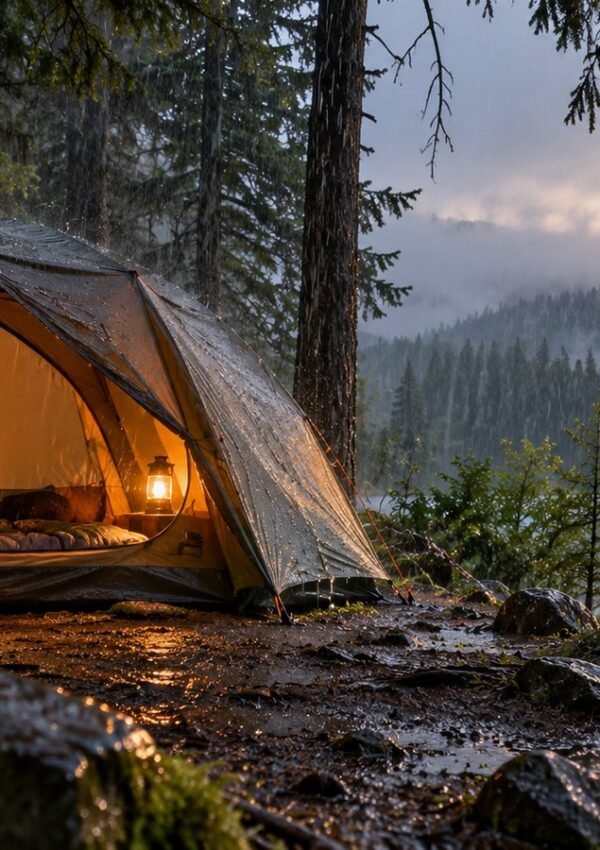
A full-coverage rainfly reaches close to the ground on all sides and offers the best protection from wind-driven rain. Partial flies that cover only the top save weight and add ventilation but leave the sides of the inner tent exposed. For rainy regions, choose full coverage.
Fabrics and Coatings
Tent fabrics are usually nylon or polyester with a waterproof coating such as polyurethane or silicone. Denier, written as a number followed by D, describes thread thickness; higher numbers usually mean heavier, more abrasion-resistant fabric. Nylon is light and strong but stretches slightly when wet, which can cause a fly to sag. Polyester stretches less and resists sun damage better, and it is common on family tents.
Waterproof Ratings
Waterproofness is often listed as hydrostatic head, measured in millimeters, which describes how tall a column of water the fabric resists before leaking in a lab test. Higher numbers indicate more water resistance. Floors usually have higher ratings than flies because body weight presses them into wet ground. Rating methods vary between brands, so treat the numbers as a rough comparison.
Seams and Floors
Factory-taped or sealed seams prevent leaks along stitching. A bathtub floor, where the waterproof floor material curves up the sides several inches, keeps ground water out. Our guide to camping in the rain explains pitching and site choices that keep a tent dry in storms.
Ventilation, Vestibules, Weight and Other Features
Ventilation and Condensation
Condensation is one of the most common complaints about tents, and it is often mistaken for a leak. Breath and damp gear release moisture, which condenses on the cool inside of the fly. Mesh panels, roof vents and a gap between fly and inner tent help moist air escape. Double-wall tents, with a separate inner tent and fly, usually handle condensation better than single-wall shelters.
Vestibules
Vestibules are covered areas between the inner tent and the fly, outside the sleeping space. Vestibules keep boots, packs and wet gear out of the rain without bringing mud inside. Two vestibules, one at each door, are worth having for two or more campers.
Poles, Stakes and Guylines
Aluminum poles are lighter and stronger than fiberglass and less likely to splinter, though fiberglass is common on budget tents. The stakes included with many tents are basic; upgrading to sturdier stakes for your typical ground, sand or hard soil, is an inexpensive improvement. Guylines anchor the fly in wind and keep fabric taut, which also improves ventilation.
Interior Details
Pockets, gear lofts, lantern hooks and power-cord ports are small conveniences that make daily life easier. Light-colored fabrics make the interior brighter during the day, while darker fabrics can make sleeping in easier early in the morning.
Flame Resistance and Safety Labels
Many tents sold in the United States carry a label stating that the fabric meets the CPAI-84 flammability specification. Flame-resistant fabric is not fireproof. Keep tents well away from campfires and grills, and never use a fuel-burning heater, stove or lantern inside: the U.S. Consumer Product Safety Commission warns that carbon monoxide can build up quickly in tents and campers. Our guide to campsite safety basics covers carbon monoxide and other risks.
Weight Specs and Packed Size
Backpacking tents list several weight figures. Minimum or trail weight usually includes only the tent body, fly and poles. Packed weight includes everything in the box, such as stakes, guylines, stuff sacks and instructions. The real carried weight usually falls between the two.
For car camping, weight hardly matters, but packed size does. Large cabin tents can take up much of a trunk, so check the packed dimensions against your vehicle’s cargo space before buying. Remember that the tent shares that space with sleeping bags, pads, a cooler, chairs and the camp kitchen, and that a bulky tent bag is much easier to load when it is packed neatly rather than stuffed back in a hurry at the end of a wet trip.

How to Choose: A Simple Decision Process
- Write down who will sleep in the tent, including pets, and how much gear needs to come inside.
- Decide how you will travel: car, canoe, bike or on foot.
- Note the typical weather: dry, rainy, windy, hot and humid, or cold.
- Pick the season rating that matches your coldest and windiest realistic trip, not the most extreme one you can imagine.
- Choose the shape that fits your priorities: headroom, weight or wind stability.
- Compare floor area, peak height, doors and vestibules among tents in your price range.
- Check fabric, rainfly coverage, seam taping and pole material.
- Read the warranty and the manufacturer’s care instructions.
Renting or Borrowing First
Many outdoor retailers and some parks rent tents. Renting or borrowing a tent for a first trip shows what you value, whether that is headroom, two doors or a quick setup, before you spend money on your own.

Before Your First Trip
Set up a new tent at home, in a yard or a park, before taking it camping. Count poles and stakes, learn which clips go where and how the fly attaches, and practice taking it down. Some manufacturers recommend seam sealing certain models; check the instructions.
After every trip, dry the tent fully before storing it, since packing it away damp can lead to mildew and damage the waterproof coatings. Our guide to cleaning, drying and storing tents explains the process step by step.
Frequently Asked Questions
What size tent should I buy for two people?
Many couples choose a three-person tent for extra room for bags and movement. Backpackers who want to save weight often accept a two-person model.
Do I need a four-season tent?
Only if you camp in heavy snow or strong winter winds. A good three-season tent suits most camping.
Why is my tent wet inside when it did not rain?
That is usually condensation from breath and damp gear. Open the vents, keep the fly taut and avoid bringing wet gear inside.
What is a tent footprint?
A footprint is a ground sheet cut to the tent floor’s shape. It protects the floor from abrasion and moisture and should not extend past the tent’s edges.
Is a higher hydrostatic head rating always better?
Higher numbers mean more water resistance in lab tests, but design, seams and pitching matter just as much. Ratings are a useful comparison, not a guarantee.
Can I use a heater in my tent?
No fuel-burning heater should be used inside a tent. The CPSC warns that carbon monoxide can kill. Use warmer sleeping gear instead.

Leave a Reply