
Quick answer: build camp meals around foods that are naturally gluten-free, such as eggs, meat, fish, potatoes, rice, corn tortillas, beans, fruit, vegetables and cheese, and choose packaged foods labeled gluten-free, which under FDA rules must contain less than 20 parts per million of gluten. At camp, the bigger risk is cross-contact, so pack separate cutting boards, utensils and condiments, and cook gluten-free food first.
Camping and gluten-free eating fit together better than many people expect. A lot of classic camp food, from foil packet potatoes to grilled chicken, scrambled eggs and campfire corn, contains no gluten at all. The challenge is less about finding food and more about the details: seasoning packets, marinades, shared griddles and that one bag of buns that sheds crumbs all over the picnic table.
This guide is for anyone cooking for a gluten-free camper, whether that is someone with celiac disease, a diagnosed sensitivity or a personal preference. It covers how labels work, which foods are safe bets, where gluten hides, and how to keep a shared camp kitchen from contaminating gluten-free meals. Meal ideas for every part of the day follow.
It fits inside our broader camping food guide, which covers meal planning, coolers, cooking methods and cleanup for the whole trip. This article is general food information, not medical advice. Anyone managing celiac disease or another medical condition should follow the guidance of their doctor or dietitian.
What Gluten-Free Means on a Label
Gluten is a group of proteins found in wheat, barley and rye, along with grains related to them such as spelt, farro and triticale. The Celiac Disease Foundation describes celiac disease as a serious autoimmune condition in which eating gluten damages the small intestine, and it estimates that the condition affects about 1 in 100 people worldwide. For people with celiac disease, the only treatment is a strict gluten-free diet, so even small amounts matter.
In the United States, the Food and Drug Administration set a federal definition for the term in a rule that took full effect in 2014. A food labeled “gluten-free,” “no gluten,” “free of gluten” or “without gluten” must contain less than 20 parts per million of gluten. The FDA chose that limit because it is the lowest level that can be reliably detected with scientifically validated methods, and because it is consistent with international standards.
Certification Marks
Some products also carry a third-party certification mark. The Gluten-Free Certification Organization (GFCO), for example, certifies products that test at 10 parts per million or less, a stricter threshold than the federal rule. A certification mark is not required by law, but many gluten-free shoppers look for it as an extra layer of assurance.
What the Rule Does Not Cover
The FDA rule applies to foods the FDA regulates. Meat, poultry and some egg products fall under the U.S. Department of Agriculture, and most alcoholic beverages are regulated by the Alcohol and Tobacco Tax and Trade Bureau, which have their own labeling approaches. Reading the ingredient list on every product is the best habit, especially for sausages, hot dogs, jerky and marinated meat.

Foods That Are Naturally Gluten-Free
Many camp staples contain no gluten in their plain, unprocessed form. Building the menu around these foods keeps planning simple and reduces how many labels need checking.
- Proteins: fresh meat, poultry and fish, eggs, plain canned tuna and chicken, beans and lentils, nuts and seeds, and most plain cheeses.
- Starches: potatoes and sweet potatoes, rice, corn and corn tortillas, quinoa, buckwheat, millet, rice noodles and certified gluten-free oats.
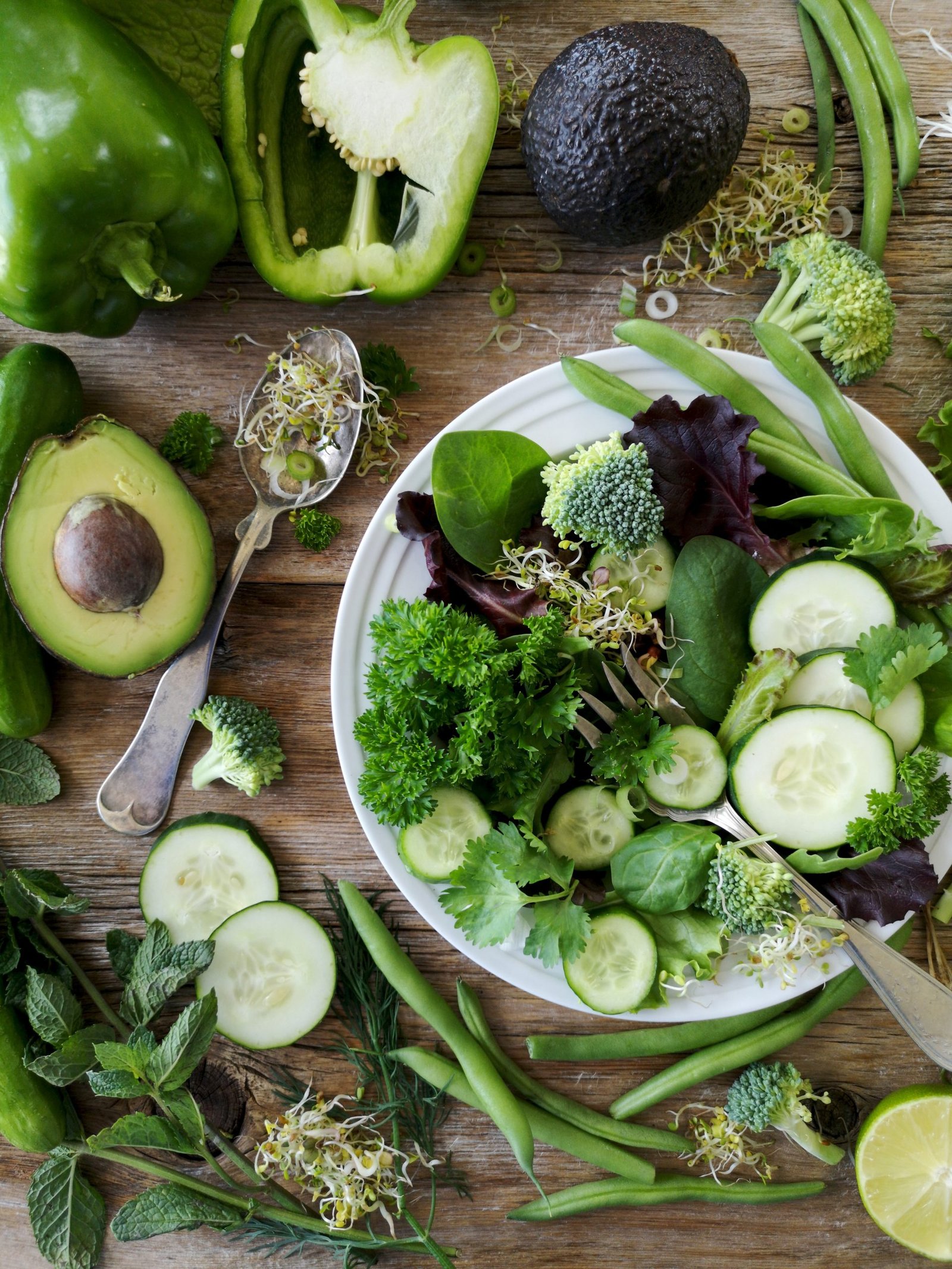
- Produce: all fresh fruits and vegetables, plus most plain frozen and canned versions.
- Fats: butter, oils, nut butters and avocado.
- Snacks: popcorn, rice cakes, plain potato and corn chips, dried fruit and fresh fruit.
Plain is the key word. A potato is gluten-free, while seasoned frozen fries may be coated with wheat flour. Plain rice is safe, while a boxed rice mix may contain orzo or a seasoning packet with wheat. Brand formulas also change over time, so recheck labels on old favorites before a trip.
A Note on Oats
Oats do not naturally contain gluten, but they are often grown and processed alongside wheat and barley, which leads to cross-contact. The Celiac Disease Foundation recommends that people with celiac disease choose oats specifically labeled gluten-free. A small number of people with celiac disease also react to oats themselves, which is something to discuss with a doctor before adding them.

Hidden Gluten to Watch For at Camp
Gluten often turns up in foods that do not look like bread or pasta. These are the items most likely to catch a camp cook off guard:
- Soy sauce and teriyaki sauce, which are usually brewed with wheat. Tamari or soy sauce labeled gluten-free is the usual swap.
- Malt, malt vinegar and malt flavoring, which come from barley.
- Beer, which is traditionally brewed from barley, and beer-based marinades.
- Seasoning packets for tacos, chili and gravy, which sometimes use wheat flour as a thickener or carrier.
- Bouillon cubes, canned soups and broths.
- Sausages, hot dogs, meatballs and burgers that use bread crumbs or fillers.
- Imitation crab and some processed deli meats.
- Couscous, orzo, bulgur, seitan and many instant noodle cups.
- Shared-fryer chips or snacks produced on lines with wheat products, which some labels note with a “may contain” statement.
- Licorice and some candies made with wheat flour.
Labels in the United States must state wheat as an allergen under federal allergen labeling law, which makes wheat easier to spot. Barley and rye are not among the major food allergens that require that statement, so they can appear only in the ingredient list or under names like malt.

Preventing Cross-Contact in a Shared Camp Kitchen
Cross-contact happens when gluten-free food touches gluten through shared surfaces, utensils or crumbs. A camp kitchen makes that easy. Tables are small, cooking surfaces are shared, and a single serving spoon can travel from regular pasta to gluten-free pasta without anyone noticing.
Set Up a Gluten-Free Zone
Give gluten-free food its own space. A labeled bin or cooler, a dedicated cutting board, a colander, a spatula and a pot keep the most important tools separate. Many families choose a different color for gluten-free gear so nobody grabs the wrong one in the dark. Squeeze bottles for mayonnaise, mustard and jam avoid the crumbs that collect in shared jars when a knife touches bread.
Cook in the Right Order
Cook gluten-free food first on any shared griddle, grill or pan, then the rest. If a grill grate has held buns or breaded food, a sheet of foil gives the gluten-free food a clean surface. Foil packets are especially useful because each packet is sealed and labeled. Pie irons, toasters and roasting forks used for regular bread are hard to clean fully, so a separate set is the safer choice for the gluten-free camper.
Wash Hands and Gear
Handwashing between handling regular bread and gluten-free food matters at camp just as it does at home. Bring a small handwashing station, such as a water jug with a spigot, soap and paper towels. Wash shared pots well before using them for gluten-free cooking, or simply reserve one pot for gluten-free meals the whole trip.

Gluten-Free Breakfast and Lunch Ideas
Breakfast
- Scrambled eggs with peppers, onions and cheese, served in warm corn tortillas as breakfast tacos.
- Potato hash with diced potatoes, onions and gluten-free sausage cooked in a cast iron skillet.
- Certified gluten-free oatmeal with brown sugar, nuts and dried fruit, made with water heated on the stove.
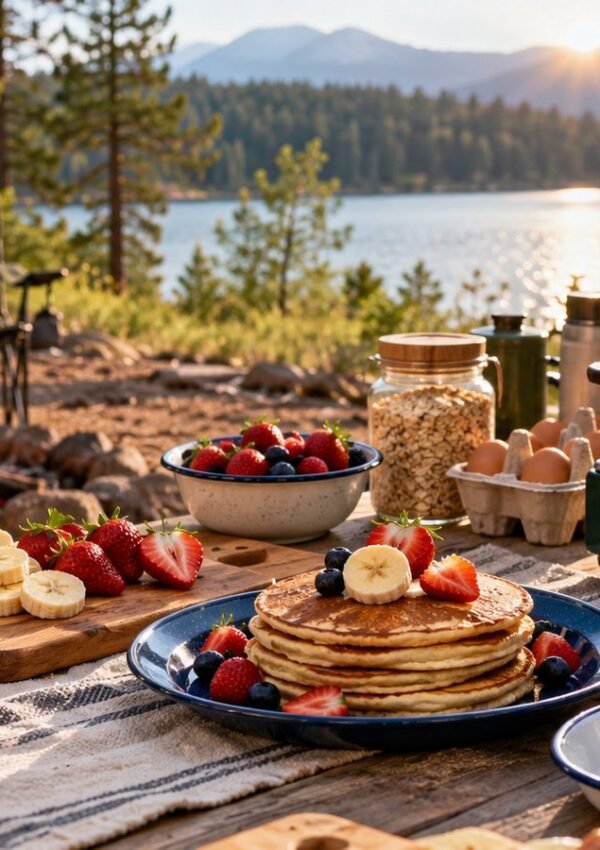
- Pancakes from a gluten-free mix, cooked first on a clean griddle.
- Yogurt parfaits with fruit and gluten-free granola, kept cold in the cooler.
- Bacon and eggs, a classic that needs only a label check on the bacon.
More morning ideas, organized by cooking method, are in our camping breakfast ideas, and most can be adapted with a few swaps.
Lunch
- Lettuce wraps or corn tortilla wraps with sliced chicken, cheese and vegetables.
- Rice cakes with peanut butter, banana and honey.
- Tuna or chicken salad with gluten-free crackers or cucumber slices.
- Cold rice and bean bowls with salsa, corn and avocado.
- Quesadillas made with corn tortillas, cooked in a skillet on the stove.
- A snack board of cheese, gluten-free deli meat, fruit, nuts and vegetables.
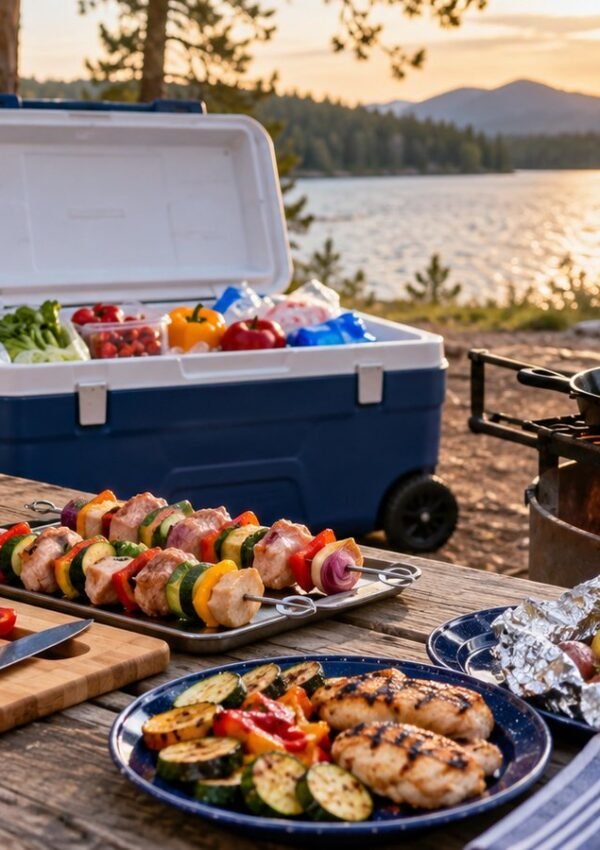
- Foil packets with chicken or sausage, potatoes, carrots and onions, seasoned with oil, salt and herbs.
- Chicken fajitas with peppers and onions, served on corn tortillas.
- Grilled burgers on lettuce leaves or gluten-free buns, cooked before regular burgers on a clean grate.
- Chili made with beans, ground beef or turkey and spices, using a seasoning mix labeled gluten-free.
- Rice noodle stir-fry with vegetables, chicken or shrimp and gluten-free tamari.
- Grilled fish with lemon, baked potatoes in foil and corn on the cob.
- Campfire nachos with corn chips, beans, cheese and salsa, baked in a cast iron skillet.

Gluten-Free Dinners, Snacks and Desserts
Dinners
Which heat source suits each meal depends on fire rules and the weather. Our comparison of camp stove vs campfire cooking explains the trade-offs.
Snacks
Popcorn, trail mix made from nuts and dried fruit, cheese sticks, apples with nut butter, rice crackers, jerky labeled gluten-free and fresh fruit all travel well. Pre-portioned bags make it easy to grab a snack without anyone reaching into a shared bowl with crumby hands.
Desserts
S’mores work with gluten-free graham-style crackers, and many marshmallows and chocolate bars contain no gluten, though labels should be checked. Banana boats with chocolate chips, foil-baked apples topped with gluten-free oats and brown sugar, and grilled pineapple are naturally gluten-free options.

Planning and Packing Tips
A written menu is the best tool for a gluten-free trip. List every meal and snack, then build a shopping list from it, checking labels at the store rather than at camp. Bring a little extra of the gluten-free staples, such as tortillas, crackers and pasta, in case of spills or a broken package, since small rural stores near campgrounds may not stock them.
Prepare as much as possible at home, where it is easier to control cross-contact. Marinate meat, chop vegetables and portion snacks into labeled containers. Mark the gluten-free items clearly with tape or a marker, and pack them together in their own cooler or bin. For vegetarian and plant-based campers, many ideas overlap with our list of vegan camping food ideas, though each recipe still needs a gluten check.
A Short Gluten-Free Gear List
- A dedicated cutting board, knife, spatula and colander in a distinct color.
- A pot or skillet reserved for gluten-free cooking.
- Heavy-duty foil for grill barriers and sealed packets.
- Squeeze bottles for condiments, labeled clearly.
- A marker and tape for labeling containers.
- A separate bin or small cooler for gluten-free food.
Eating Out on the Road
Restaurants and campground snack bars vary widely in how well they handle gluten-free requests. Calling ahead, asking about shared fryers and dedicated prep areas, and carrying a backup meal reduce the chance of a gluten-free camper going hungry. The Celiac Disease Foundation offers resources on dining out that can help.
Frequently Asked Questions
What can I eat gluten-free while camping?
Eggs, meat, fish, potatoes, rice, corn tortillas, beans, fruits, vegetables, cheese and nuts are naturally gluten-free in their plain forms. Packaged foods labeled gluten-free meet the FDA limit of less than 20 parts per million of gluten.
Are marshmallows gluten-free?
Many marshmallows contain no gluten ingredients, but recipes and manufacturing vary by brand. Check the label every time you buy them.
How do I avoid cross-contact at a campsite?
Use separate cutting boards, utensils, pots and condiment bottles, cook gluten-free food first on shared surfaces, use foil as a barrier on grates, and wash hands between handling regular and gluten-free food.
Is soy sauce gluten-free?
Most standard soy sauce is brewed with wheat and is not gluten-free. Look for tamari or soy sauce specifically labeled gluten-free.
Are oats safe on a gluten-free camping trip?
Choose oats labeled gluten-free, because regular oats often come into contact with wheat. People with celiac disease should check with their doctor, since a small number react to oats themselves.

Leave a Reply