Quick answer: the main RV campground types are private RV parks and resorts (usually full hookups and amenities), state park campgrounds (scenic, moderately priced, often water and electric), national park campgrounds (prime locations, often no hookups and length limits), national forest and BLM campgrounds (rustic, low cost), U.S. Army Corps of Engineers lake campgrounds (often electric and water at good prices), membership programs such as Harvest Hosts, Thousand Trails and Passport America, and free options like dispersed camping on public land. Choose based on the hookups you need, your rig length, budget and how far ahead you can book.
Where you park your RV shapes the whole trip. A resort with a pool and full hookups is a very different experience from a quiet national forest loop with no electricity, and each has its place.
This guide explains each major type of RV campground, what to expect, and how to find and book them. For an overview of RV types, costs and hookups, see our RV camping for beginners guide.
Sources: National Park Service (NPS) campground information; USDA Forest Service and Bureau of Land Management (BLM) recreation pages; U.S. Army Corps of Engineers (USACE) recreation information; Recreation.gov; state park system websites; America the Beautiful Pass rules (USGS store and NPS); published membership program terms (Harvest Hosts, Thousand Trails, Passport America, Good Sam, KOA). Checked October 2026.

RV Campground Types at a Glance
| Type | Typical hookups | Typical setting | Booking | Good for |
|---|---|---|---|---|
| Private RV park or resort | Full hookups common | Near highways, towns and attractions | Directly with park or booking sites | Convenience, amenities, big rigs |
| State park | Varies; water and electric common | Lakes, beaches, forests | State reservation systems | Scenery at moderate cost |
| National park | Often none or limited | Inside or near the park | Recreation.gov or first-come | Location |
| National forest | Usually none; some electric | Forests, mountains, lakes | Recreation.gov or first-come | Quiet, rustic camping |
| Army Corps of Engineers | Water and electric common | Lakes and rivers | Recreation.gov | Value and waterfront sites |
| BLM campground | Usually none | Deserts, rivers, open land | Often first-come | Low cost, open spaces |
| County or city park | Varies | Local parks, fairgrounds | Local office | Off-the-radar options |
| Membership stays | Varies; often none | Wineries, farms, member parks | Through the program | Unique or discounted stays |
| Dispersed camping | None | Public land | No reservation | Free camping and solitude |
Private RV Parks and Resorts
Private RV parks are businesses built around RVs. Many offer full hookups, pull-through sites, Wi-Fi, laundry, bathhouses and sometimes pools, playgrounds and planned activities. Large chains include KOA, which operates hundreds of franchised and company-owned campgrounds across North America.
Pros
- Full hookups and big-rig-friendly sites are common
- Convenient locations near highways and towns
- Amenities that make family trips and long stays easier
- Online booking and phone support
Cons
- Often the most expensive option
- Sites can be close together
- Some parks have age, size or rig-condition rules for RVs
Discount clubs
Programs such as Good Sam and KOA’s loyalty program offer discounts at participating parks, typically in exchange for an annual fee. Check the terms to see whether the savings fit your travel pattern.
State Park Campgrounds
State park campgrounds often have some of the best scenery at moderate prices. Facilities vary widely by state and by park, from primitive loops to sites with water, electric and sometimes sewer.
What to know
- Many state parks have length limits for RVs, especially in older campgrounds.
- Popular parks book up months ahead; each state sets its own reservation window.
- Out-of-state visitors sometimes pay higher fees.
- Some states sell annual passes that cover entry but not camping fees.
Check each state’s reservation site and campground pages for site lengths and hookup details.
National Park Campgrounds
Camping inside a national park puts you close to the sights, but sites are limited. Many NPS campgrounds have no hookups, though some have electric sites or dump stations.
What to know
- Many national park campgrounds have strict vehicle length limits; older loops were designed for smaller rigs.
- Reservations for many campgrounds are made on Recreation.gov, often months in advance, while some campgrounds remain first-come, first-served.
- Generator use is usually limited to set hours.
- Private campgrounds and national forest campgrounds just outside park boundaries are good backups.
Our guide on how to book hard-to-get campsites explains reservation windows and strategies.
National Forest Campgrounds
The USDA Forest Service manages thousands of developed campgrounds. Many are rustic, with vault toilets, picnic tables and fire rings but no hookups, though some have electric sites and water spigots.
What to know
- Some are run by concessionaires, which handle fees and maintenance.
- Reservations are often on Recreation.gov; some sites are first-come.
- Roads can be narrow or unpaved; check site and road details for big rigs.
- Fees are usually lower than private parks.

U.S. Army Corps of Engineers Campgrounds
The U.S. Army Corps of Engineers manages recreation areas at many lakes and rivers it created or maintains. Its campgrounds are known among RVers for waterfront sites, paved pads and electric and water hookups at moderate prices.
What to know
- Most Corps campgrounds are reserved through Recreation.gov.
- Many operate seasonally.
- Holders of the America the Beautiful Senior or Access Pass often receive a discount on camping fees at many Corps and other federal campgrounds. See our guide to the America the Beautiful pass for campers for the details.

BLM Campgrounds
The Bureau of Land Management runs developed campgrounds in many western states, often in desert, canyon and river settings. Facilities are usually basic, and many sites are first-come, first-served at low fees.
Long-Term Visitor Areas
In parts of Arizona and California, the BLM operates Long-Term Visitor Areas, where RVers can stay for extended winter periods with a permit. These are popular with snowbirds.
County, City and Fairground Campgrounds
Local governments run many lesser-known campgrounds in county parks, city parks and fairgrounds. Some have full hookups and can be good options when state and private parks are full. Search local parks department websites, as these campgrounds are not always listed on national booking platforms.

Membership Programs
Several membership programs open up additional places to stay. Read each program’s current terms, fees and rules before joining.
Harvest Hosts
Harvest Hosts members can stay overnight at participating wineries, breweries, farms, museums and other businesses. Stays are typically one night without hookups, so a self-contained RV is required, and hosts appreciate guests who support the business with a purchase.
Thousand Trails
Thousand Trails offers access to a network of member campgrounds for an annual fee, with different zones and plans. It can be cost-effective for people who travel often within a region.
Passport America
Passport America is a discount club that offers reduced rates at participating campgrounds, often around half off, with restrictions on dates and lengths of stay.
Other programs
Some programs connect RVers with private hosts who offer driveway or land stays. Rules and fees vary, so compare carefully.

Overnight Parking
Sometimes you just need a place to sleep between destinations.
- Retail parking lots: some stores and restaurants allow overnight RV parking, but policies vary by location and local laws. Always ask the manager and follow posted signs.
- Rest areas: rules on overnight stays vary by state; some prohibit overnight parking.
- Truck stops: some allow RVs, but parking is meant for commercial drivers, so use RV or car areas where provided.
Overnight parking is for resting, not camping: no awnings, chairs or grills outside, and leave early.
Dispersed and Free Camping
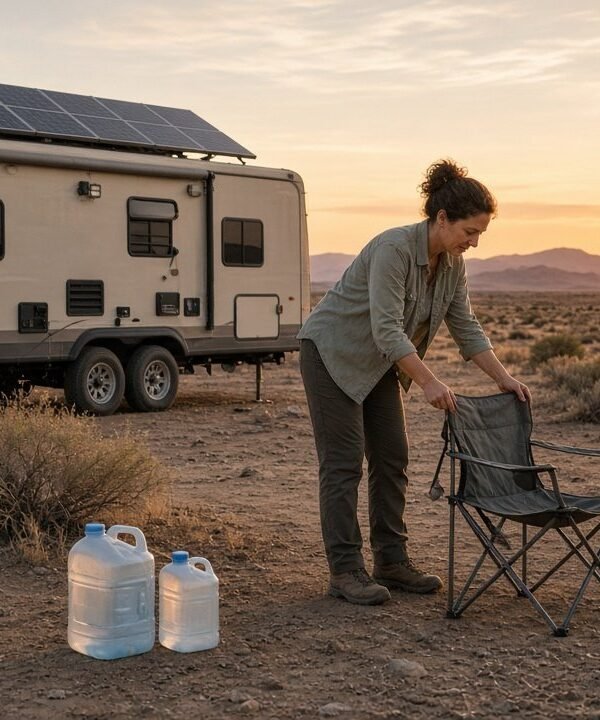
Dispersed camping on BLM and national forest land is free in most places and offers privacy and scenery, but no hookups or services. Stay limits and rules apply. See our guides to dispersed camping rules and free camping in the US for details.

Military Campgrounds
Many U.S. military installations operate campgrounds, often called FamCamps, for active-duty service members, retirees, veterans with base access and their families. They frequently offer hookups at modest rates. Eligibility and base access rules vary, so check with the installation’s recreation office before planning a stay.

Seasonal and Long-Stay Options
Campground choices change with the seasons. In winter, many northern state and federal campgrounds close or shut off water, while southern RV parks fill with snowbirds staying for weeks or months.
Monthly and seasonal rates
Many private RV parks offer weekly, monthly or seasonal rates that work out much cheaper per night than daily rates. Electricity may be metered and billed separately on long stays.
Shoulder seasons
Spring and fall are often the easiest times to find open sites at popular parks, with milder weather and fewer crowds. Check whether water and dump stations are still open late in the season.

Ways to Save on RV Campgrounds
- Mix full-hookup nights with low-cost public campgrounds and free dispersed sites.
- Travel midweek, when rates and demand are often lower.
- Ask about discounts for seniors, veterans, club members and long stays.
- Use federal pass discounts where they apply.
- Book water and electric sites instead of full hookups when you can dump at a station.
- Stay longer in one place to cut fuel costs, which often exceed campground fees on long trips.

How to Choose the Right Campground
Ask yourself these questions:
- What hookups do you need? Air conditioning in summer usually means electric hookups; full hookups make long stays easier.
- How long is your rig? Check maximum site length and access roads.
- What is your budget? Mix full-hookup nights with cheaper public campgrounds.
- What is the purpose of the stay? One night between destinations needs less than a week at the beach.
- How far ahead can you book? Popular parks fill early; first-come sites need flexible timing.
- Do you need amenities? Laundry, Wi-Fi, showers and playgrounds matter for families and long trips.
Read recent reviews
Recent reviews from other RVers often reveal details a booking page leaves out, such as tight turns, low branches, uneven sites, weak cell signal, low voltage at the pedestal or noisy neighbors like highways and rail lines. Look at reviews from people with rigs similar in size to yours.
Reading campsite details
When booking, look for site type (pull-through or back-in), pad surface, maximum length, slope, hookup amperage (30 or 50 amp), shade and distance to restrooms. Many booking pages include photos.

Campground Etiquette Basics
Whatever type of campground you choose, the same courtesies apply: respect quiet hours, keep pets leashed, do not walk through other people’s sites, keep generator use within posted hours and leave your site clean. Our guide to campground etiquette covers more.
Frequently Asked Questions
What is the difference between an RV park and a campground?
RV parks are usually private businesses designed for RVs with full hookups and amenities, while campgrounds may serve tents and RVs and often have fewer hookups, especially on public land.
What are the cheapest RV campgrounds?
Dispersed camping on public land is usually free. BLM, national forest and Army Corps of Engineers campgrounds tend to be low cost, and discount programs can reduce private park rates.
Do national parks have RV hookups?
Some national park campgrounds have electric hookups or dump stations, but many have no hookups at all. Check each campground’s page on the NPS website or Recreation.gov.
What are Army Corps of Engineers campgrounds?
They are campgrounds at lakes and rivers managed by the U.S. Army Corps of Engineers, often with electric and water hookups. Most are reserved on Recreation.gov.
Is Harvest Hosts worth it?
It can be for self-contained RVers who enjoy unique one-night stays at wineries, farms and similar businesses. Compare the annual fee with how often you will use it.
Can I park my RV overnight in a store parking lot?
Some stores allow it, but policies vary by location and local laws. Always ask the manager, follow posted signs and keep your stay brief and low-key.

Sources
- National Park Service. Campground information and generator rules.
- USDA Forest Service. Developed campgrounds.
- Bureau of Land Management. Campgrounds and Long-Term Visitor Areas.
- U.S. Army Corps of Engineers. Recreation information.
- Recreation.gov. Campground listings and booking rules.
- America the Beautiful Pass. Senior and Access Pass discount rules.
- Membership program terms: Harvest Hosts, Thousand Trails, Passport America, Good Sam, KOA.